
Suno AI latest news 2026: growth, legal battles, and AI music innovation reshape global music creation, ownership, and industry economics.
Adobe Express AI Leap Transforms Creative Workflows 2026
Introduction: Suno AI and the New Age of Music Creation
The emergence of Suno AI marks a pivotal turning point in how music is conceived, produced, and consumed. In 2026, the platform has moved far beyond novelty status. It is now central to an ongoing transformation of the global music economy, where artificial intelligence is redefining creativity, ownership, and monetization.
What makes this moment particularly significant is not just the technology itself, but the friction it has created between innovation and tradition. Suno AI sits directly at that intersection.
Explosive Growth Validates AI Music Demand
Suno AI’s rapid expansion underscores a fundamental shift in user behavior. The platform has surpassed 2 million paid subscribers and generates hundreds of millions in annual recurring revenue, signaling strong commercial adoption of AI-driven music tools.
This growth reflects a broader democratization of music production. Tools that once required technical expertise are now accessible through simple prompts, allowing hobbyists, marketers, and independent creators to produce full-length tracks in minutes.
At the same time, Suno’s expansion into new offices and infrastructure investments highlights its ambition to become a long-term platform within the creator economy.
Product Innovation: Personalization Becomes Core Strategy
The release of Suno v5.5 represents a major leap in personalization. Features such as custom AI voices, user-trained models, and preference-based outputs allow users to create music that reflects their individual style.
This shift signals an important transition. Suno AI is no longer simply generating music—it is learning user intent and evolving into a co-creative system. The ability to train models on personal tracks or vocal styles pushes the platform closer to replicating the nuances of human artistry.
Legal Battles Reveal Structural Industry Conflict
Despite its success, Suno AI remains entangled in legal and licensing disputes. Negotiations with major labels such as Universal Music Group and Sony Music Entertainment have stalled, largely due to disagreements over distribution rights and revenue models.
These tensions stem from unresolved questions about copyright. Lawsuits filed in recent years argue that AI systems trained on existing music may infringe intellectual property rights, a claim Suno has contested while pursuing partnerships.
At the same time, collaboration is emerging as an alternative path. Agreements with Warner Music Group indicate that parts of the industry are shifting from resistance to controlled integration of AI technologies.
Artist Backlash and Ethical Debate Intensify
The rise of Suno AI has triggered strong resistance from artist communities. Campaigns like “Say No to Suno” argue that AI-generated music floods platforms with low-quality content, diluting royalties and undermining human creativity.
Reports suggest millions of AI-generated tracks are being created daily, raising concerns about oversupply and the erosion of value in music distribution systems.
This backlash highlights a deeper issue: the tension between accessibility and sustainability. While AI lowers barriers to creation, it also challenges the economic structures that support professional artists.
Streaming Platforms Face an AI Content Surge
The impact of Suno AI extends beyond creation tools into distribution ecosystems. Streaming platforms are witnessing a surge in AI-generated content, with some reporting tens of thousands of AI tracks uploaded daily.
Although AI music still represents a smaller share of total streams, its dominance in new uploads is reshaping how platforms manage discovery, royalties, and content verification.
This imbalance introduces new risks, including fraud, bot-generated streams, and challenges in distinguishing human from AI-created music.
How Suno AI Became a Disruptor
Founded in the early 2020s, Suno AI pioneered a new category of generative audio platforms. Its core innovation lies in converting natural language prompts into complete songs, including lyrics, vocals, and instrumentation.
Key capabilities include:
- Text-to-music generation
- Multi-genre composition
- AI-generated vocals
- Cloud-based production workflows
These features have effectively transformed music into a programmable medium, accessible to anyone with an internet connection.
Conclusion: A Defining Inflection Point for Music
Suno AI represents both an unprecedented opportunity and a profound disruption. Its rapid adoption confirms that AI-driven creativity is here to stay, but its legal challenges reveal that the framework governing this new reality is still being written.
The future of music will likely be shaped by how well the industry balances innovation with regulation. Whether Suno AI becomes a foundational layer of the music ecosystem or remains a contested force, its influence on the creative economy is already irreversible.
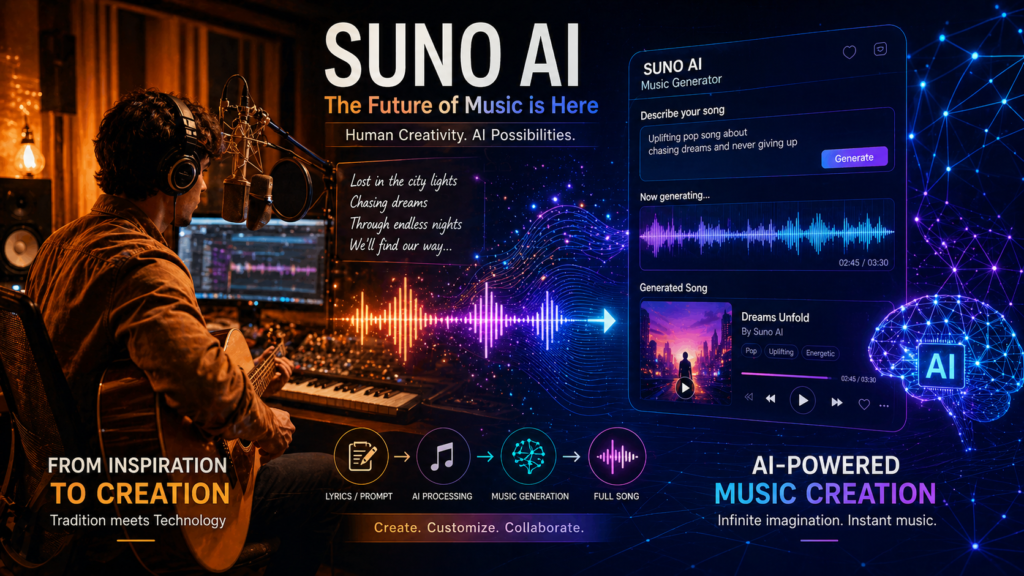
Disclaimer : This image is a conceptual illustration created for editorial and informational purposes only. It is designed to visually represent the evolving relationship between traditional music production and AI-generated creativity associated with Suno AI. Any depiction of studios, interfaces, or generated music elements is symbolic and does not correspond to any official product interface, feature set, or real-world environment. No identifiable individuals, artists, or copyrighted materials are intentionally represented. The visual is intended to support narrative storytelling and should not be interpreted as a factual or technical representation of Suno AI or any affiliated platform.
One UI 9: Samsung’s Android 17 Update Rolls Out

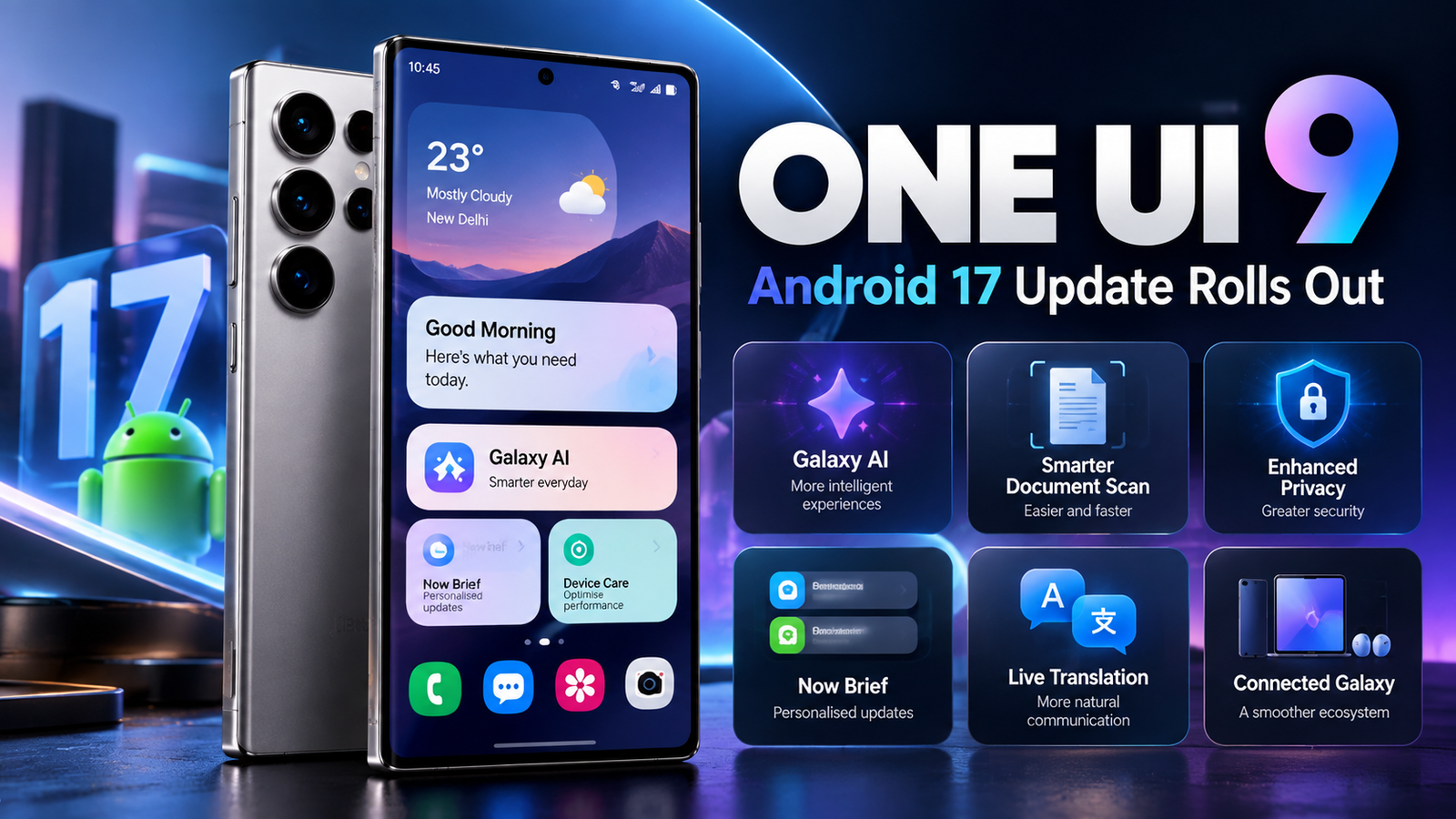
One UI 9 is rolling out with Android 17, Galaxy AI upgrades, privacy tools and new features. Here’s the latest Samsung rollout news and device status. Canon EOS R8 Captures Global Attention in 2026 One UI 9: Samsung’s Android 17 Rollout Gathers Pace Samsung’s One UI 9 rollout is entering an important phase. After months…
Canon EOS R8 Captures Global Attention in 2026

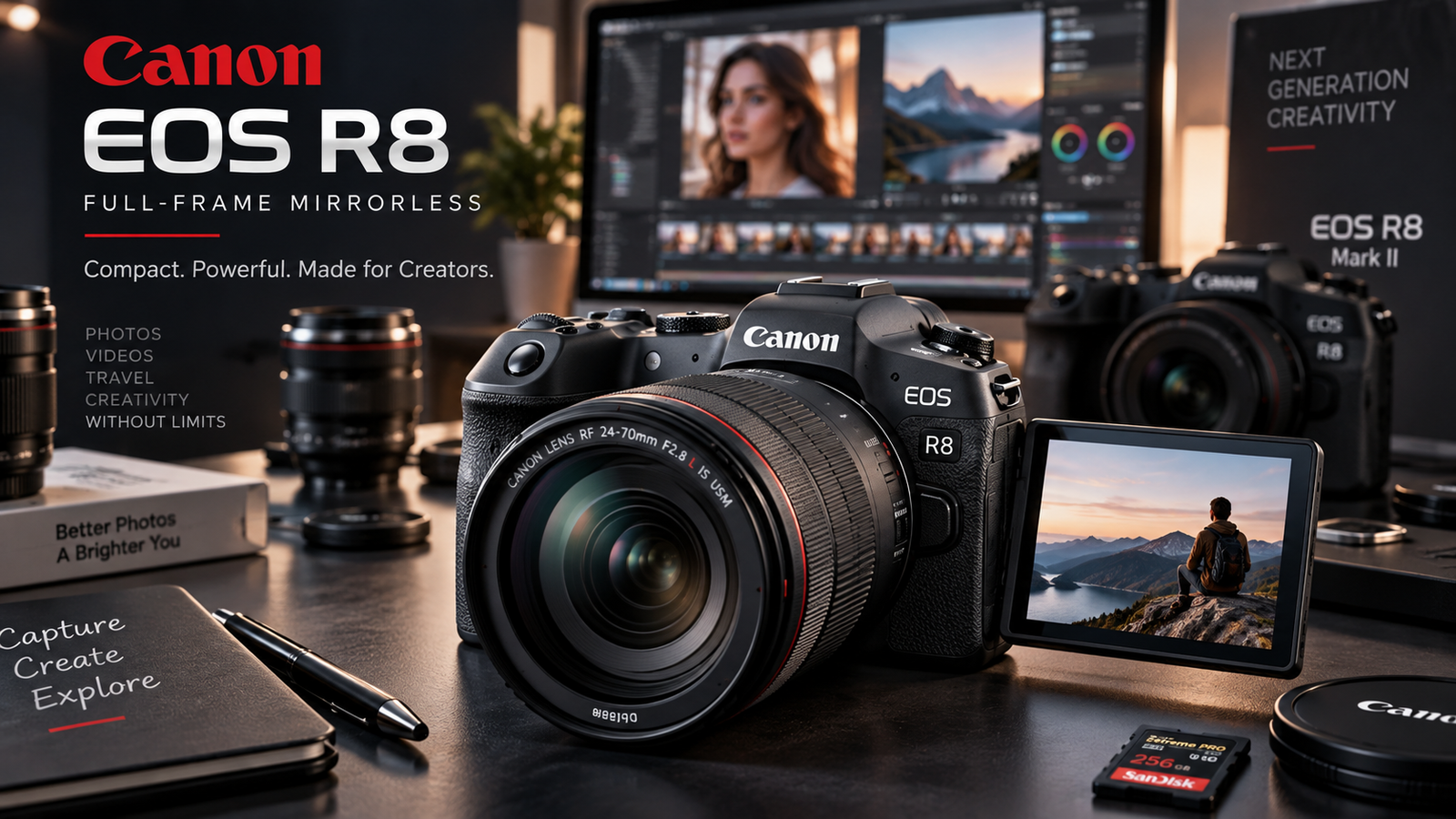
Canon EOS R8 gets a major 2026 buying boost as the R8 Mark II arrives. Check its price, specs, 4K video, 40fps shooting and latest firmware. Household Electric Fan: The Quiet Shift to BLDC Cooling The Canon EOS R8 has suddenly become a more interesting camera in 2026, not because Canon has quietly replaced it,…
Household Electric Fan: The Quiet Shift to BLDC Cooling
A household electric fan is getting smarter in 2026, with BLDC motors, battery backup and better efficiency reshaping how Indian homes stay cool. Redmi Note 17 Pro Max: 10,000mAh Battery Changes Game Household Electric Fan: The Quiet Shift to BLDC Cooling The humble household electric fan is going through a surprisingly important transformation. For decades,…



Pingback: Udio AI Shapes Licensed Music Future in 2026 Shift