
Lindy is rapidly emerging as a leading AI agent platform in 2026, transforming workflow automation, coding, scheduling, and business productivity.
HeyGen Is Rewriting the Future of AI Video Creation
The AI automation race is entering a new phase, and Lindy is positioning itself at the center of that transformation. What began as another productivity-focused AI startup is now evolving into one of the most discussed no-code AI agent platforms in the market. In 2026, Lindy is no longer being viewed simply as an AI assistant. It is increasingly being described as a full-scale AI workforce orchestration platform capable of reshaping how businesses handle repetitive operational tasks.
The growing attention surrounding Lindy comes at a moment when companies across industries are aggressively searching for ways to operationalize generative AI beyond chatbots. While many AI tools still depend heavily on direct prompting, Lindy’s core appeal lies in autonomous execution. Businesses are using AI agents to manage emails, automate scheduling, coordinate workflows, generate reports, handle CRM updates, and even assist software development teams without requiring constant human intervention.
What separates Lindy from earlier automation tools is its positioning around “AI employees.” The platform allows users to create customized AI agents through natural language prompts instead of traditional coding. This shift is attracting startups, solo entrepreneurs, sales teams, and enterprise operations departments seeking scalable workflow automation without building internal AI infrastructure.
One of the biggest developments driving Lindy’s momentum is the rapid expansion of agentic AI itself. Across the broader AI industry, autonomous agents are becoming the next major competitive battleground. Companies are increasingly moving beyond standalone chat interfaces toward systems capable of taking actions independently across applications and workflows. Analysts now view AI agents as one of the defining enterprise technology trends of 2026.
Lindy has benefited significantly from this industry transition. Its integration ecosystem, which connects with tools such as Gmail, Slack, Google Calendar, Notion, CRMs, and development platforms, has become a major selling point for businesses seeking centralized automation. Rather than replacing individual software products, Lindy acts as a coordination layer between them.
The company’s rise also reflects a broader philosophical shift occurring inside the workplace. Businesses are increasingly prioritizing operational efficiency over headcount expansion. AI automation platforms are now marketed not just as productivity boosters, but as digital workforce multipliers. Lindy’s branding around proactive AI assistants strongly aligns with that corporate narrative.
Software developers are also emerging as an important user segment for Lindy. Recent attention around Lindy’s AI coding assistants and workflow automation tools demonstrates how coding support is becoming deeply integrated into agentic AI ecosystems. Instead of merely generating code snippets, newer AI systems are starting to automate broader engineering workflows including pull request summaries, issue routing, testing coordination, and documentation management.
This evolution places Lindy into direct competition with a growing wave of AI infrastructure companies. GitHub Copilot, IBM Bob, OpenAI-powered enterprise tools, and multiple no-code automation startups are all competing to dominate the emerging AI operations layer. The competition is intensifying because enterprises increasingly view AI agents as long-term strategic infrastructure rather than experimental software.
Another reason Lindy is attracting attention is accessibility. Unlike enterprise AI platforms that require engineering expertise, Lindy emphasizes fast deployment and simplified onboarding. Several reviews note that users can create functioning AI agents within minutes using template-driven workflows and natural language instructions. This low technical barrier could become a major factor in broader SMB adoption.
However, questions surrounding reliability, governance, and AI decision-making remain unresolved. As AI agents gain more autonomy, businesses are increasingly concerned about oversight, data privacy, compliance risks, and workflow accuracy. Industry analysts believe that trust and operational transparency may ultimately determine which AI agent platforms achieve long-term enterprise dominance.
Despite those concerns, Lindy’s rapid visibility reflects a larger reality shaping the AI economy in 2026. The market is no longer focused solely on AI-generated content. The next phase is about AI systems capable of acting independently, coordinating workflows, and functioning as persistent operational agents inside businesses.
That transition could fundamentally redefine productivity software over the next decade, and Lindy is rapidly becoming one of the most visible names attached to that future.
Lindy
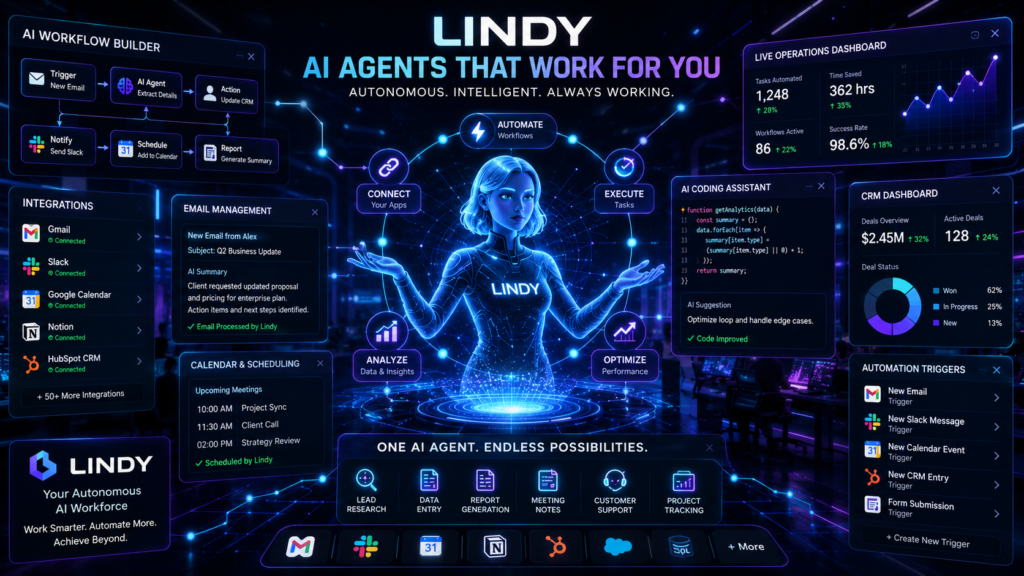
Lindy is an AI automation and no-code AI agent platform designed to help businesses automate workflows using autonomous AI assistants. The platform enables users to create customized “Lindies” capable of handling tasks such as scheduling, email management, CRM updates, research, coding support, and workflow coordination.
The platform gained major traction during the broader rise of agentic AI in 2025 and 2026, as enterprises increasingly explored AI-driven operational automation beyond traditional chatbot interfaces. Lindy competes within the growing AI agent ecosystem alongside enterprise automation and AI productivity platforms.
Disclaimer: This image is a conceptual editorial illustration created for informational and educational purposes only. The visuals, interfaces, dashboards, and AI assistant representations are artistically designed to depict futuristic AI workflow automation concepts and are not official product screenshots or endorsed representations of Lindy AI or any affiliated platform, software provider, or integration partner.
One UI 9: Samsung’s Android 17 Update Rolls Out

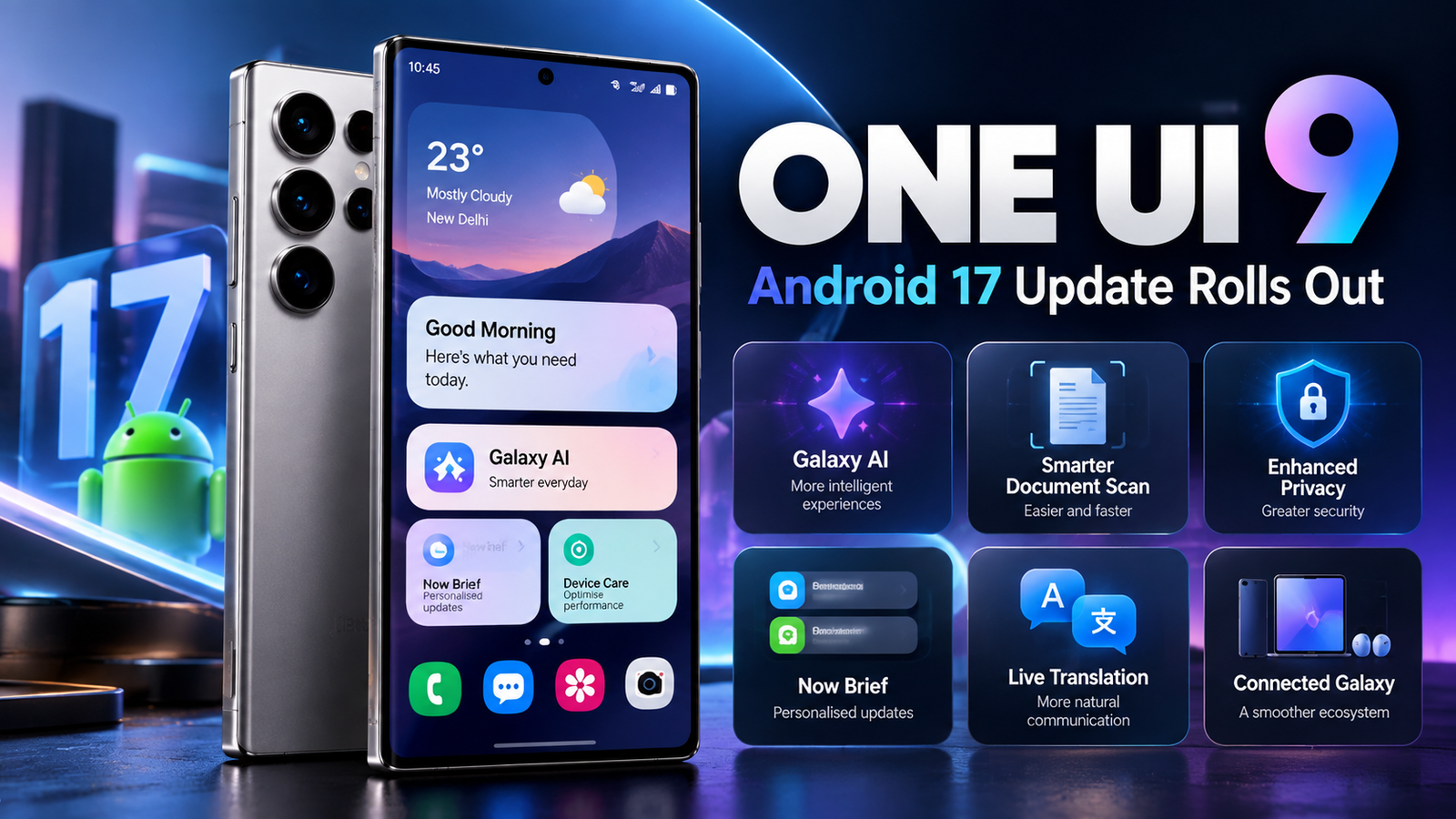
One UI 9 is rolling out with Android 17, Galaxy AI upgrades, privacy tools and new features. Here’s the latest Samsung rollout news and device status. Canon EOS R8 Captures Global Attention in 2026 One UI 9: Samsung’s Android 17 Rollout Gathers Pace Samsung’s One UI 9 rollout is entering an important phase. After months…
Canon EOS R8 Captures Global Attention in 2026

Canon EOS R8 gets a major 2026 buying boost as the R8 Mark II arrives. Check its price, specs, 4K video, 40fps shooting and latest firmware. Household Electric Fan: The Quiet Shift to BLDC Cooling The Canon EOS R8 has suddenly become a more interesting camera in 2026, not because Canon has quietly replaced it,…
Household Electric Fan: The Quiet Shift to BLDC Cooling
A household electric fan is getting smarter in 2026, with BLDC motors, battery backup and better efficiency reshaping how Indian homes stay cool. Redmi Note 17 Pro Max: 10,000mAh Battery Changes Game Household Electric Fan: The Quiet Shift to BLDC Cooling The humble household electric fan is going through a surprisingly important transformation. For decades,…




Pingback: Gumloop Accelerates the Rise of Autonomous AI Workflows