
HeyGen expands AI avatar video creation in 2026 with multilingual translation, digital twins, and enterprise-focused AI media tools.
Runway ML Pushes AI Video Into a New Creative Era
AI-generated video content is accelerating rapidly
The race to dominate AI-generated video content is accelerating rapidly, and HeyGen has emerged as one of the most influential companies redefining how digital communication is created, localized, and scaled. What began as an AI avatar platform focused on simplifying video production has evolved into a broader ecosystem for multilingual media generation, synthetic presenters, and AI-powered visual storytelling.
In 2026, HeyGen’s growth reflects a major shift in how businesses, creators, educators, and marketers approach video content. The company is no longer competing only within the niche of avatar generation. It is increasingly positioning itself as a full-scale AI communication infrastructure platform.
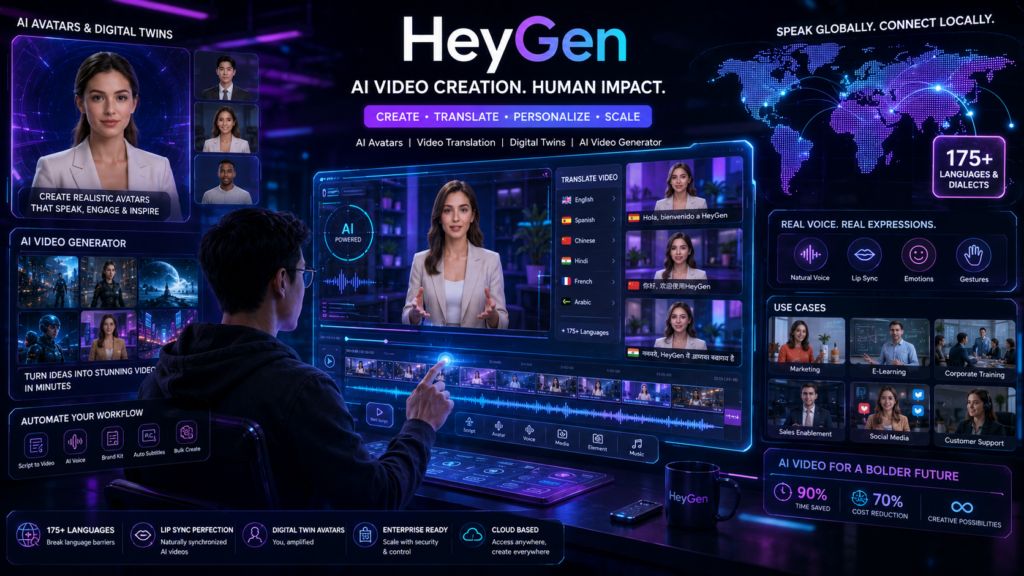
One of the company’s most significant strengths remains its AI video translation technology. HeyGen’s system now supports translation across more than 175 languages and dialects while preserving voice tone, lip synchronization, and speaker identity. This capability has become especially valuable for global businesses attempting to localize video content without traditional dubbing costs or production delays.
The rapid adoption of AI translation tools is reshaping international content strategies across industries. Marketing teams, training departments, YouTubers, online educators, and multinational companies are increasingly relying on AI-generated localization to scale content distribution into new markets.
HeyGen’s platform is benefiting directly from that trend.
The company has aggressively expanded its AI avatar ecosystem through custom “digital twin” technology, allowing users to create realistic AI versions of themselves capable of delivering scripted presentations, marketing campaigns, tutorials, and customer communication videos. These avatars can replicate facial movements, voice patterns, gestures, and emotional expressions with increasing realism.
This evolution is becoming particularly important in the creator economy. Independent creators and small businesses are now able to produce professional-quality video content without studios, cameras, production crews, or extensive editing workflows. In practical terms, AI avatars are lowering production barriers for millions of digital publishers worldwide.
HeyGen’s recent “Avatar IV” systems and Video Agent tools also signal a broader strategic ambition. Instead of functioning solely as an avatar generator, the platform is increasingly automating the entire video production pipeline. Users can generate videos from prompts, automate scripts, localize presentations, and produce social-ready content at scale through a unified AI workflow.
That automation model is reshaping expectations around speed and cost efficiency in media production.
According to industry analysis, AI video generators such as HeyGen can reduce traditional video production costs by as much as 70 percent while dramatically shortening production timelines. This cost reduction is attracting enterprise adoption across marketing, corporate training, sales communication, and customer support sectors.
At the same time, HeyGen faces intensifying competition within the rapidly expanding AI video market. Rival platforms including Synthesia, Runway ML, Kling AI, and DeepBrain AI are all competing aggressively for enterprise customers and creator adoption. The market is evolving quickly as companies race to improve realism, motion quality, multilingual performance, and editing flexibility.
Yet HeyGen appears to hold a particularly strong position in the multilingual AI communication sector.
Its translation systems are increasingly recognized as one of the platform’s major differentiators. Industry reviewers and creators frequently highlight HeyGen’s ability to maintain natural lip-syncing and preserve authentic voice tone across translated outputs.
This capability is becoming increasingly relevant as global audiences demand localized content experiences. Traditional dubbing workflows are often expensive, time-consuming, and operationally difficult for fast-moving digital creators. AI-generated localization dramatically changes that equation.
The company’s expansion into mobile workflows is another strategic development worth noting. HeyGen’s latest iOS applications and automated video creation shortcuts suggest the platform is prioritizing accessibility for mobile-first creators and marketers.
That move reflects broader industry behavior. Short-form vertical video platforms such as TikTok, Instagram Reels, and YouTube Shorts continue driving demand for rapid, scalable content generation systems. AI platforms capable of generating multilingual short-form videos quickly are likely to gain enormous commercial advantages over traditional production tools.
Educational technology may also become a major growth area for HeyGen and similar AI avatar companies.
Recent academic research exploring AI-generated lecture systems demonstrated how interactive educational videos using HeyGen-style avatars and generative AI can create personalized learning environments. Researchers argued that AI instructor systems may eventually enable real-time adaptive education experiences for students.
This broader evolution suggests AI avatars are moving far beyond entertainment or marketing alone. They are increasingly entering sectors including education, enterprise communication, healthcare training, customer service, and virtual assistance.
However, the expansion of synthetic media also raises growing ethical and regulatory concerns.
The increasing realism of AI-generated humans has intensified debates around deepfake risks, consent, misinformation, and identity ownership. As digital twins become more sophisticated, regulatory scrutiny surrounding synthetic media disclosure and biometric replication is expected to increase globally.
Despite those concerns, market demand for AI-generated video continues expanding at extraordinary speed.
Businesses are prioritizing scalable communication systems. Creators want faster production pipelines. Global brands need multilingual engagement. And audiences are increasingly becoming comfortable interacting with AI-generated presenters, digital influencers, and synthetic video hosts.
HeyGen sits directly at the intersection of all those trends.
The platform’s current trajectory suggests that AI-generated presenters may soon become a standard layer of online communication infrastructure rather than a novelty technology. Whether for product explainers, business presentations, educational modules, customer onboarding, or social media campaigns, synthetic video creation is rapidly entering mainstream workflows.
What makes 2026 especially important is that the conversation around AI avatars has shifted from experimentation to operational deployment. Companies are no longer merely testing AI video systems. They are integrating them into daily content production strategies.
For HeyGen, that shift represents a major commercial opportunity.
The company’s future now depends on whether it can continue balancing realism, scalability, creator accessibility, and ethical trust while competing in one of the fastest-moving sectors of artificial intelligence.
But one thing is increasingly clear: AI-generated communication is no longer a future concept. Platforms like HeyGen are already reshaping how the internet speaks, teaches, markets, and entertains.
Disclaimer: This image is a conceptual AI-themed illustration created for editorial and informational purposes only. Any user interfaces, dashboards, avatars, branding-inspired visuals, analytics panels, or multilingual video elements shown are artistic representations and may not reflect actual HeyGen products, features, or official platform designs. This artwork is not affiliated with, endorsed by, or sponsored by HeyGen or any related organization.
One UI 9: Samsung’s Android 17 Update Rolls Out

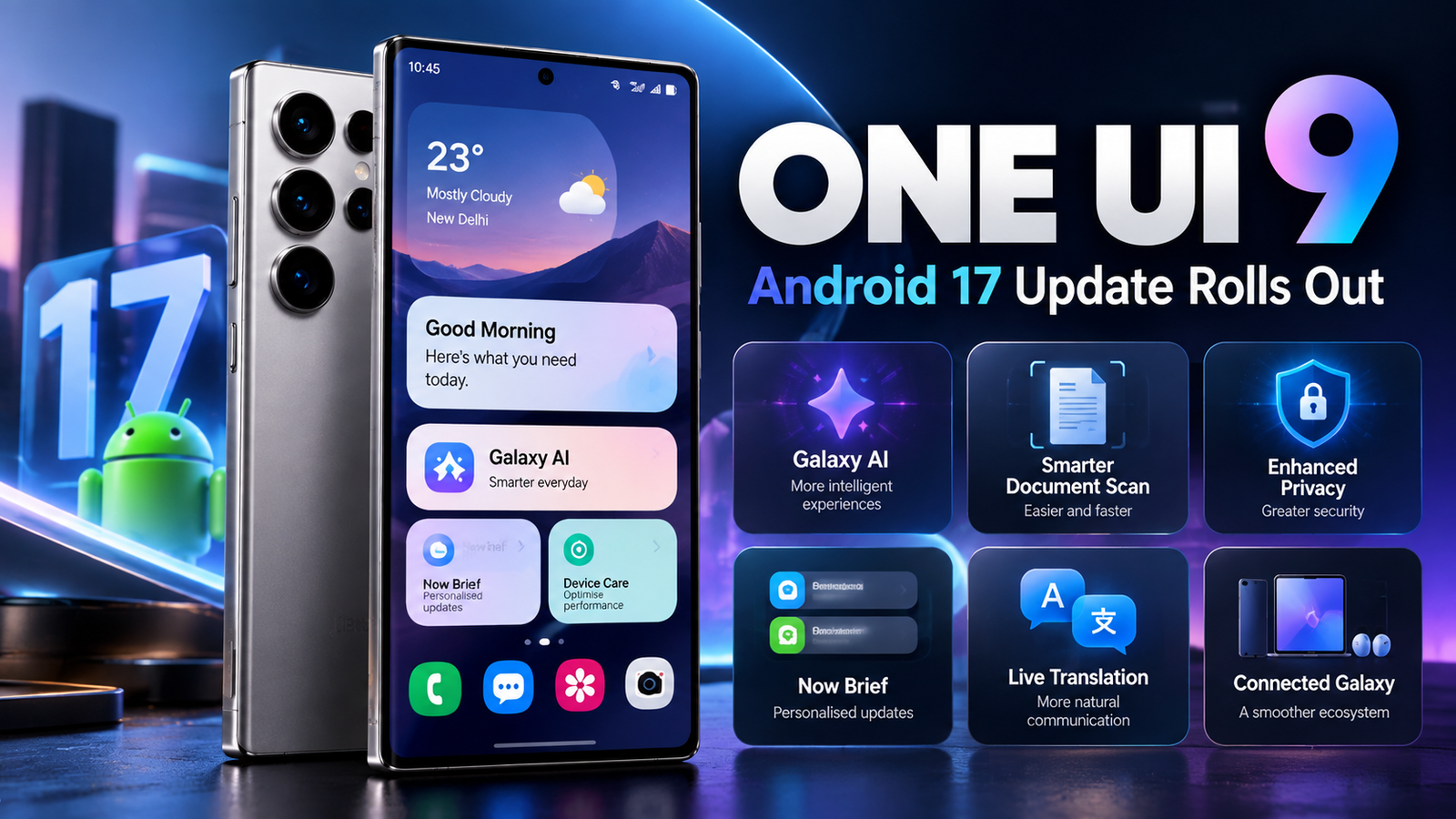
One UI 9 is rolling out with Android 17, Galaxy AI upgrades, privacy tools and new features. Here’s the latest Samsung rollout news and device status. Canon EOS R8 Captures Global Attention in 2026 One UI 9: Samsung’s Android 17 Rollout Gathers Pace Samsung’s One UI 9 rollout is entering an important phase. After months…
Canon EOS R8 Captures Global Attention in 2026

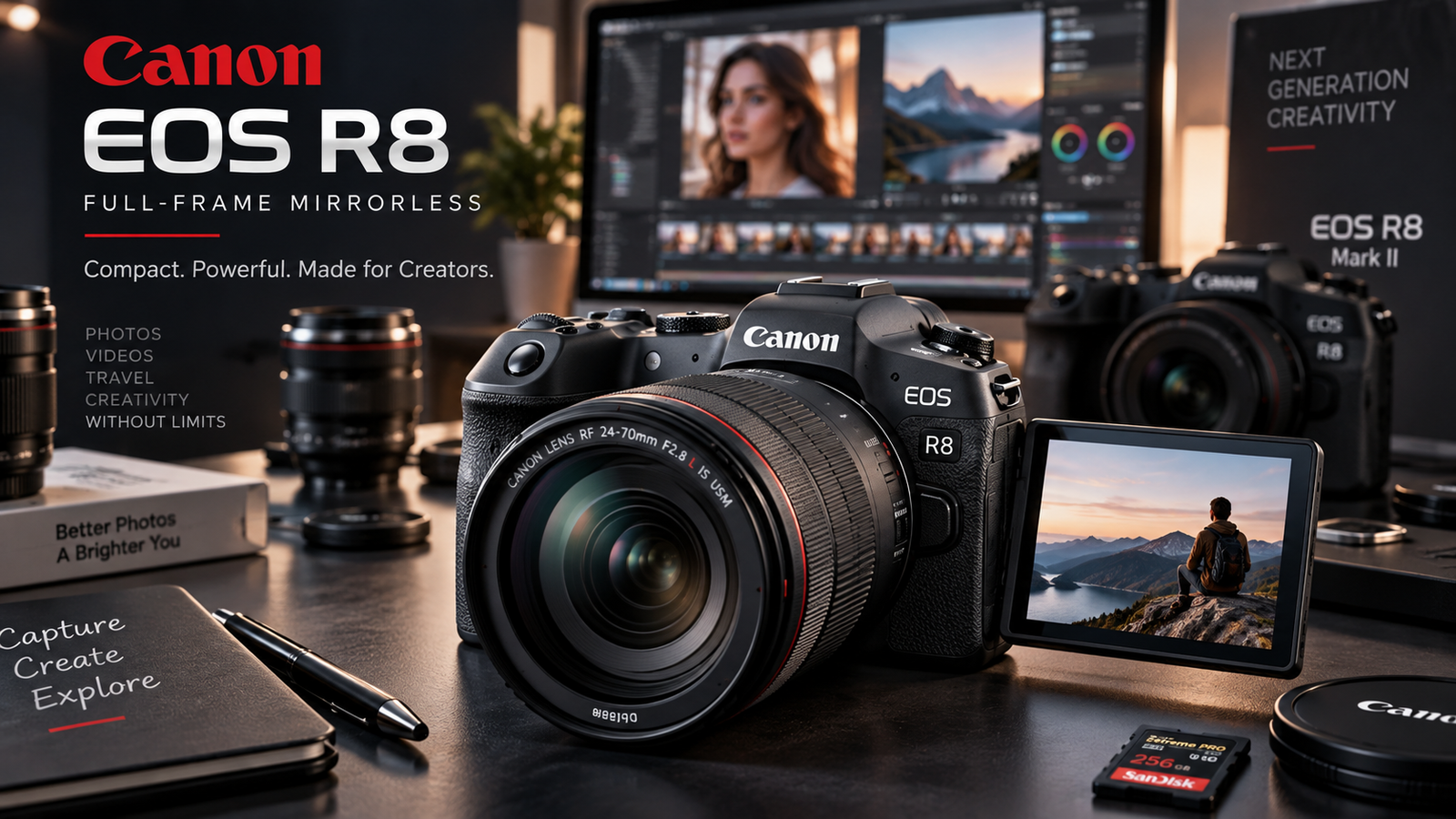
Canon EOS R8 gets a major 2026 buying boost as the R8 Mark II arrives. Check its price, specs, 4K video, 40fps shooting and latest firmware. Household Electric Fan: The Quiet Shift to BLDC Cooling The Canon EOS R8 has suddenly become a more interesting camera in 2026, not because Canon has quietly replaced it,…
Household Electric Fan: The Quiet Shift to BLDC Cooling
A household electric fan is getting smarter in 2026, with BLDC motors, battery backup and better efficiency reshaping how Indian homes stay cool. Redmi Note 17 Pro Max: 10,000mAh Battery Changes Game Household Electric Fan: The Quiet Shift to BLDC Cooling The humble household electric fan is going through a surprisingly important transformation. For decades,…


Pingback: Lindy Pushes AI Agents Into Mainstream Business Work