
Runway ML accelerates AI video innovation in 2026 with world models, Gen-4 tools, creator expansion, and rising industry competition.
ElevenLabs Is Defining the Future of Voice AI in 2026
Runway ML
The artificial intelligence video race is entering a defining stage, and Runway ML is rapidly positioning itself at the center of that transformation. Once viewed primarily as an experimental AI creative platform for filmmakers and digital artists, Runway ML has now evolved into one of the most influential companies shaping the future of generative media.
In 2026, the company’s momentum has intensified through major funding announcements, advanced AI video systems, and aggressive expansion into world-model technology. The shift signals that Runway ML is no longer operating solely as a creative software company. It is increasingly positioning itself as a foundational AI infrastructure player for the future of digital storytelling.
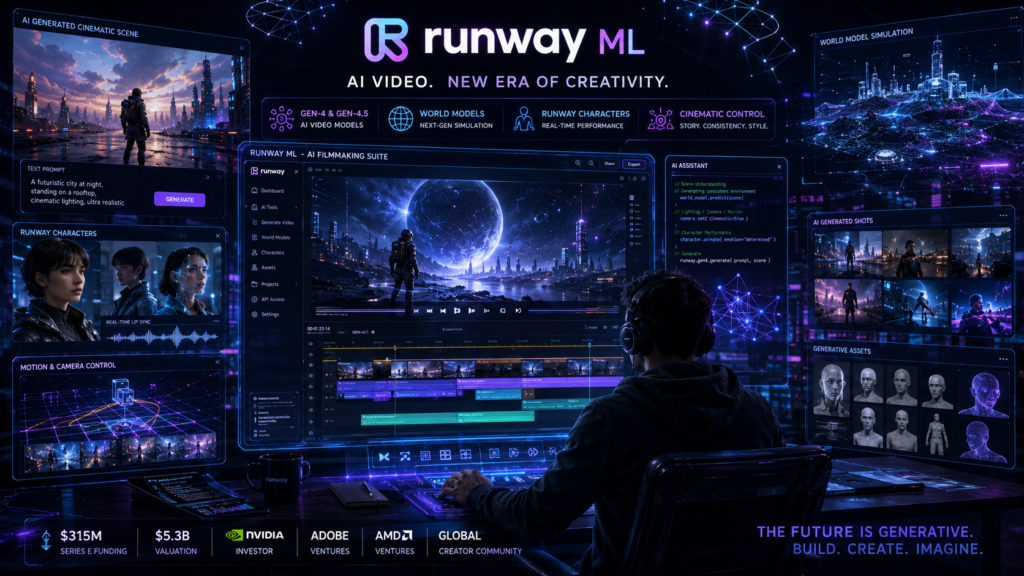
The biggest recent development came when Runway announced $315 million in Series E funding led by General Atlantic, pushing the company’s valuation to approximately $5.3 billion. The funding round included participation from NVIDIA, Adobe Ventures, AMD Ventures, and Fidelity, highlighting growing institutional confidence in AI-generated media technologies.
The company stated that the investment will help accelerate development of “world models,” a next-generation AI approach focused on creating persistent, controllable digital environments rather than isolated image or video outputs. This represents one of the most important strategic pivots currently happening in generative AI.
World models are increasingly seen as the future of interactive media because they allow AI systems to simulate coherent environments, maintain character continuity, and generate dynamic cinematic experiences across scenes. Runway’s internal research teams appear heavily focused on this direction.
That ambition became clearer following the introduction of Runway Labs, an internal incubator dedicated to exploring advanced applications for generative video. The company described the initiative as a platform for experimenting with the next generation of AI-native storytelling tools and interactive visual systems.
At the product level, Runway continues to expand the capabilities of its Gen-4 ecosystem. The company’s Gen-4 and Gen-4.5 models are increasingly recognized for improvements in visual consistency, cinematic control, and multi-scene continuity. Unlike earlier AI video systems that struggled with stable environments and recurring characters, Runway’s latest models focus heavily on maintaining narrative coherence across multiple shots.
This capability is becoming especially important for professional creators. Filmmakers, advertisers, gaming studios, and content agencies are increasingly demanding tools capable of generating production-quality sequences rather than isolated AI clips.
Runway’s newest experimental system, called “Runway Characters,” further expands that vision. The tool can reportedly transform a single reference image into a fully expressive conversational video character capable of real-time lip-syncing, facial animation, and dynamic movement. The technology operates at high frame rates with minimal latency, representing another major step toward AI-generated digital actors and interactive media experiences.
The timing of Runway’s expansion is also significant because the competitive AI video landscape has become dramatically more intense. Following OpenAI’s reported decision to wind down the Sora standalone product strategy, rival platforms including Runway ML, Kling AI, and Vidu have experienced major user growth. Industry analysts increasingly view Runway as one of the strongest remaining independent challengers in AI video generation.
This shift has intensified broader discussions about the future of content production itself.
AI-assisted production pipelines
Hollywood studios, advertising agencies, YouTubers, and independent creators are all experimenting with AI-assisted production pipelines. Tools once considered experimental are now entering commercial workflows. AI-generated visual effects, automated editing, synthetic voice integration, and AI-driven animation are gradually becoming normalized across media industries.
Runway is actively encouraging that transition through creator-focused initiatives such as its annual AI Festival. Originally centered around AI filmmaking, the event has expanded into categories including gaming, design, fashion, advertising, and new media art. The festival increasingly functions as both a showcase and recruitment platform for emerging AI-native creators.
However, Runway’s rise is also bringing increased legal and ethical scrutiny.
The company recently faced a copyright-related class action lawsuit alleging unauthorized use of YouTube videos for AI training purposes. The case reflects growing tension between AI developers and content creators over data sourcing, intellectual property rights, and compensation structures in generative AI ecosystems.
This legal pressure mirrors wider industry concerns affecting nearly every major generative AI platform. As AI-generated media becomes commercially viable, disputes surrounding copyrighted material, synthetic performers, and ownership rights are expected to intensify globally.
At the same time, developer adoption of Runway’s API ecosystem continues growing. Recent API updates added Gen-4.5 support, image-generation integrations, multilingual audio tools, and third-party AI model access. These updates suggest Runway is attempting to evolve into a broader AI media operating system rather than a single-purpose video application.
Another reason Runway ML is attracting attention is its growing influence over the creator economy. Independent filmmakers and small production teams can now generate cinematic visuals previously requiring expensive equipment, motion capture systems, or large VFX departments. That democratization of visual production could fundamentally reshape online entertainment, advertising, and digital publishing over the next decade.
Still, the company faces major challenges ahead.
Competition from Google, ByteDance, Adobe, and emerging open-source video AI systems is accelerating rapidly. Infrastructure costs remain enormous, copyright regulation is evolving unpredictably, and user expectations for realism continue increasing.
Yet despite those risks, Runway ML currently occupies one of the strongest strategic positions in AI-generated media. The company combines advanced research capabilities, strong investor backing, creator-focused branding, and rapidly improving product infrastructure at a time when demand for AI video tools is exploding worldwide.
The broader significance extends beyond entertainment alone. AI-generated video is increasingly influencing education, marketing, gaming, virtual production, digital avatars, enterprise communication, and interactive storytelling.
Runway ML’s evolution therefore represents more than the growth of a startup. It reflects the emergence of a new media infrastructure layer where artificial intelligence becomes deeply integrated into how visual content is imagined, produced, and consumed.
For the creative industry, 2026 may ultimately be remembered as the year AI video stopped being experimental and started becoming mainstream.
Disclaimer: This image is a conceptual AI-themed illustration created for editorial and informational purposes only. Any interface designs, branding-inspired visuals, dashboards, logos, cinematic scenes, or AI-generated elements depicted are artistic representations and may not reflect actual Runway ML products, features, or official company materials. This artwork is not affiliated with, endorsed by, or sponsored by Runway ML or any related organization.
One UI 9: Samsung’s Android 17 Update Rolls Out

One UI 9 is rolling out with Android 17, Galaxy AI upgrades, privacy tools and new features. Here’s the latest Samsung rollout news and device status. Canon EOS R8 Captures Global Attention in 2026 One UI 9: Samsung’s Android 17 Rollout Gathers Pace Samsung’s One UI 9 rollout is entering an important phase. After months…
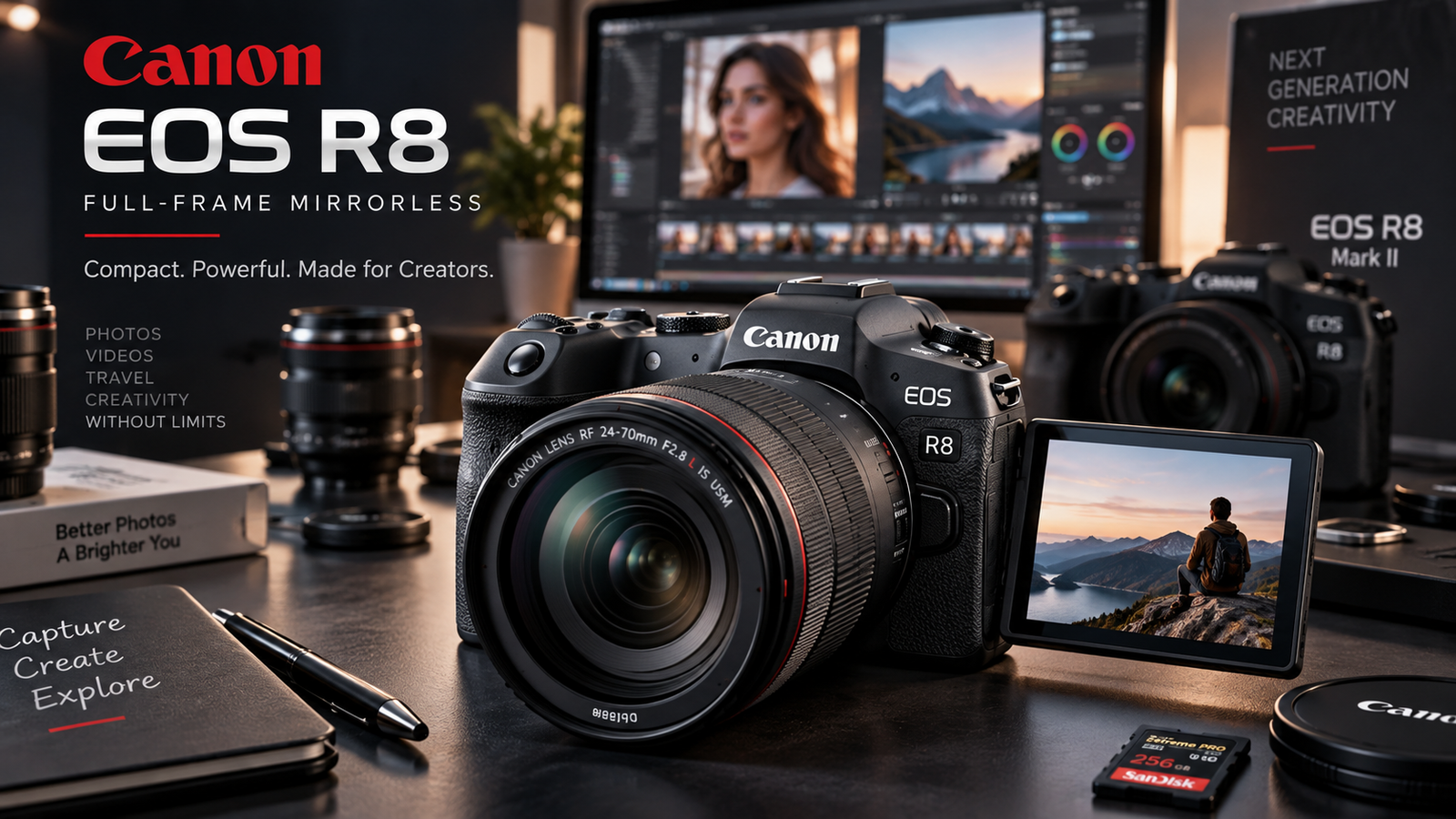
Canon EOS R8 Captures Global Attention in 2026

Canon EOS R8 gets a major 2026 buying boost as the R8 Mark II arrives. Check its price, specs, 4K video, 40fps shooting and latest firmware. Household Electric Fan: The Quiet Shift to BLDC Cooling The Canon EOS R8 has suddenly become a more interesting camera in 2026, not because Canon has quietly replaced it,…
Household Electric Fan: The Quiet Shift to BLDC Cooling
A household electric fan is getting smarter in 2026, with BLDC motors, battery backup and better efficiency reshaping how Indian homes stay cool. Redmi Note 17 Pro Max: 10,000mAh Battery Changes Game Household Electric Fan: The Quiet Shift to BLDC Cooling The humble household electric fan is going through a surprisingly important transformation. For decades,…




Pingback: HeyGen Is Rewriting the Future of AI Video Creation