Confidential Computing is emerging as a critical cybersecurity layer in 2026, protecting sensitive data during processing and enabling secure AI adoption.

AI Supercomputing Platforms Driving 2026 Compute Race
🚀 The Rise of Confidential Computing
In 2026, Confidential Computing is moving from niche innovation to a core pillar of modern cybersecurity and AI infrastructure. As enterprises deploy AI at scale, protecting data not just at rest or in transit—but during processing has become a strategic necessity.
Industry momentum shows that Confidential Computing is now widely recognized as a top strategic technology, especially as organizations handle increasingly sensitive workloads in cloud and hybrid environments.
📰 Latest News Shaping Confidential Computing (2026)
- Privacy is becoming a competitive differentiator, with technologies like confidential computing and encrypted processing enabling secure collaboration and data sharing at scale.
- Advanced AI chips are now embedding confidential computing capabilities, including attestation and secure telemetry, to enforce compliance and prevent misuse.
- Enterprises are shifting toward sovereign and secure cloud models, increasing demand for confidential computing to protect sensitive data across distributed systems.
📊Why Confidential Computing Matters
Traditional security models protect:
- Data at rest (encryption in storage)
- Data in transit (secure communication channels)
However, data becomes vulnerable during processing—when it is decrypted in memory.
Confidential Computing solves this by using Trusted Execution Environments (TEEs) to isolate and protect data while it is being processed.
Key benefits include:
- End-to-end data protection, even in untrusted environments
- Strong compliance with global data regulations
- Secure use of public cloud for sensitive workloads
🧠 What Is Confidential Computing?
Confidential Computing is a hardware-based security approach that ensures:
- Data remains encrypted even during computation
- Workloads are executed inside secure enclaves (TEEs)
- Unauthorized access—including from cloud providers—is prevented
This paradigm shift enables organizations to trust cloud and AI systems with highly sensitive data such as financial records, healthcare data, and proprietary AI models.
⚡ Key Trends Driving Confidential Computing in 2026
1. AI Security Becomes Mission-Critical
Confidential computing is increasingly positioned as essential for securing AI workloads and model inference pipelines, not just traditional applications.
2. Adoption Across Enterprise Security Strategies
Organizations are prioritizing confidential computing for sensitive workloads, making it a mainstream cybersecurity investment.
3. Integration with AI Infrastructure
Major AI platforms and data centers are embedding confidential computing at the hardware level, including GPUs and AI accelerators.
4. Regulatory and Data Sovereignty Pressure
Governments and regulators are demanding stronger protections for data-in-use, especially in cross-border and cloud environments.
5. Shift Toward Zero-Trust Architectures
Confidential computing complements zero-trust security by ensuring no entity—internal or external—can access sensitive data during execution.
🏗️ Enterprise Adoption: Real-World Impact
Organizations adopting Confidential Computing gain:
- Secure AI deployment in regulated industries
- Enhanced data privacy and compliance
- Ability to collaborate securely across organizations
- Protection against insider threats and cloud vulnerabilities
Industries leading adoption include:
- Healthcare (patient data protection)
- Finance (secure transactions and analytics)
- Government (national security and data sovereignty)
- AI/ML (model protection and secure inference)
⚠️ Challenges & Risks
Despite its promise, Confidential Computing faces challenges:
- Performance overhead in some implementations
- Complex integration with existing systems
- Limited developer familiarity with TEEs
- Interoperability issues across platforms
Emerging research is addressing these limitations by improving efficiency and scalability of confidential computing systems.
🔮 Future Outlook: Privacy-First Computing Era
The future of Confidential Computing points toward:
- Default adoption in cloud and AI platforms
- Widespread use in multi-party data collaboration
- Integration with post-quantum security models
- Expansion into edge and embedded systems
Analysts predict that over 75% of operations in untrusted environments will be secured using confidential computing by the end of the decade, highlighting its critical role in the future of digital security.
Disclaimer : The information provided in this article is for informational and educational purposes only. While reasonable efforts have been made to ensure the accuracy, completeness, and timeliness of the content, the field of Confidential Computing is rapidly evolving and subject to continuous technological and regulatory changes. This article does not constitute professional, legal, financial, or cybersecurity advice. Readers are advised to conduct their own research and consult with qualified professionals before making any decisions related to technology adoption, investments, or data security strategies. The author and publisher disclaim any liability for any direct or indirect loss or damage arising from reliance on the information presented. All trademarks, product names, and company references mentioned are the property of their respective owners.
-
Preemptive Cybersecurity 2026: Stop Threats Before They Strike

Preemptive Cybersecurity is transforming digital defense by predicting, preventing cyberattacks before they happen. Explore trends, strategies, future insights. Physical AI: The Next Frontier of Intelligent Machines Introduction: The Shift to Preemptive Cybersecurity Cybersecurity in 2026 is undergoing a fundamental shift—from reactive defense to proactive, predictive protection. Known as Preemptive Cybersecurity, this approach focuses on stopping…
-
Physical AI: The Next Frontier of Intelligent Machines

Physical AI is revolutionizing 2026 by enabling machines to interact with the real world through robotics, sensors, and autonomous decision-making systems. Domain-Specific Language Models Transform AI in 2026 🚀 The Rise of Physical AI The AI revolution is no longer confined to screens and software. In 2026, Physical AI is emerging as the next major…
-
Domain-Specific Language Models Transform AI in 2026
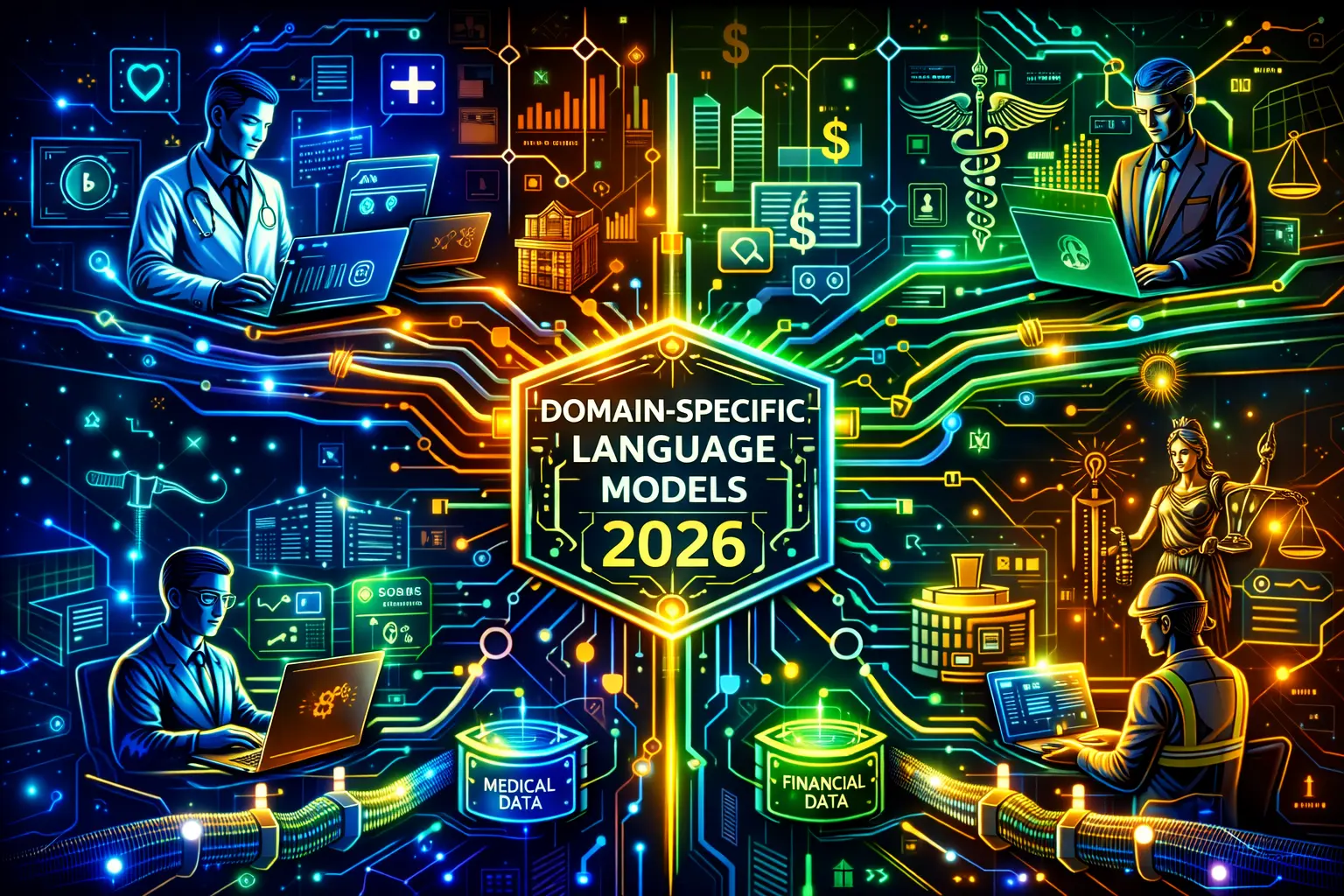
Domain-Specific Language Models are redefining AI in 2026 with higher accuracy, lower costs, and industry-focused intelligence for enterprise applications. Multiagent Systems: Powering Autonomous AI in 2026 🚀 The Rise of Domain-Specific Language Models In 2026, the AI landscape is undergoing a decisive shift—from massive general-purpose models to Domain-Specific Language Models (DSLMs). These specialized AI systems…