
Domain-Specific Language Models are redefining AI in 2026 with higher accuracy, lower costs, and industry-focused intelligence for enterprise applications.
Multiagent Systems: Powering Autonomous AI in 2026
The Rise of Domain-Specific Language Models
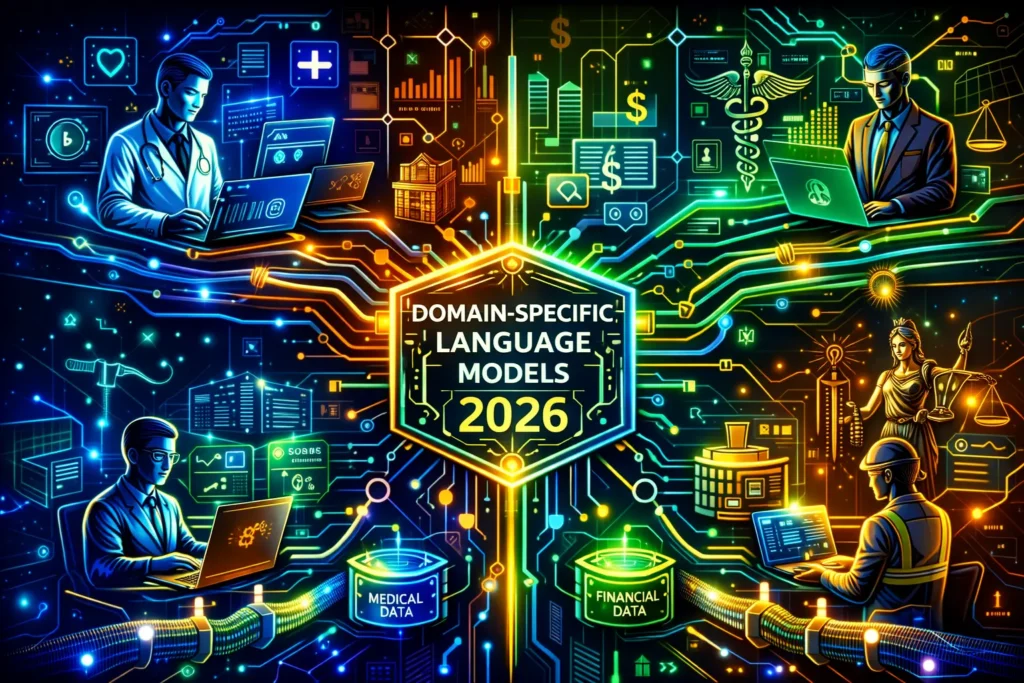
In 2026, the AI landscape is undergoing a decisive shift—from massive general-purpose models to Domain-Specific Language Models (DSLMs). These specialized AI systems are designed to excel in specific industries such as healthcare, finance, law, and engineering.
Recent developments indicate that enterprises are prioritizing precision over scale, adopting DSLMs to achieve measurable ROI and operational efficiency.
Latest News Shaping Domain-Specific Language Models (2026)
- Enterprises are increasingly replacing generic AI with specialized models trained on proprietary data, improving accuracy and business outcomes.
- Countries and organizations are building language- and domain-specific AI models, such as Arabic-focused AI systems, to address regional and industry needs.
- Smaller, task-focused models are gaining traction due to lower compute costs, faster performance, and privacy benefits.
- Breakthroughs in model compression are enabling efficient deployment of specialized AI models even in constrained environments.
From General AI to Specialized Intelligence
The early wave of AI was dominated by large, general-purpose models trained on vast internet data. However, these models often struggle with:
- Industry-specific terminology
- Regulatory compliance requirements
- High accuracy demands in critical domains
Domain-Specific Language Models address these gaps by being trained or fine-tuned on targeted datasets, enabling them to understand context, workflows, and domain nuances.
Analysts predict that by 2028, over half of enterprise AI interactions will rely on domain-specific models, signaling a major shift in AI architecture.
What Are Domain-Specific Language Models?
A Domain-Specific Language Model is an AI model designed to operate within a specific field or industry, delivering highly accurate and context-aware outputs.
Key characteristics:
- Specialized training data (e.g., medical records, legal documents)
- Higher accuracy and reliability for domain tasks
- Improved compliance and governance
- Lower computational cost compared to large general models
Unlike general LLMs, DSLMs are precision tools built for real-world applications, not broad conversational tasks.
Key Trends Driving DSLMs in 2026
Enterprise Demand for ROI-Focused AI
Businesses are moving toward DSLMs because they deliver tangible value, reducing hallucinations and improving decision-making accuracy.
Shift Toward Smaller, Efficient Models
Smaller, domain-focused models provide lower latency and faster deployment, especially in edge and real-time systems.
Integration with Proprietary Data
Organizations are training DSLMs on internal datasets, enabling AI to align with business processes and workflows.
Rise of Industry-Specific AI Applications
From healthcare diagnostics to financial forecasting, DSLMs are becoming the core engine of vertical AI solutions.
Hybrid AI Architectures
New approaches combine general LLMs with DSLMs, leveraging both broad reasoning and specialized expertise for optimal performance.
Enterprise Impact: Why DSLMs Matter
Organizations adopting Domain-Specific Language Models gain:
- Higher accuracy in mission-critical tasks
- Reduced operational costs and compute usage
- Improved compliance with regulations
- Faster deployment and customization
Industries leading adoption:
- Healthcare (diagnosis support, clinical documentation)
- Finance (risk analysis, fraud detection)
- Legal (contract analysis, compliance automation)
- Manufacturing (predictive maintenance, optimization)
These models are turning AI into a domain expert rather than a general assistant.
Challenges & Risks
Despite strong momentum, DSLMs face key challenges:
- Data availability and quality constraints
- High initial setup and training costs
- Model fragmentation across domains
- Need for continuous updates and validation
Additionally, maintaining domain-specific accuracy requires ongoing fine-tuning and governance frameworks.
Future Outlook: The Era of Specialized AI
The future of Domain-Specific Language Models will include:
- Industry-specific AI ecosystems
- Standardized domain evaluation benchmarks
- Integration with multi-agent systems
- Widespread use in edge and on-device AI
Experts suggest that the future of AI is not bigger models—but smarter, specialized ones tailored to real-world needs.
Disclaimer : The information presented in this article is for informational and educational purposes only. While efforts have been made to ensure accuracy, completeness, and relevance, the rapidly evolving nature of Domain-Specific Language Models and artificial intelligence technologies means that updates, innovations, and regulatory changes may occur without prior notice. This content does not constitute professional, technical, financial, or legal advice. Readers are encouraged to conduct independent research and consult qualified professionals before making decisions related to AI adoption, investments, or business strategies. The author and publisher disclaim any liability for any direct or indirect losses, damages, or consequences arising from the use of or reliance on the information provided. All trademarks, product names, and company names mentioned are the property of their respective owners.
One UI 9: Samsung’s Android 17 Update Rolls Out

One UI 9 is rolling out with Android 17, Galaxy AI upgrades, privacy tools and new features. Here’s the latest Samsung rollout news and device status. Canon EOS R8 Captures Global Attention in 2026 One UI 9: Samsung’s Android 17 Rollout Gathers Pace Samsung’s One UI 9 rollout is entering an important phase. After months…
Canon EOS R8 Captures Global Attention in 2026

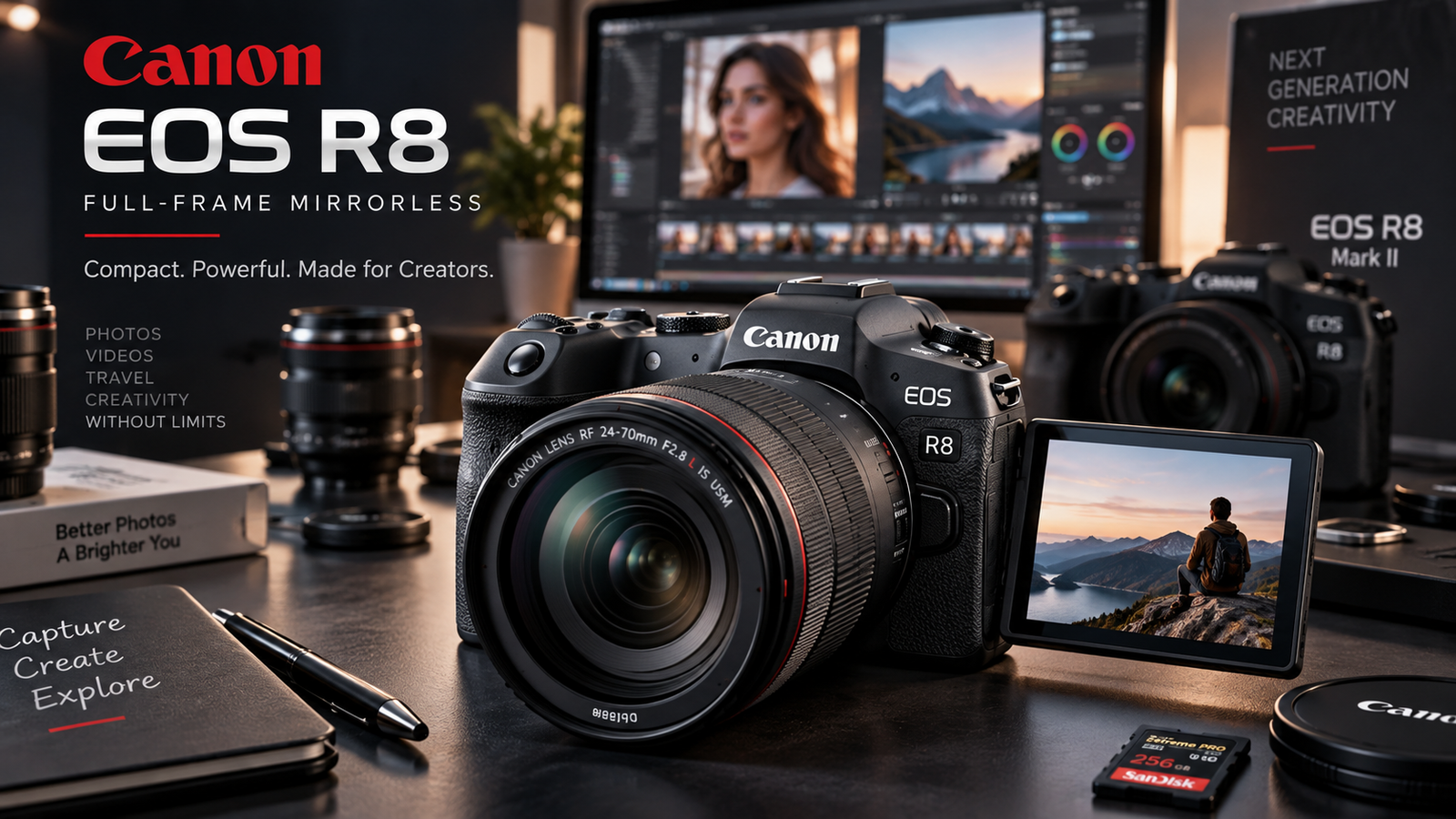
Canon EOS R8 gets a major 2026 buying boost as the R8 Mark II arrives. Check its price, specs, 4K video, 40fps shooting and latest firmware. Household Electric Fan: The Quiet Shift to BLDC Cooling The Canon EOS R8 has suddenly become a more interesting camera in 2026, not because Canon has quietly replaced it,…
Household Electric Fan: The Quiet Shift to BLDC Cooling
A household electric fan is getting smarter in 2026, with BLDC motors, battery backup and better efficiency reshaping how Indian homes stay cool. Redmi Note 17 Pro Max: 10,000mAh Battery Changes Game Household Electric Fan: The Quiet Shift to BLDC Cooling The humble household electric fan is going through a surprisingly important transformation. For decades,…



Pingback: Physical AI: The Next Frontier of Intelligent Machines