
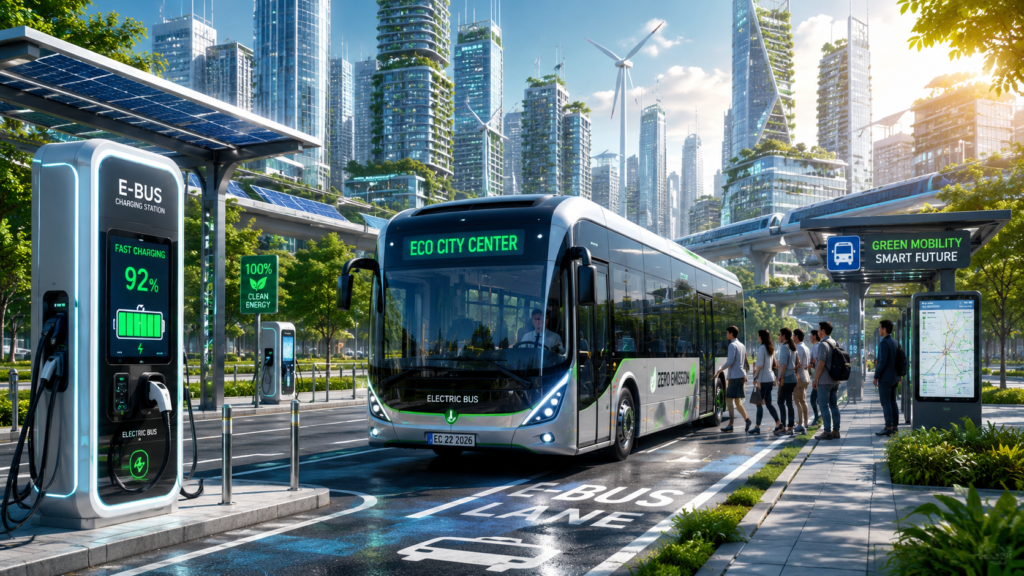
Electric buses are transforming public transportation as governments and operators invest heavily in cleaner, smarter, and more sustainable transit systems worldwide.
Monogram ZIF361NPRII : Luxury Freezing Redefined
Electric Buses Reshape Public Transportation Worldwide
The global transportation industry is entering a new phase as electric buses move from pilot projects to large-scale deployment. Recent announcements from India, Europe, Canada, and Australia indicate that governments and transit agencies are accelerating investments in cleaner public transportation, signaling a long-term shift away from diesel-powered fleets.
The latest developments suggest that electric buses are no longer viewed as experimental technology. Instead, they are becoming a central pillar of urban mobility strategies designed to reduce emissions, improve air quality, and modernize public transportation networks.
Across major cities, transportation authorities are increasingly focusing on fleet electrification while balancing concerns related to infrastructure, charging networks, operational reliability, and long-term costs.
Major Investments Signal Industry Momentum
One of the most significant recent developments comes from India, where JBM Auto secured a major investment aimed at deploying thousands of electric buses across the country. The funding reflects growing confidence in India’s public transportation electrification plans and highlights the increasing role of private capital in supporting sustainable mobility initiatives.
At the same time, several state governments are expanding electric bus programs. New projects involving hundreds of buses have been announced to strengthen urban transit systems while reducing dependence on fossil fuels.
Internationally, transit operators are also moving forward with large fleet transitions. Canadian cities have begun receiving next-generation electric buses, while transportation agencies across the United Kingdom and Ireland continue to secure financing for large-scale electric fleet expansion.
These investments demonstrate that electric buses are becoming a mainstream solution rather than a niche environmental initiative.
Why Cities Are Choosing Electric Buses
Urban transportation systems face growing pressure to reduce emissions while handling increasing passenger demand. Electric buses address several challenges simultaneously.
They produce zero tailpipe emissions, helping cities improve air quality and meet climate goals. Advances in battery technology have also increased vehicle range, making electric buses suitable for a broader range of routes.
Transit operators are finding that electric buses can lower long-term operating expenses through reduced fuel consumption and simplified maintenance requirements. Although upfront procurement costs remain higher than diesel alternatives, many governments are offering incentives and financial support to accelerate adoption.
For passengers, modern electric buses often provide quieter rides, improved comfort, better air conditioning systems, digital ticketing integration, and enhanced accessibility features.
Challenges Remain Despite Rapid Growth
While the momentum behind electric buses is strong, the transition is not without obstacles.
Charging infrastructure remains one of the industry’s biggest challenges. Transit agencies must invest in depots, charging stations, power upgrades, and operational planning before deploying large fleets.
Battery performance in extreme weather conditions continues to be monitored closely. Some transit operators have reported challenges related to charging times, vehicle availability, and route planning.
Financial considerations also play an important role. Although lifecycle costs are improving, agencies must secure substantial capital investments before realizing long-term savings.
Recent debates surrounding certain electric bus projects show that safety standards, charging technologies, and operational reliability remain key considerations for transportation planners.
India’s Growing Leadership in Bus Electrification
India is emerging as one of the most important markets for electric public transportation. Government initiatives promoting cleaner mobility have encouraged manufacturers, investors, and state transport agencies to accelerate adoption.
Programs supporting electric bus procurement are helping cities modernize aging fleets while addressing urban pollution concerns. Large-scale tenders and deployment plans indicate that electric buses will become increasingly common across metropolitan and regional transportation networks.
Industry experts believe India’s combination of policy support, manufacturing capabilities, and growing urbanization positions the country as a major driver of global electric bus growth over the next decade.
What Comes Next for Public Transportation?
The future of public transportation appears increasingly electric. Industry forecasts suggest strong growth in electric bus adoption through the next decade as battery technology improves and charging infrastructure expands.
Transit agencies are expected to adopt a mix of electrification strategies depending on route requirements, passenger demand, and local energy infrastructure. Hybrid solutions may continue to play a role during transition periods, but long-term investment trends clearly favor fully electric fleets.
As cities pursue sustainability targets and governments strengthen environmental regulations, electric buses are likely to become the standard for public transportation rather than an alternative option.
What is an electric bus?
An electric bus is a public transportation vehicle powered primarily by electricity stored in batteries instead of diesel or gasoline.
Why are cities adopting electric buses?
Cities are adopting electric buses to reduce emissions, improve air quality, lower operating costs, and support climate goals.
Are electric buses cheaper to operate?
While initial purchase costs are higher, electric buses generally have lower fuel and maintenance expenses over their operational lifetime.
Which countries are leading electric bus adoption?
China remains the global leader, while India, the United Kingdom, Canada, Australia, and several European nations are rapidly expanding electric bus fleets.
Will diesel buses disappear completely?
Most industry forecasts suggest diesel buses will gradually decline, although mixed fleets may remain common during the transition period.
BUS
Public transportation systems worldwide are undergoing a transformation driven by environmental regulations, urban population growth, and technological advances. Electric buses have emerged as one of the most effective solutions for reducing transportation-related emissions while maintaining reliable mass transit services. Governments are increasingly supporting electrification through subsidies, procurement programs, and sustainability policies, making electric buses a central component of future mobility strategies.
Disclaimer: The information presented in this article is for informational and educational purposes only. Transportation policies, electric bus deployment projects, government initiatives, investments, and industry developments are subject to change. While efforts have been made to ensure accuracy at the time of publication, readers should verify details through official transportation authorities, government agencies, manufacturers, and industry sources before making decisions based on this content. The views expressed are based on publicly available information and industry analysis and do not constitute financial, investment, legal, or professional advice. Eknumbertech is not responsible for any actions taken based on the information provided in this article.
One UI 9: Samsung’s Android 17 Update Rolls Out

One UI 9 is rolling out with Android 17, Galaxy AI upgrades, privacy tools and new features. Here’s the latest Samsung rollout news and device status. Canon EOS R8 Captures Global Attention in 2026 One UI 9: Samsung’s Android 17 Rollout Gathers Pace Samsung’s One UI 9 rollout is entering an important phase. After months…
Canon EOS R8 Captures Global Attention in 2026

Canon EOS R8 gets a major 2026 buying boost as the R8 Mark II arrives. Check its price, specs, 4K video, 40fps shooting and latest firmware. Household Electric Fan: The Quiet Shift to BLDC Cooling The Canon EOS R8 has suddenly become a more interesting camera in 2026, not because Canon has quietly replaced it,…
Household Electric Fan: The Quiet Shift to BLDC Cooling
A household electric fan is getting smarter in 2026, with BLDC motors, battery backup and better efficiency reshaping how Indian homes stay cool. Redmi Note 17 Pro Max: 10,000mAh Battery Changes Game Household Electric Fan: The Quiet Shift to BLDC Cooling The humble household electric fan is going through a surprisingly important transformation. For decades,…