
Microsoft Copilot in 2026 evolves with AI agents, enterprise tools, and adoption challenges. Explore trends, updates, and future of Copilot.
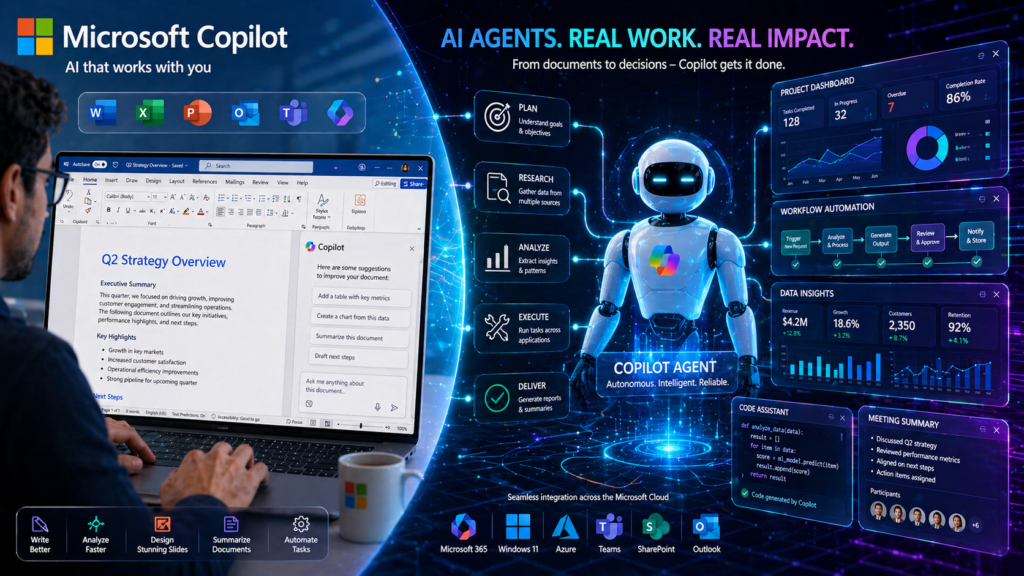
Gemini 2026: AI Power, Enterprise Shift & Agentic Future
Introduction: Microsoft Copilot’s Critical Turning Point
Microsoft Copilot in 2026 is no longer just an AI assistant layered on top of Office tools. It is rapidly transforming into an autonomous, agent-driven system designed to execute tasks, orchestrate workflows, and act as a digital collaborator. Yet, this transformation comes at a moment of tension: strong technological progress is colliding with slower-than-expected adoption and increasing competitive pressure.
The latest developments reveal a product at a strategic inflection point—expanding capabilities while simultaneously redefining its role in enterprise AI.
From Assistant to Agent: The “Execution Era”
One of the most significant shifts in Microsoft Copilot is the transition toward agentic AI. New features such as “Agent Mode” in Word, Excel, and PowerPoint allow Copilot to go beyond suggestions and actively perform tasks within documents and workflows.
This shift is reinforced by the introduction of systems like Copilot Cowork, which can plan, execute, and manage tasks autonomously across applications.
Microsoft is effectively repositioning Copilot from a reactive assistant into a proactive execution engine—capable of handling multi-step workflows with minimal human intervention.
Multi-Model Intelligence and Accuracy Push
Another defining development is Microsoft’s move toward multi-model AI systems. Instead of relying on a single model, Copilot now integrates multiple AI engines working together to improve output quality and reliability.
Features such as “Critique” and “Model Council” allow different AI systems to generate and validate responses collaboratively, reducing hallucinations and improving accuracy.
This architecture signals a broader industry shift: AI platforms are becoming orchestration layers that combine multiple models rather than relying on one dominant system.
Deep Integration Across Microsoft Ecosystem
Microsoft continues to embed Copilot deeply into its productivity stack. In 2026, Copilot is integrated across Outlook, Teams, Excel, PowerPoint, and SharePoint, enabling automation of tasks such as meeting summaries, report generation, and workflow optimization.
Recent updates include the ability to generate complete presentations, convert research into multiple formats, and analyze workplace data seamlessly across applications.
Additionally, Copilot is increasingly being made available to a broader user base, including those without premium licenses, significantly expanding its reach.
Enterprise Expansion and Real-World Impact
Copilot’s strongest traction is currently in enterprise environments. Organizations are using it to automate workflows, improve productivity, and reduce operational costs.
For example, reports indicate that AI tools like Copilot are helping institutions such as schools optimize budgets and streamline operations.
Microsoft is also investing heavily in AI infrastructure and global expansion, signaling long-term commitment to scaling Copilot as a foundational enterprise platform.
Adoption Challenges and Market Pressure
Despite its technological advancements, Copilot faces a significant adoption gap. Reports suggest that usage remains a small fraction of Microsoft’s overall customer base, raising concerns about monetization and real-world value capture.
User feedback has also highlighted issues such as complexity, branding confusion, and integration challenges.
In response, Microsoft has begun simplifying its approach, including scaling back aggressive integrations in some areas and refining the user experience.
Privacy, Governance, and Trust
As Copilot becomes more deeply embedded in workflows, governance and privacy are becoming critical priorities.
Microsoft is introducing stronger controls around data usage, content sourcing, and AI decision-making, particularly through tools like Microsoft Purview.
At the same time, the company is addressing concerns about transparency and trust, emphasizing that Copilot is designed for professional and enterprise use—not just casual interaction.
Microsoft Copilot
Microsoft Copilot is part of Microsoft’s broader AI strategy, built on its partnership with OpenAI and integrated into Microsoft 365, Windows, and Azure ecosystems.
Initially launched as an AI assistant for productivity tools, Copilot has evolved into a comprehensive platform that combines conversational AI, automation, and enterprise data integration.
By 2026, it represents Microsoft’s primary interface for delivering AI capabilities across its entire product ecosystem.
The Future of Microsoft Copilot
Looking ahead, Copilot is expected to evolve into a fully autonomous digital coworker. The focus will likely shift toward:
- Multi-agent systems handling complex workflows
- Deeper enterprise integration across cloud and data platforms
- Increased personalization and contextual intelligence
- Stronger governance frameworks for enterprise AI
If Microsoft can close the adoption gap and refine user experience, Copilot has the potential to become a dominant interface for workplace AI.
Disclaimer: This image is a conceptual and illustrative representation created for informational purposes only. It does not depict any official Microsoft Copilot interface, product design, or real-time functionality. Any resemblance to actual software, dashboards, or systems is purely coincidental. The visual is intended solely to represent the concept of AI-powered productivity and automated workflows within a modern digital workspace.
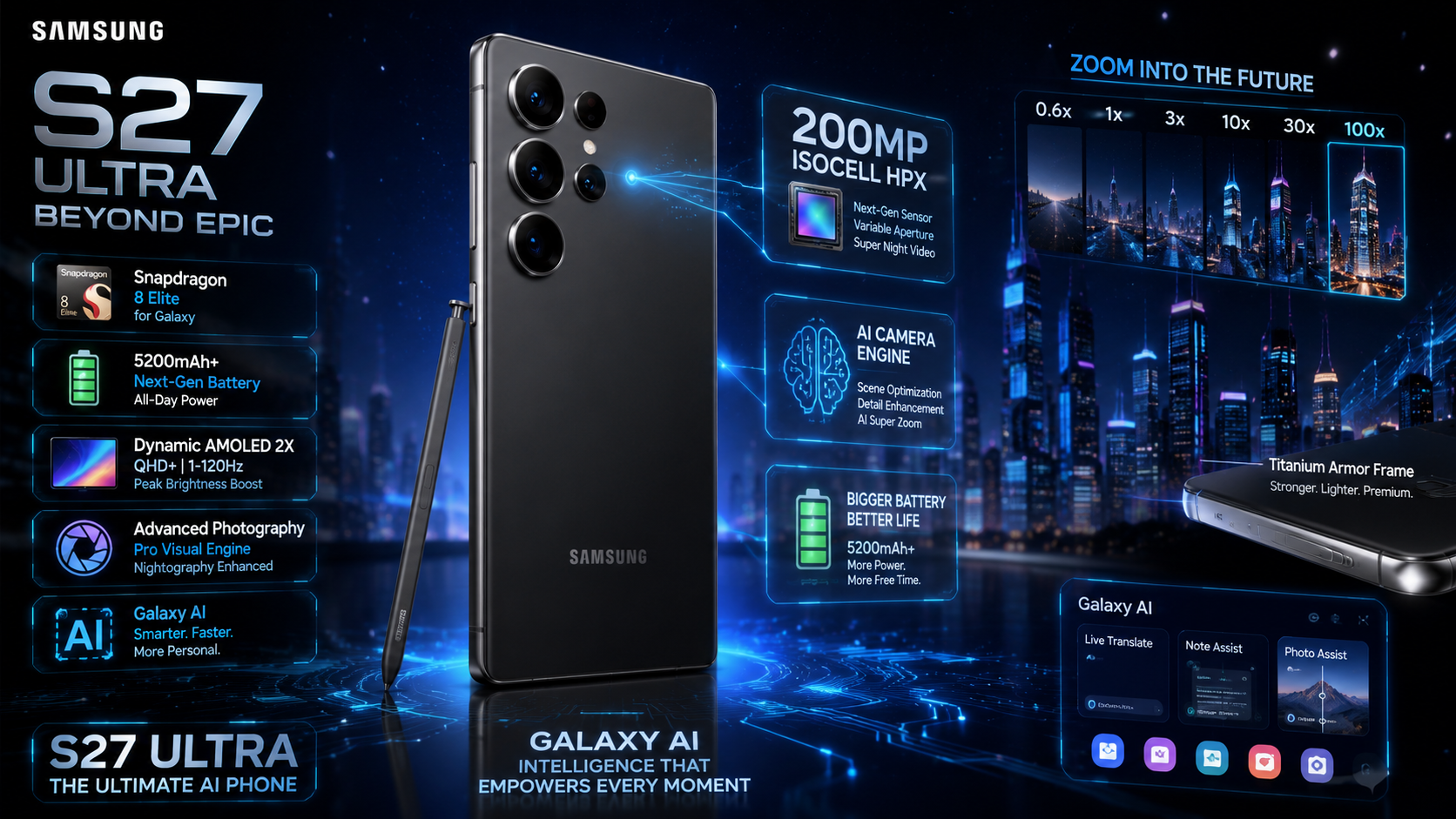
Samsung S27 Ultra Leaks Reveal Massive Camera Upgrades Ahead

Samsung S27 Ultra leaks hint at major camera upgrades, bigger battery, AI features, and a refreshed design. Here’s everything revealed so far. Galaxy Watch Ultra Gets Smarter With AI Health Upgrades Today Samsung S27 Ultra Leaks Reveal Massive Camera Upgrades Ahead The S27 Ultra has already become one of the most discussed smartphones in the…
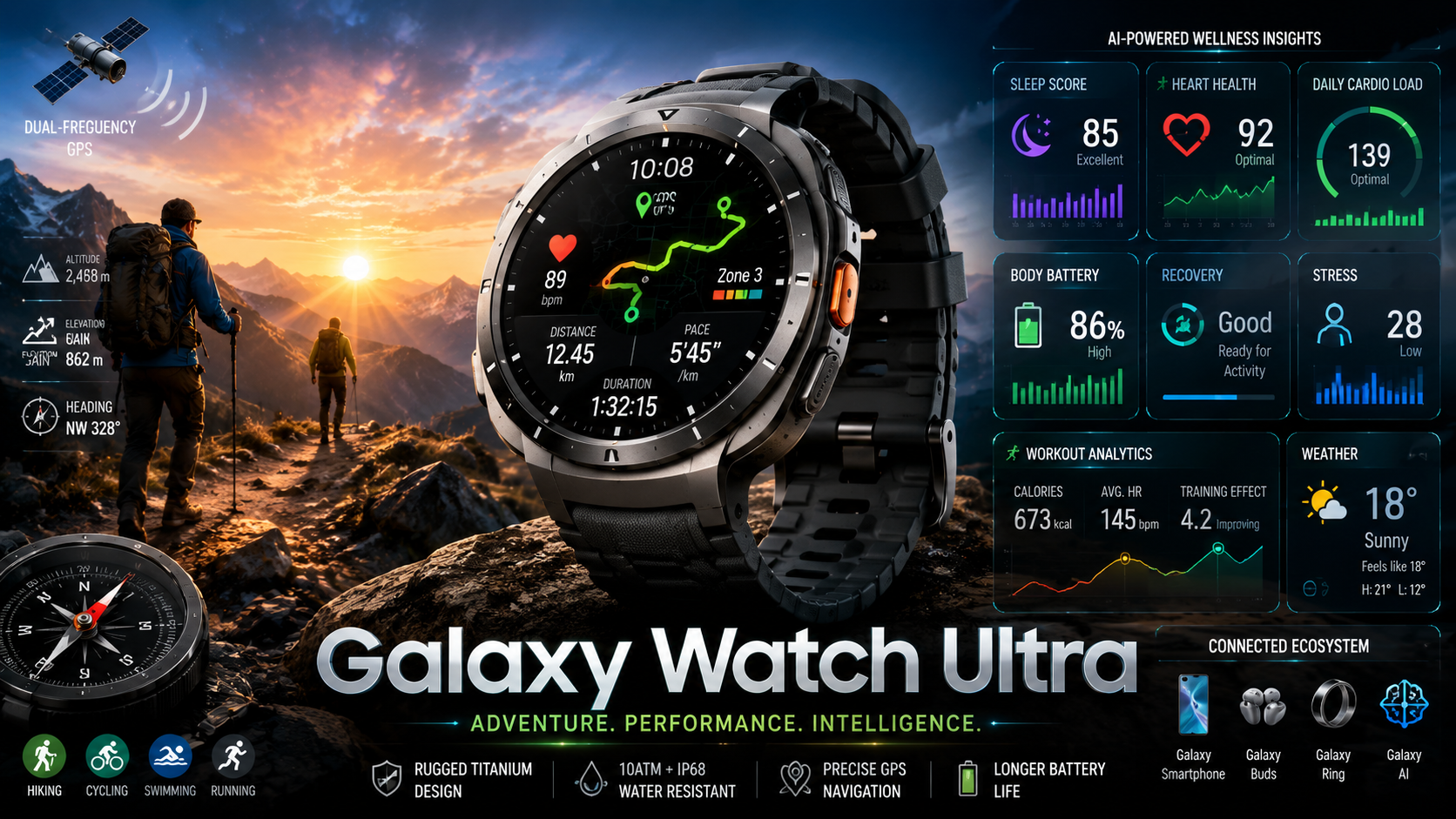
Galaxy Watch Ultra Gets Smarter With AI Health Upgrades Today
Discover the latest Galaxy Watch Ultra news, AI health features, battery improvements, rugged design, pricing, and everything announced by Samsung. Honda ADV 160 India Launch: Latest Updates & Expectations Galaxy Watch Ultra: Samsung Pushes Smartwatches Into a New AI Era Samsung has once again raised the bar in the premium smartwatch segment with its latest…
Honda ADV 160 India Launch: Latest Updates & Expectations
Honda ADV 160 India launch news, expected price, features, engine, rivals, launch timeline, and everything riders should know in 2026. Motorcycle Industry Shifts as EV Innovation Accelerates Honda ADV 160 India Launch: Everything We Know So Far Honda appears to be preparing one of its most anticipated premium scooter launches for the Indian market. The…



Pingback: Top 5 AI Prompts That Get You Hired in 2026