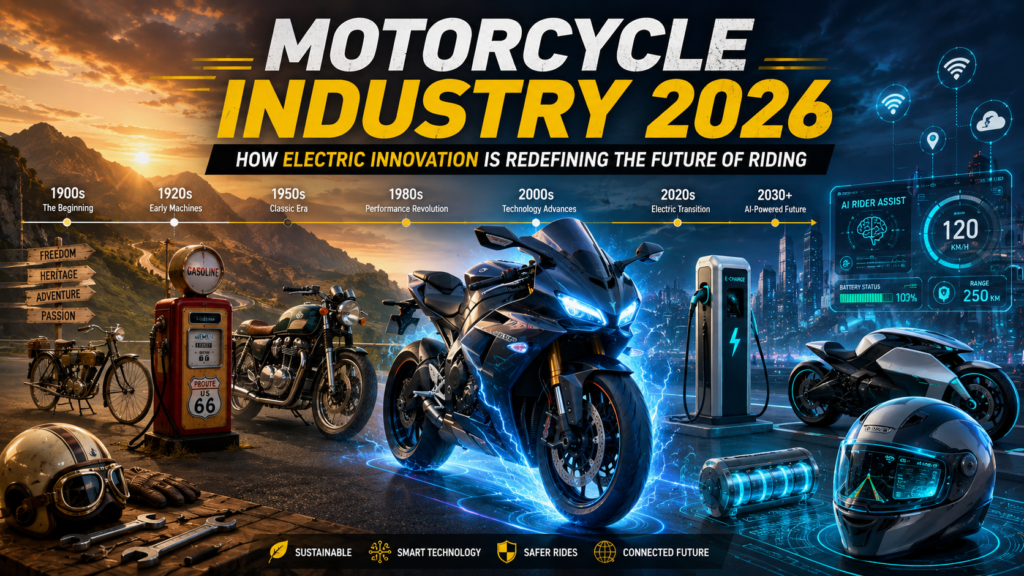
Discover the latest motorcycle news, EV trends, new launches, global expansion, safety innovations, and what the future holds for riders in 2026.
History of Trains: From Steam Engines to Smart Rail Future
Motorcycle Industry Shifts as EV Innovation Accelerates Worldwide
The global motorcycle industry is entering one of its most transformative periods in decades. While motorcycles have long been associated with performance, freedom, and affordability, the market is now being reshaped by electric mobility, sustainable fuels, advanced rider-assistance technology, and growing international expansion.
Manufacturers are no longer competing solely on engine performance. Instead, innovation in connectivity, safety, battery technology, and environmental compliance has become the defining factor for the next generation of motorcycles.
Recent developments from leading manufacturers suggest that the future of motorcycling will be cleaner, smarter, and increasingly global.
A New Era for the Motorcycle Industry
Over the past few years, motorcycle manufacturers have faced changing customer expectations alongside stricter emission regulations.
Consumers today want motorcycles that deliver exciting performance while also offering better fuel efficiency, lower emissions, intelligent electronics, and connected riding experiences. This shift has encouraged manufacturers to accelerate investments in electric motorcycles, flex-fuel technology, and advanced rider safety systems.
The result is an industry evolving faster than ever before.
Electric Motorcycles Are Moving Into the Mainstream
Electric motorcycles are no longer experimental products reserved for niche buyers.
Several manufacturers have announced ambitious electrification plans aimed at expanding their product portfolios over the coming years.
Bajaj Auto recently confirmed its long-term strategy to introduce electric motorcycles while simultaneously expanding production capacity for its successful electric vehicle lineup. The company expects demand for electric two-wheelers to continue rising both domestically and internationally.
Industry analysts believe that battery improvements, faster charging, and expanding charging infrastructure will accelerate electric motorcycle adoption during the second half of the decade.
Flex-Fuel Technology Adds Another Dimension
While battery-powered motorcycles dominate headlines, internal combustion engines are also becoming cleaner.
Yamaha recently strengthened its sustainable mobility strategy by introducing a flex-fuel motorcycle capable of operating on higher ethanol blends. This approach supports government initiatives promoting renewable fuels while allowing riders to continue using familiar engine technology.
Flex-fuel motorcycles may become an important transitional technology in markets where charging infrastructure is still developing.
Indian Motorcycle Manufacturers Expand Globally
India continues strengthening its position as one of the world’s largest motorcycle manufacturing hubs.
Hero MotoCorp has expanded into Germany through a strategic distribution partnership, marking another milestone in its European growth strategy. The move demonstrates increasing international confidence in Indian motorcycle engineering and manufacturing quality.
At the same time, Yamaha is transforming its Chennai manufacturing facility into a major export hub serving international markets. The facility will manufacture both conventional and electric two-wheelers, reinforcing India’s growing importance in global motorcycle production.
These developments indicate that India’s motorcycle industry is no longer focused solely on domestic demand but is becoming a significant global supplier.
Adventure Motorcycles Continue Their Rise
Adventure motorcycles remain one of the fastest-growing segments worldwide.
Manufacturers are investing heavily in mid-capacity adventure bikes designed for both city commuting and long-distance touring. Several upcoming models are expected to intensify competition in this category, giving riders more choices across different price segments.
Consumers increasingly value versatility, comfort, and off-road capability, making adventure motorcycles one of the industry’s strongest growth areas.
Technology Is Becoming a Major Selling Point
Modern motorcycles are rapidly evolving into intelligent machines.
Features that were once reserved for premium touring motorcycles are becoming increasingly common across multiple segments, including:
- Traction control
- Cornering ABS
- Ride-by-wire throttle systems
- Multiple riding modes
- Smartphone connectivity
- TFT instrument clusters
- Navigation integration
- Cruise control
Research institutions are also developing advanced rider-assistance systems that use artificial intelligence and vision-based hazard detection to improve rider safety. These technologies could significantly reduce accident risks in future motorcycles.
Motorcycle Tourism Continues to Grow
Motorcycling is increasingly becoming an experience rather than simply a mode of transport.
Companies specializing in guided motorcycle expeditions are witnessing strong demand from riders seeking adventure travel across multiple continents.
This trend reflects changing consumer preferences, with enthusiasts prioritizing memorable riding experiences alongside motorcycle ownership.
Challenges Facing the Industry
Despite strong momentum, manufacturers continue facing several challenges.
Supply chain disruptions, rising raw material costs, battery production expenses, stricter environmental regulations, and increasing global competition remain significant concerns.
Companies must balance innovation with affordability while continuing to meet evolving regulatory standards across different countries.
What Riders Can Expect Next
The coming years are expected to introduce several important developments across the motorcycle industry.
Electric motorcycles will become more practical thanks to improved battery technology and faster charging capabilities. Artificial intelligence will play a greater role in rider safety, predictive maintenance, and connected services.
Manufacturers are also expected to introduce more lightweight adventure motorcycles, hybrid technologies, flex-fuel models, and premium touring machines equipped with sophisticated electronics.
Rather than replacing traditional motorcycles overnight, these innovations are likely to broaden consumer choice while supporting a gradual transition toward sustainable mobility.
The motorcycle industry is entering a defining period of technological transformation.
The motorcycle industry is entering a defining period of technological transformation.
Electric mobility, sustainable fuels, global manufacturing expansion, intelligent safety systems, and digital connectivity are reshaping how motorcycles are designed, manufactured, and experienced.
For riders, this evolution promises safer journeys, greater efficiency, improved performance, and more choices than ever before. Whether powered by electricity, flex-fuel, or conventional engines, the next generation of motorcycles will be smarter, cleaner, and increasingly connected to the future of transportation.
Motorcycle
Motorcycles remain one of the world’s most widely used forms of personal transportation, particularly across Asia, Europe, and Latin America. Growing environmental awareness, stricter emission standards, and rapid advances in battery technology have accelerated innovation throughout the industry. Today’s motorcycle market is expanding beyond traditional petrol-powered machines into electric, hybrid, and sustainable mobility solutions while maintaining strong demand for touring, adventure, and performance motorcycles.
Disclaimer : This article is intended for informational and editorial purposes only. The information presented is based on publicly available reports, official announcements, industry publications, and credible news sources available at the time of publication. While every effort has been made to ensure accuracy, specifications, pricing, launch schedules, availability, and other details related to motorcycles may change without prior notice. The motorcycles, brand names, logos, trademarks, product images, and related intellectual property mentioned in this article are the property of their respective manufacturers and owners. Their use is solely for news reporting, commentary, review, and educational purposes and does not imply any affiliation, endorsement, or sponsorship. Any concept images or feature illustrations accompanying this article are created for editorial and illustrative purposes only and may not represent actual products, production models, or official manufacturer designs. Readers are encouraged to verify technical specifications, pricing, availability, and safety information through the official websites of the respective motorcycle manufacturers or authorized dealerships before making any purchasing decisions.
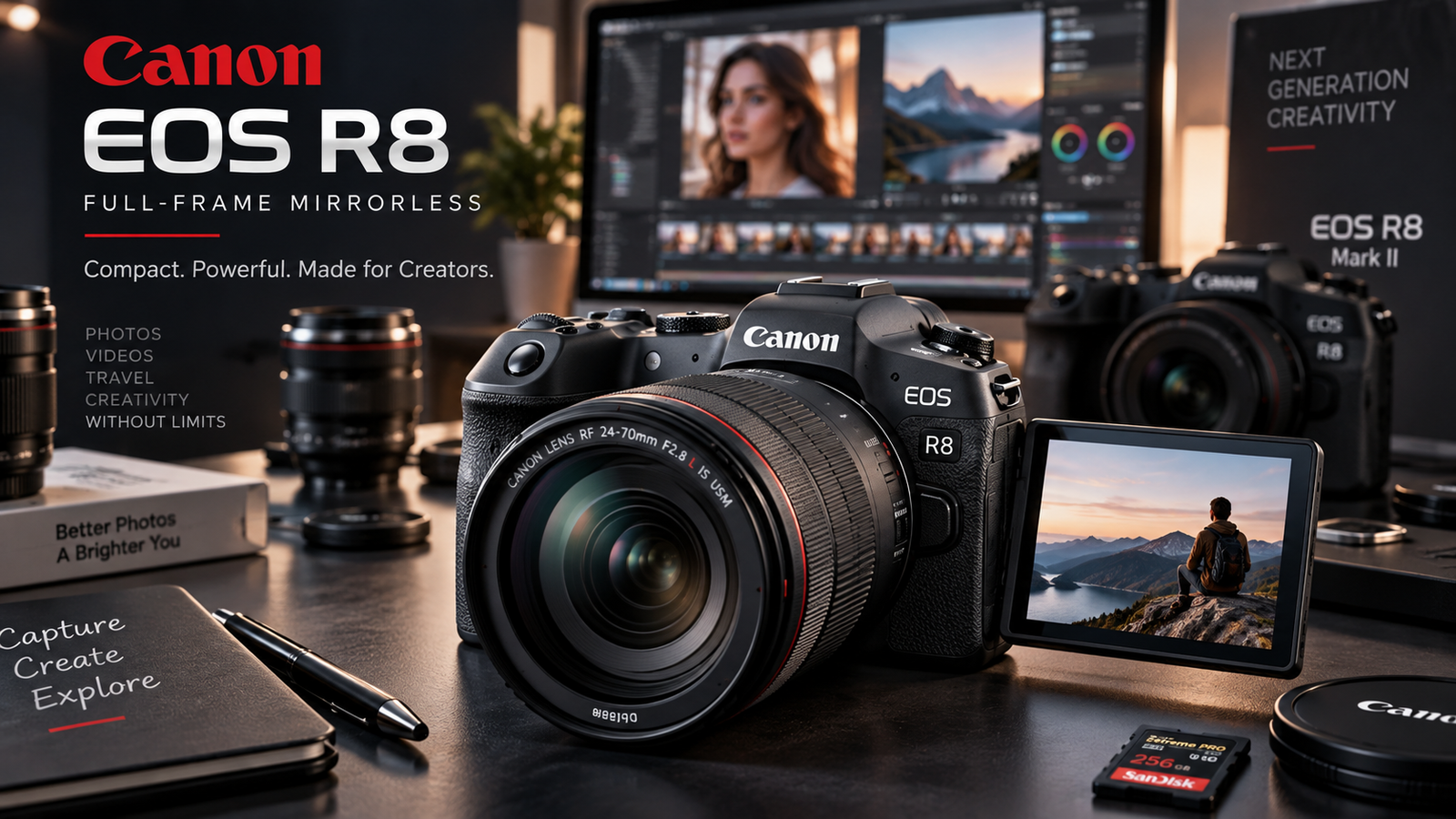
Canon EOS R8 Captures Global Attention in 2026

Canon EOS R8 gets a major 2026 buying boost as the R8 Mark II arrives. Check its price, specs, 4K video, 40fps shooting and latest firmware. Household Electric Fan: The Quiet Shift to BLDC Cooling The Canon EOS R8 has suddenly become a more interesting camera in 2026, not because Canon has quietly replaced it,…
Household Electric Fan: The Quiet Shift to BLDC Cooling

A household electric fan is getting smarter in 2026, with BLDC motors, battery backup and better efficiency reshaping how Indian homes stay cool. Redmi Note 17 Pro Max: 10,000mAh Battery Changes Game Household Electric Fan: The Quiet Shift to BLDC Cooling The humble household electric fan is going through a surprisingly important transformation. For decades,…
Redmi Note 17 Pro Max: 10,000mAh Battery Changes Game
Redmi Note 17 Pro Max brings a 10,000mAh battery, 100W charging, 120Hz AMOLED and Snapdragon 6 Gen 5. India launch is tipped for September 15, 2026 Price is key Lattice-Based Cryptography: The Quantum-Safe Race Xiaomi Redmi Note 17 Pro Max is now official, but India is the real test The xiaomi redmi note 17 pro…