
Rytr AI in 2026 remains a leading budget AI writer, balancing affordability and speed while facing limits in long-form, SEO, and enterprise workflows.
Jasper AI in 2026: From Content Tool to Marketing OS
Introduction: Where Rytr Stands in 2026
In a market now dominated by sophisticated AI platforms, Rytr continues to hold a distinctive position. While competitors race toward enterprise-grade automation and agentic systems, Rytr is quietly doubling down on simplicity, affordability, and speed.
The latest developments and industry signals show that Rytr is not trying to become the most advanced AI tool—it is trying to remain the most accessible one. That strategic choice is shaping its trajectory in 2026.
The “Everyday AI Writer” Strategy
Rytr emerged as one of the earliest widely adopted AI writing assistants, focusing on fast content generation across templates like emails, ads, and blog snippets. It supports dozens of use cases, tones, and languages, making it versatile for everyday writing tasks.
Unlike enterprise tools, Rytr’s model is intentionally lightweight:
- Minimal learning curve
- Template-driven workflows
- Strong emphasis on short-form content
By 2026, this positioning has evolved into a clear identity:
Rytr is the “entry layer” of AI content creation.
Latest News: Key Rytr AI Developments in 2026
Regulatory Reset Shapes Rytr’s Narrative
One of the most significant developments impacting Rytr comes from regulation rather than product updates. In late 2025, the U.S. Federal Trade Commission revisited earlier enforcement actions related to Rytr’s ability to generate reviews.
The regulator ultimately set aside a prior order, signaling a shift toward supporting AI innovation while still policing deceptive use cases.
This regulatory reset reflects a broader industry trend:
- Less restriction on AI capabilities
- Stronger focus on misuse and misleading claims
For Rytr, it removes a major compliance overhang while reinforcing the importance of ethical AI usage.
Product Direction: Stability Over Reinvention
Unlike competitors transforming into full-stack marketing platforms, Rytr’s 2026 updates remain incremental:
- Regular feature updates and bug fixes
- Improvements to usability and templates
- Continued expansion of language and tone options
This signals a deliberate product philosophy:
Refinement over disruption
Affordability as a Competitive Weapon
Rytr’s biggest differentiator remains pricing. In 2026, it is still considered one of the most affordable AI writing tools available, with generous free-tier access and low-cost plans.
This has made it especially popular among:
- Freelancers
- Solo creators
- Small businesses
In a market where AI costs are rising, Rytr is positioning itself as the cost-efficient alternative.
Strength in Short-Form Content, Weakness in Scale
Real-world usage trends highlight a clear pattern:
- Strong performance in short-form outputs like ads, captions, and emails
- Faster content generation compared to heavier platforms
- Limitations in long-form, where content may become repetitive or generic
This reinforces Rytr’s niche:
Speed-first content generation, not depth-first content strategy
Feature Expansion: Quiet Addition of AI Capabilities
Recent testing and user feedback indicate that Rytr has begun expanding capabilities subtly, including:
- AI-assisted image generation
- Improved content structuring
- Enhanced rewriting tools
However, these features are still lightweight compared to competitors offering integrated SEO, research, and automation systems.
Why Rytr Still Matters
At first glance, Rytr may appear outpaced by more advanced AI platforms. But that interpretation misses a key market dynamic.
The AI ecosystem is splitting into two layers:
- Enterprise AI platforms (complex, expensive, integrated)
- Accessible AI tools (simple, fast, affordable)
Rytr dominates the second category.
Its value proposition is clear:
- Low barrier to entry
- Immediate productivity gains
- Minimal technical overhead
In many cases, Rytr is not replaced—it is supplemented by more advanced tools as user needs grow.
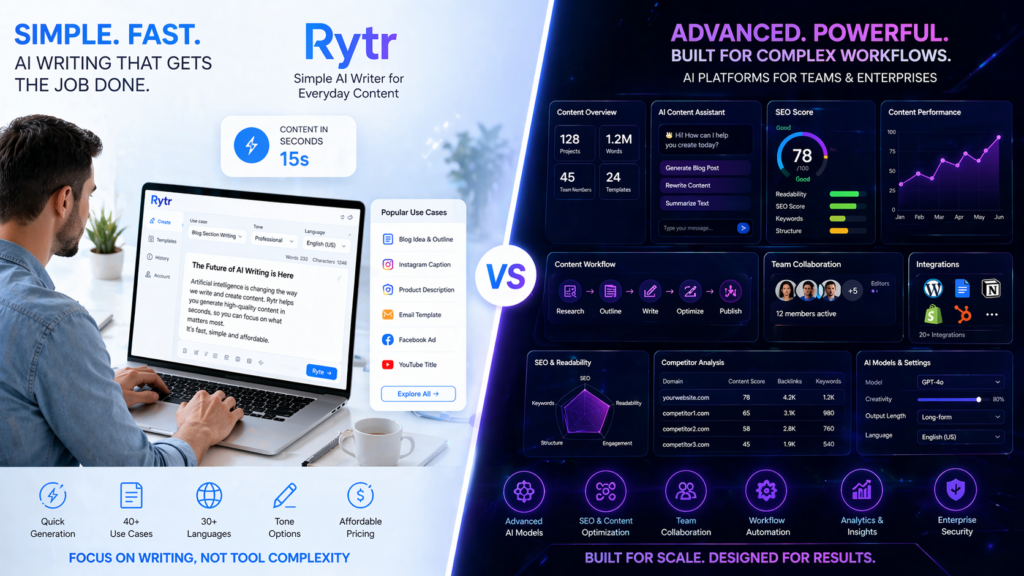
Rytr vs the New AI Content Stack
In 2026, Rytr often plays a specific role in a broader workflow:
- Idea generation
- Quick drafts
- Social media content
More advanced tools are then used for:
- SEO optimization
- Long-form structuring
- Data-backed content strategies
This layered usage model reflects how AI adoption is maturing across industries.
Disclaimer: This image is created for illustrative and informational purposes only. It represents a conceptual comparison of simple and advanced AI writing workflows and does not reflect the exact interface, features, or design of any specific platform, including Rytr. Any resemblance to real tools or dashboards is purely coincidental.
Samsung S27 Ultra Leaks Reveal Massive Camera Upgrades Ahead

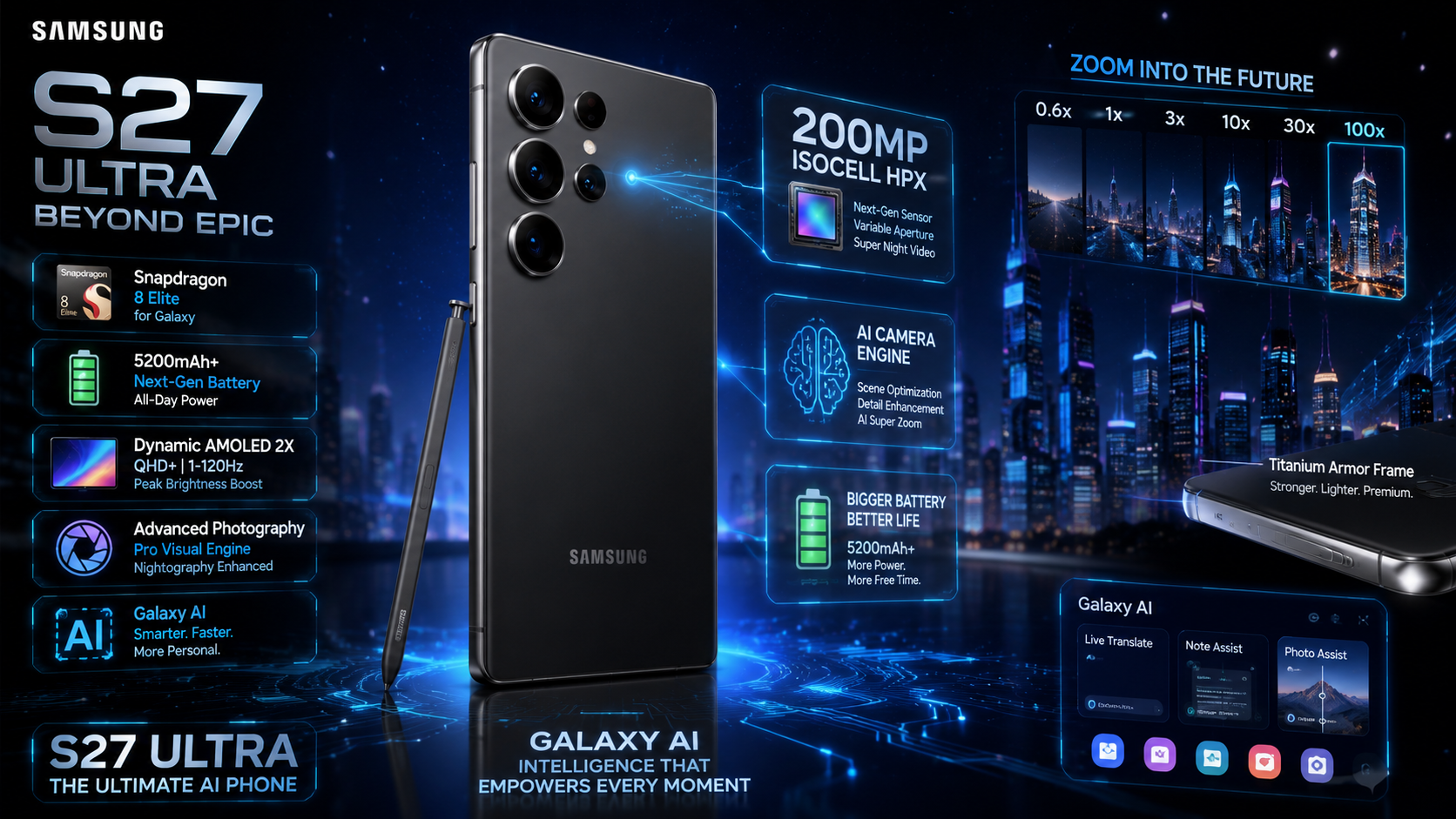
Samsung S27 Ultra leaks hint at major camera upgrades, bigger battery, AI features, and a refreshed design. Here’s everything revealed so far. Galaxy Watch Ultra Gets Smarter With AI Health Upgrades Today Samsung S27 Ultra Leaks Reveal Massive Camera Upgrades Ahead The S27 Ultra has already become one of the most discussed smartphones in the…
Galaxy Watch Ultra Gets Smarter With AI Health Upgrades Today
Discover the latest Galaxy Watch Ultra news, AI health features, battery improvements, rugged design, pricing, and everything announced by Samsung. Honda ADV 160 India Launch: Latest Updates & Expectations Galaxy Watch Ultra: Samsung Pushes Smartwatches Into a New AI Era Samsung has once again raised the bar in the premium smartwatch segment with its latest…
Honda ADV 160 India Launch: Latest Updates & Expectations
Honda ADV 160 India launch news, expected price, features, engine, rivals, launch timeline, and everything riders should know in 2026. Motorcycle Industry Shifts as EV Innovation Accelerates Honda ADV 160 India Launch: Everything We Know So Far Honda appears to be preparing one of its most anticipated premium scooter launches for the Indian market. The…




Pingback: Gemini 2026: AI Power, Enterprise Shift & Agentic Future