
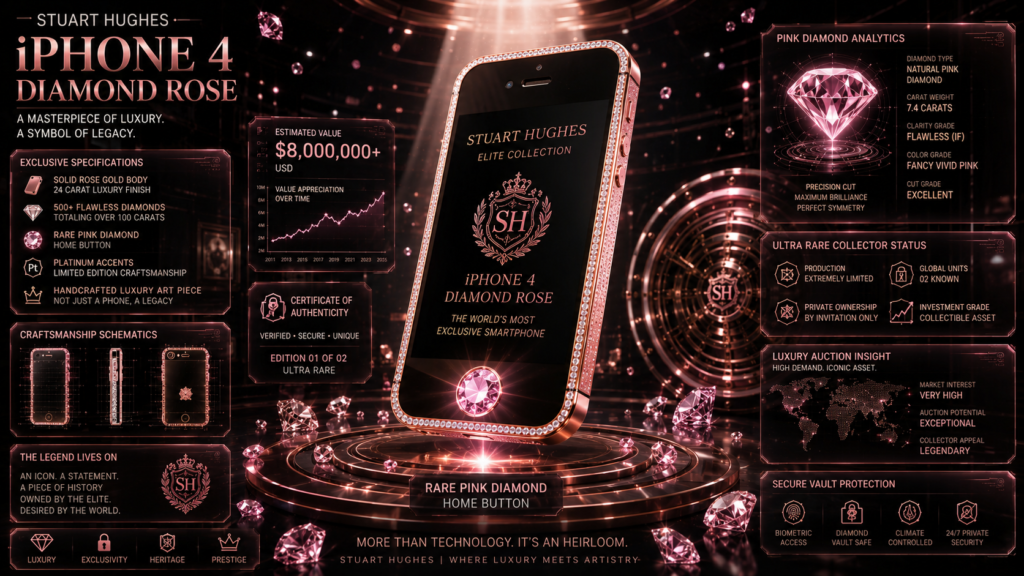
Stuart Hughes iPhone 4 Diamond Rose remains a symbol of ultra-luxury tech with pink diamonds, rose gold craftsmanship, and collector prestige.
Stuart Hughes iPhone 4S Elite Gold Still Defines Luxury
The Stuart Hughes iPhone 4 Diamond Rose continues to occupy a strange and fascinating position in luxury technology culture. More than a decade after it first shocked the world with its extraordinary valuation and diamond-covered craftsmanship, the device has once again returned to public conversation as collectors revisit the most extravagant era in smartphone history.
In 2026, luxury technology is dominated by artificial intelligence, titanium construction, foldable displays, and ecosystem-driven innovation. Yet the Stuart Hughes iPhone 4 Diamond Rose represents a completely different philosophy — one where rarity, spectacle, and handcrafted excess mattered more than technological evolution itself.
That contrast is precisely why the device has regained relevance among collectors, luxury analysts, and digital culture historians.
Originally designed by luxury craftsman Stuart Hughes, the iPhone 4 Diamond Rose became internationally famous for its extreme materials and almost unbelievable level of exclusivity. The device reportedly featured a rose gold exterior, hundreds of flawless diamonds, platinum detailing, and an extraordinary pink diamond home button. Even its presentation case reflected excessive luxury, incorporating rare stones and precious materials designed to elevate the phone into the realm of collectible art.
At the time of release, the device was widely described as one of the most expensive smartphones ever produced. The price alone transformed the iPhone 4 Diamond Rose into a global media phenomenon.
Today, however, the conversation surrounding the device has evolved.
Rather than being viewed simply as an outrageous luxury purchase, the Stuart Hughes iPhone 4 Diamond Rose is increasingly discussed as a cultural artifact from the peak age of hyper-visible luxury branding. During the early 2010s, gold-plated gadgets, diamond-covered electronics, and ultra-limited customization became powerful symbols of celebrity wealth and elite consumer culture.
The Diamond Rose edition embodied that trend more aggressively than almost any other smartphone ever created.
Luxury researchers now point to the device as an example of how consumer technology briefly entered the same psychological territory traditionally occupied by rare watches, jewelry, and supercars. Ownership was never about utility. It was about narrative, exclusivity, and social symbolism.
That distinction matters even more in today’s luxury market.
Modern wealth culture has shifted toward discretion, private experiences, sustainability narratives, and understated prestige. Quiet luxury dominates fashion and design trends across global elite markets. Against that backdrop, the Stuart Hughes iPhone 4 Diamond Rose feels almost surreal — a relic from a period when luxury branding relied heavily on visual excess and public spectacle.
Ironically, that older style of extravagance may now be increasing the phone’s collector appeal.
Rare-tech communities and luxury collectors have shown growing interest in historically significant technology objects, especially those associated with iconic cultural moments. Vintage Apple products, limited-edition electronics, and experimental luxury collaborations are increasingly treated as museum-grade collectibles rather than obsolete gadgets.
The Stuart Hughes iPhone 4 Diamond Rose sits at the center of that conversation because it represents an extreme intersection between technology and luxury art.
Part of the fascination comes from how detached the device has become from practical functionality.
Compared to modern flagship smartphones, the original iPhone 4 hardware is technologically outdated. But that no longer matters. Much like mechanical watches surviving in the smartwatch era, the Diamond Rose edition has transcended its original purpose. It exists primarily as an object of craftsmanship, rarity, and mythology.
Luxury analysts argue that products like the Diamond Rose help explain how emotional storytelling often outweighs technical relevance in premium markets.
The phone also continues to fuel debate about the boundaries between luxury design and publicity-driven excess.
Critics have long argued that Stuart Hughes creations were designed mainly for headline generation rather than functional innovation. Supporters counter that the products were never intended to compete with mainstream electronics. Instead, they were commissioned as collectible art pieces for a microscopic audience of ultra-high-net-worth buyers seeking singular ownership experiences.
Regardless of opinion, the Stuart Hughes iPhone 4 Diamond Rose achieved something exceptionally rare in consumer technology: permanence.
Most smartphones disappear from public memory within a few years. The Diamond Rose, however, remains one of the most recognizable ultra-luxury gadgets ever created. It still appears in discussions surrounding the world’s most expensive phones, elite collectibles, and the evolution of wealth symbolism in the digital era.
That staying power reflects more than simple curiosity.
The device captures a specific cultural moment when smartphones stopped being purely technological tools and became extensions of personal identity, celebrity culture, and status projection. The iPhone 4 Diamond Rose amplified that transformation to an almost theatrical level.
Now, years later, collectors are revisiting the phone not for its software or performance — but because it represents a fascinating chapter in the relationship between luxury, technology, and spectacle.
The Stuart Hughes iPhone 4 Diamond Rose may no longer define the future of smartphones.
But it still defines one of the most extravagant moments in luxury-tech history.
Stuart Hughes iPhone 4 Diamond Rose
The Stuart Hughes iPhone 4 Diamond Rose was created during the early wave of ultra-luxury smartphone customization that emerged in the late 2000s and early 2010s. British designer Stuart Hughes became internationally known for producing heavily customized luxury electronics using diamonds, gold, platinum, and rare materials.
The Diamond Rose edition of the iPhone 4 reportedly featured over 500 flawless diamonds, rose gold construction, platinum detailing, and a rare pink diamond integrated into the home button. Only an extremely limited number of units were believed to exist, helping establish the device as one of the most recognizable luxury smartphones ever created.
Over time, the phone transitioned from being viewed as a premium gadget to becoming a collector-oriented symbol of luxury culture and extreme wealth branding.
Disclaimer: The information, pricing references, luxury valuations, rarity claims, and collectible estimates presented in this article are intended solely for editorial, educational, and informational purposes. The Stuart Hughes iPhone 4 Diamond Rose is a luxury-customized device associated with publicly reported specifications, historical media coverage, collector discussions, and luxury technology commentary available at the time of publication. Product details, ownership history, market value, rarity statistics, and availability may vary depending on private transactions, independent verification, and evolving collector-market conditions. This article is not affiliated with, endorsed by, or sponsored by Apple Inc., Stuart Hughes, luxury auction houses, private collectors, or any associated organization. All trademarks, logos, product names, and intellectual property referenced remain the property of their respective owners and are used strictly for commentary, journalism, and informational reporting purposes. Certain visual elements featured in the accompanying artwork — including holographic valuation systems, gemstone analytics, futuristic vault environments, security overlays, and luxury-tech interface concepts — are artistic visualizations created to represent themes of exclusivity, craftsmanship, rarity, and collectible luxury culture. They should not be interpreted as official specifications, live auction data, financial guidance, or authenticated ownership documentation. Luxury collectible markets are inherently speculative and influenced by factors including provenance verification, historical significance, media exposure, private ownership, rarity perception, and global luxury demand. Readers and collectors are encouraged to independently verify authenticity, valuation, and ownership claims through reputable dealers, certified appraisers, auction platforms, and recognized luxury experts before making any purchasing or investment decisions. Any opinions, analysis, or interpretations expressed in this article reflect journalistic commentary surrounding luxury technology, collectible electronics, and ultra-premium consumer branding.
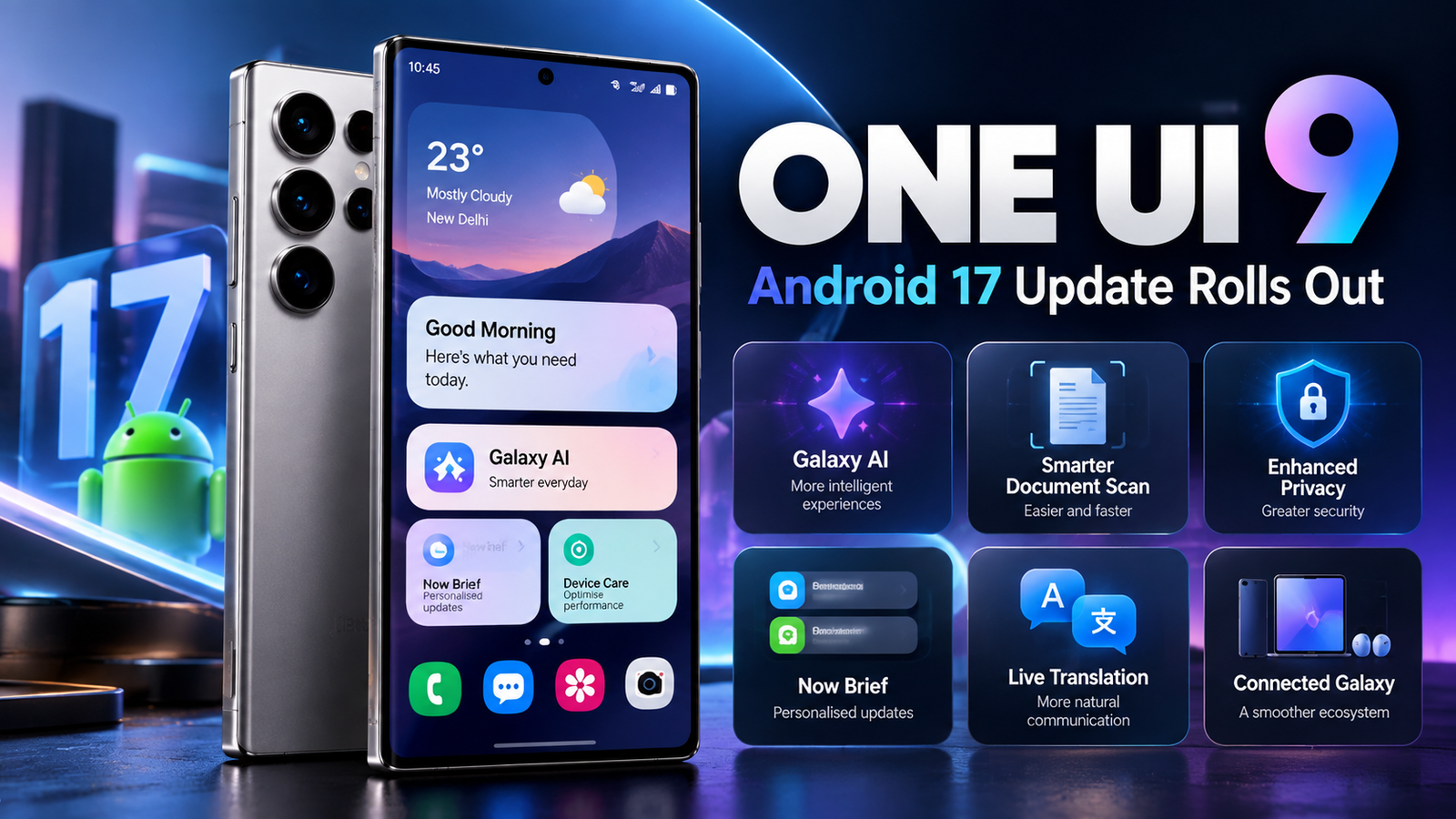
One UI 9: Samsung’s Android 17 Update Rolls Out

One UI 9 is rolling out with Android 17, Galaxy AI upgrades, privacy tools and new features. Here’s the latest Samsung rollout news and device status. Canon EOS R8 Captures Global Attention in 2026 One UI 9: Samsung’s Android 17 Rollout Gathers Pace Samsung’s One UI 9 rollout is entering an important phase. After months…
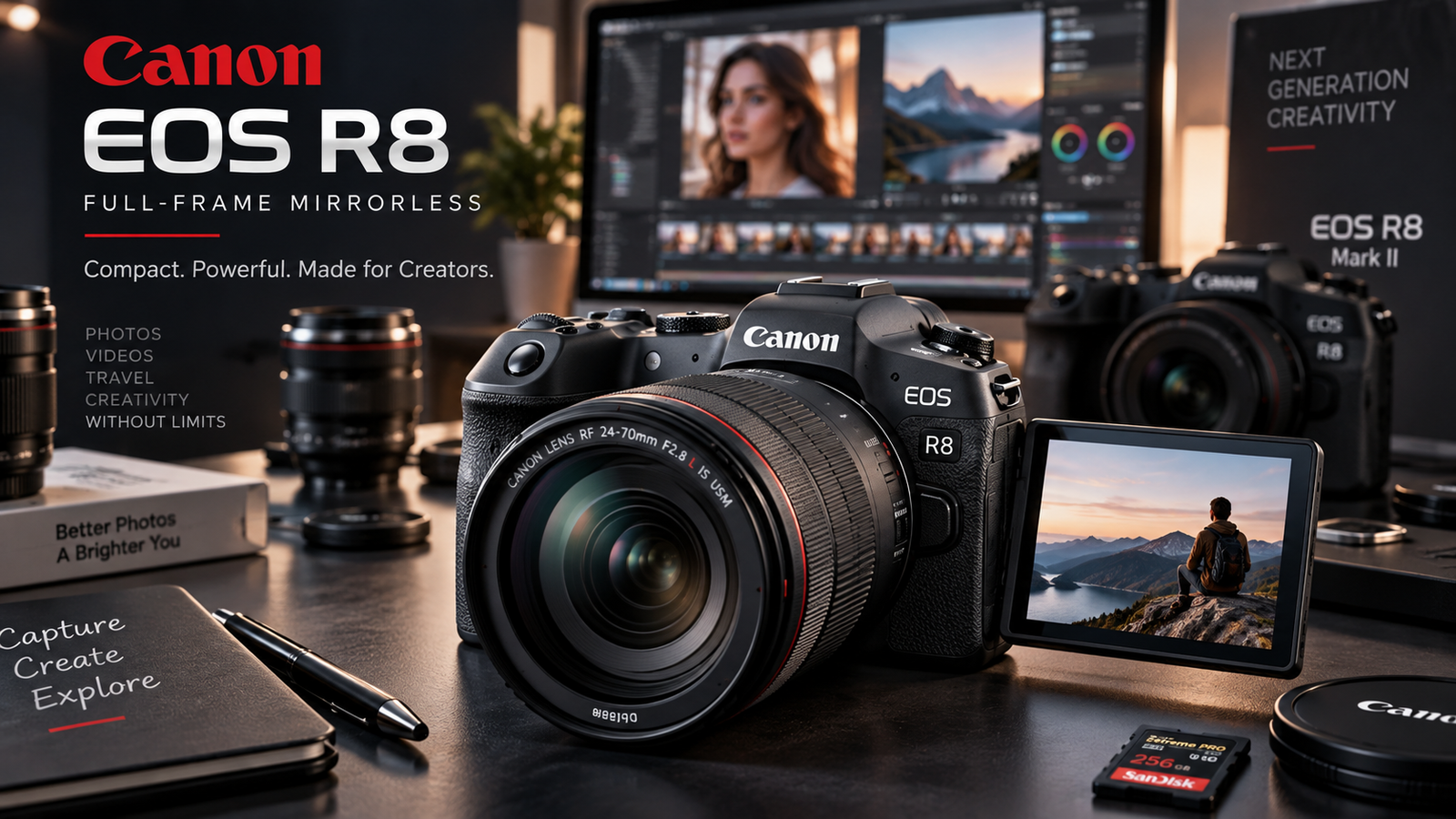
Canon EOS R8 Captures Global Attention in 2026

Canon EOS R8 gets a major 2026 buying boost as the R8 Mark II arrives. Check its price, specs, 4K video, 40fps shooting and latest firmware. Household Electric Fan: The Quiet Shift to BLDC Cooling The Canon EOS R8 has suddenly become a more interesting camera in 2026, not because Canon has quietly replaced it,…
Household Electric Fan: The Quiet Shift to BLDC Cooling
A household electric fan is getting smarter in 2026, with BLDC motors, battery backup and better efficiency reshaping how Indian homes stay cool. Redmi Note 17 Pro Max: 10,000mAh Battery Changes Game Household Electric Fan: The Quiet Shift to BLDC Cooling The humble household electric fan is going through a surprisingly important transformation. For decades,…


Pingback: Goldstriker iPhone 3GS Supreme Still Defines Luxury Tech