
Learn about Tap (valve) technology, working principles, smart water-saving innovations, valve types, applications, and future trends in plumbing systems.
Nothing 4b Launch Today: Features, Price and Latest Updates
Tap (Valve): Understanding the Technology Behind Modern Water Control
Water taps are among the most commonly used fixtures in homes, industries, commercial buildings, and public infrastructure. Although they appear simple, modern Tap (valve) technology has evolved significantly over the years. Today’s taps are designed to provide precise water control, conserve resources, improve hygiene, and integrate with smart home systems.
From traditional compression taps to advanced touchless and IoT-enabled faucets, valve technology continues to transform the way people interact with water every day.
What Is a Tap (Valve)?
A tap, commonly known as a faucet, is a mechanical valve that regulates the flow of liquids or gases through pipes. By opening, closing, or partially restricting the flow, the valve allows users to control both water volume and pressure.
Modern taps are engineered using advanced materials and precision manufacturing techniques to ensure durability, leak prevention, and efficient operation.
How Tap Valve Technology Works
At the core of every tap is a valve mechanism that controls water movement.
When the handle, lever, or sensor activates the valve, an internal component moves to either allow or restrict water flow. Depending on the design, this mechanism may use rubber washers, ceramic discs, ball valves, or cartridges.
The valve ensures smooth water delivery while maintaining pressure and minimizing leakage.
Major Types of Tap Valve Technologies
Compression Valve Technology
Compression valves are among the oldest designs still in use today.
They operate using a rubber washer that seals against a valve seat. Rotating the handle lifts the washer, allowing water to pass through.
Although reliable and inexpensive, washer wear often leads to dripping over time.
Ball Valve Technology
Ball valves use a hollow metal or plastic ball containing precisely machined openings.
Rotating the ball aligns these openings with the water supply, controlling flow and temperature.
Ball valves are commonly found in single-handle kitchen faucets because they provide smooth operation and long service life.
Cartridge Valve Technology
Cartridge valves utilize a replaceable cartridge containing internal seals and moving components.
These valves offer smooth operation, easier maintenance, and improved leak resistance compared to traditional washer systems.
They are widely used in residential and commercial plumbing.
Ceramic Disc Valve Technology
Ceramic disc technology represents one of the most durable valve systems available.
Two polished ceramic discs slide against each other with exceptional precision.
When their openings align, water flows freely.
Because ceramic materials resist wear and corrosion, these valves often last for many years without leaking.
Smart Tap Technology
Modern homes increasingly use intelligent faucets equipped with digital technologies.
Smart taps can include:
- Infrared motion sensors
- Voice assistant compatibility
- Smartphone control
- Automatic shut-off
- Temperature memory
- Water usage monitoring
- Touch activation
- Leak detection alerts
These technologies reduce water wastage while improving convenience and hygiene.
Sensor-Based Tap Systems
Touchless faucets have become increasingly popular in hospitals, airports, restaurants, offices, and smart homes.
Infrared sensors detect hand movement beneath the faucet, automatically activating water flow.
Once the user’s hands move away, the valve closes automatically.
Benefits include:
- Reduced water consumption
- Improved hygiene
- Lower risk of cross-contamination
- Minimal physical contact
- Longer faucet lifespan
Materials Used in Modern Tap Manufacturing
Manufacturers use several materials depending on durability requirements and application.
Common materials include:
- Brass
- Stainless steel
- Zinc alloy
- Bronze
- Engineering plastics
- Ceramic components
- Silicone seals
Premium taps often feature corrosion-resistant coatings such as chrome, brushed nickel, matte black finishes, or PVD coatings for enhanced durability.
Water-Saving Technologies
Environmental sustainability has driven significant innovation in faucet design.
Modern water-saving features include:
Aerators
Aerators mix air with water, maintaining strong water pressure while reducing consumption.
Flow Restrictors
Flow restrictors limit the maximum discharge rate without noticeably affecting performance.
Automatic Shut-Off
Electronic systems automatically stop water flow after a preset duration.
Eco Modes
Many smart taps provide eco settings that optimize water usage during routine activities.
Industrial Applications
Tap valve technology extends well beyond residential plumbing.
Industries use specialized valve systems in:
- Water treatment plants
- Oil and gas facilities
- Chemical processing
- Food manufacturing
- Pharmaceutical production
- Power generation
- Fire protection systems
- Agricultural irrigation
Industrial valves often incorporate automated actuators, remote monitoring, and high-pressure sealing technologies.
Advantages of Modern Tap Technology
Modern valve systems provide several practical benefits.
Leak-resistant designs reduce maintenance costs and conserve water.
Ceramic valves deliver smooth operation for years with minimal wear.
Smart technologies improve hygiene and user convenience.
Precision engineering ensures better pressure control and temperature regulation.
Advanced manufacturing materials significantly increase operational lifespan.
Challenges in Tap Valve Engineering
Despite technological advances, manufacturers continue addressing several engineering challenges.
Hard water can cause mineral deposits that affect valve performance.
Electronic faucets require reliable power sources and periodic maintenance.
Balancing affordability with advanced features remains an important consideration for manufacturers targeting residential markets.
Future of Tap (Valve) Technology
The future of tap technology is closely tied to smart buildings and sustainable infrastructure.
Emerging innovations include:
- AI-powered water optimization
- IoT-connected plumbing systems
- Predictive maintenance using sensors
- Voice-controlled faucets
- Self-cleaning valve surfaces
- Digital water quality monitoring
- Smart leak prevention systems
As cities become smarter and water conservation becomes increasingly important, intelligent valve technologies are expected to play a vital role in reducing water waste while improving user experience.
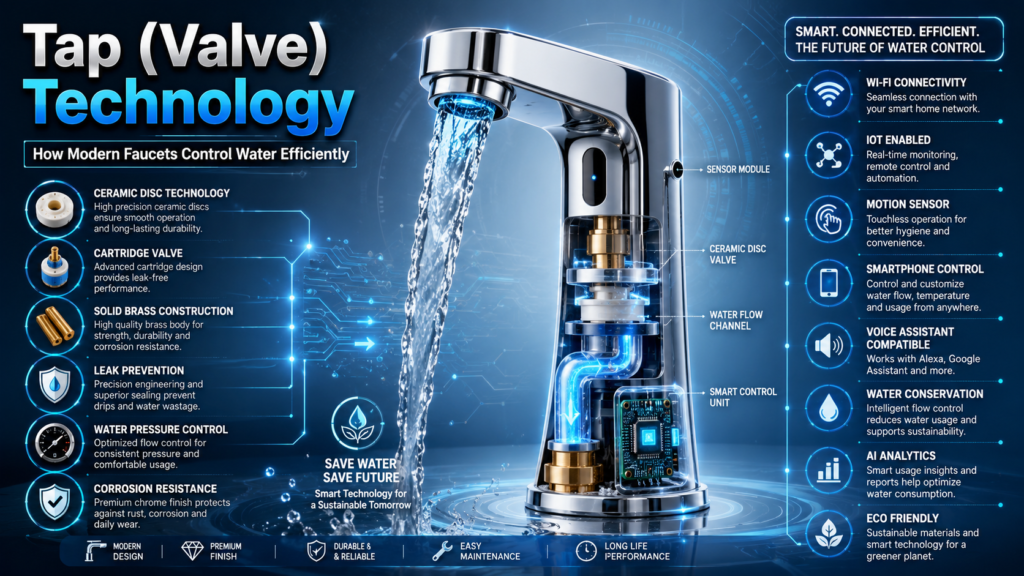
Tap (Valve)
The earliest water taps relied on simple mechanical valves made from bronze or brass. Over time, advancements in materials science and precision engineering led to the development of ceramic disc valves, cartridge systems, and touchless sensor technology. Today, smart taps integrate electronics, IoT connectivity, and water-saving innovations, making them essential components of modern residential, commercial, and industrial plumbing systems.
Disclaimer: This image is a conceptual illustration created for educational and editorial purposes only. It is intended to demonstrate modern Tap (Valve) technology and may not represent the exact design, specifications, or functionality of any specific manufacturer or commercial product. All trademarks, product names, and technologies belong to their respective owners.
One UI 9: Samsung’s Android 17 Update Rolls Out

One UI 9 is rolling out with Android 17, Galaxy AI upgrades, privacy tools and new features. Here’s the latest Samsung rollout news and device status. Canon EOS R8 Captures Global Attention in 2026 One UI 9: Samsung’s Android 17 Rollout Gathers Pace Samsung’s One UI 9 rollout is entering an important phase. After months…
Canon EOS R8 Captures Global Attention in 2026

Canon EOS R8 gets a major 2026 buying boost as the R8 Mark II arrives. Check its price, specs, 4K video, 40fps shooting and latest firmware. Household Electric Fan: The Quiet Shift to BLDC Cooling The Canon EOS R8 has suddenly become a more interesting camera in 2026, not because Canon has quietly replaced it,…
Household Electric Fan: The Quiet Shift to BLDC Cooling
A household electric fan is getting smarter in 2026, with BLDC motors, battery backup and better efficiency reshaping how Indian homes stay cool. Redmi Note 17 Pro Max: 10,000mAh Battery Changes Game Household Electric Fan: The Quiet Shift to BLDC Cooling The humble household electric fan is going through a surprisingly important transformation. For decades,…