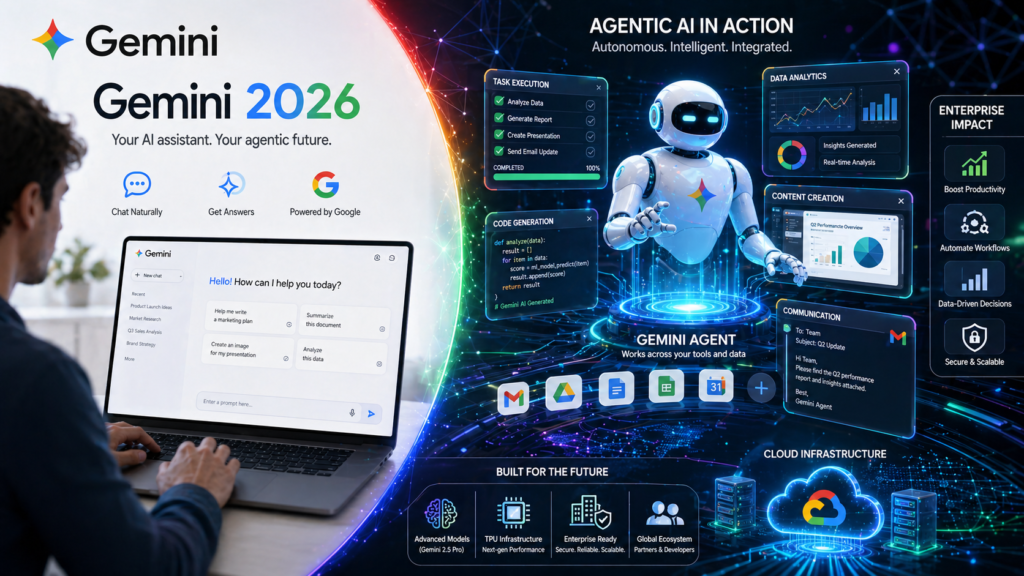
Gemini in 2026 evolves with agentic AI, enterprise growth, and personalization. Explore latest news, trends, and future impact of Gemini AI.
Rytr AI 2026: Budget Writer Disrupting Content Workflows
Introduction: Gemini’s Strategic Leap in 2026
Gemini has moved decisively from being just another AI model to becoming the backbone of Google’s artificial intelligence ecosystem. In 2026, the platform is no longer limited to chatbot-style interactions; it is increasingly embedded across enterprise tools, developer platforms, and consumer applications.
Recent developments suggest that Gemini is entering what Google calls the “agentic AI era,” where systems do not just respond to prompts but actively perform tasks, automate workflows, and integrate deeply into everyday digital environments.
The Rise of Agentic AI and Enterprise Integration
One of the most defining trends around Gemini is its shift toward agent-based intelligence. Google’s latest updates introduce platforms where AI agents can execute complex, multi-step tasks autonomously rather than simply answering queries.
This transition is particularly evident in enterprise deployments. Partnerships aimed at scaling Gemini Enterprise indicate that businesses are moving from experimentation to full-scale AI integration.
The introduction of unified enterprise platforms and dedicated AI infrastructure, including advanced Tensor Processing Units (TPUs), highlights how seriously Google is investing in making Gemini a core enterprise technology.
Gemini Inside Everyday Work: Workspace Intelligence
Gemini is increasingly being embedded into productivity tools, transforming how people work. Google’s Workspace Intelligence initiative integrates Gemini into Gmail, Docs, Sheets, and other tools, enabling real-time assistance, automated content creation, and contextual decision-making.
This integration goes beyond simple automation. Gemini can now generate presentations aligned with company branding, analyze datasets, and assist in communication workflows, effectively acting as a digital co-worker rather than just a tool.
Personal Intelligence and Hyper-Personalization
Another major shift is Gemini’s move toward personalization. New updates allow the AI to understand user preferences by integrating data from services like Google Photos and other connected apps.
This “Personal Intelligence” layer enables Gemini to generate highly contextual outputs without requiring detailed prompts. For instance, users can create personalized images or content that reflects their own history and preferences, marking a shift toward more intuitive AI interactions.
However, this advancement also raises questions about privacy and data usage, as deeper personalization requires broader access to user data.
Developer Ecosystem and Model Advancements
Gemini’s evolution is also driven by continuous model improvements. The release of newer versions such as Gemini 3 and its variants has significantly enhanced reasoning, coding, and multimodal capabilities.
Developers are gaining access to advanced APIs, enabling them to build applications that combine text, images, and real-time data processing. Features like Deep Research agents and multimodal function responses are expanding what AI systems can achieve in practical scenarios.
This developer-first approach is crucial for scaling Gemini beyond Google’s own products and into third-party ecosystems.
AI in Software Development: A Paradigm Shift
One of the most striking indicators of Gemini’s impact is its role in software engineering. Reports suggest that a significant portion of new code within Google is now generated by AI systems powered by Gemini.
This shift is not just about efficiency—it represents a fundamental change in how software is built. Engineers are increasingly supervising AI-generated outputs rather than writing code from scratch, accelerating development cycles and reducing time-to-market.
Expanding Ecosystem and Strategic Partnerships
Gemini’s influence is extending beyond Google’s ecosystem. Strategic collaborations, including partnerships with major technology players, indicate that Gemini is becoming a foundational layer for broader AI innovation.
These partnerships suggest a future where Gemini powers not just Google services but also external platforms, devices, and operating systems.
Gemini
Gemini is Google’s flagship family of AI models, developed by Google DeepMind. It was designed as a multimodal system capable of handling text, images, audio, and video within a unified architecture.
Since its introduction, Gemini has evolved through multiple versions, with each iteration improving reasoning, speed, and integration capabilities. By 2026, it has become central to Google’s strategy for competing in the global AI race.
Challenges and Market Competition
Despite its rapid growth, Gemini operates in an intensely competitive landscape. Rival AI systems from companies like OpenAI, Anthropic, and Microsoft continue to push innovation boundaries.
Additionally, the question of monetization remains critical. While enterprise adoption is strong, converting widespread AI usage into sustainable revenue streams is still a challenge for major tech companies.
The Road Ahead: From Tools to Autonomous Systems
The trajectory of Gemini points toward increasingly autonomous systems capable of handling complex workflows independently. The focus is shifting from reactive AI to proactive systems that anticipate user needs and act on their behalf.
If current trends continue, Gemini could evolve into a universal AI layer embedded across devices, applications, and industries, fundamentally reshaping how humans interact with technology.
Disclaimer: This image is a conceptual and illustrative representation created for informational purposes only. It does not depict any official interface, product design, or real-time functionality of Google Gemini or its associated services. Any resemblance to actual platforms, dashboards, or systems is purely coincidental and intended solely to visualize the concept of AI-driven automation and agentic workflows.
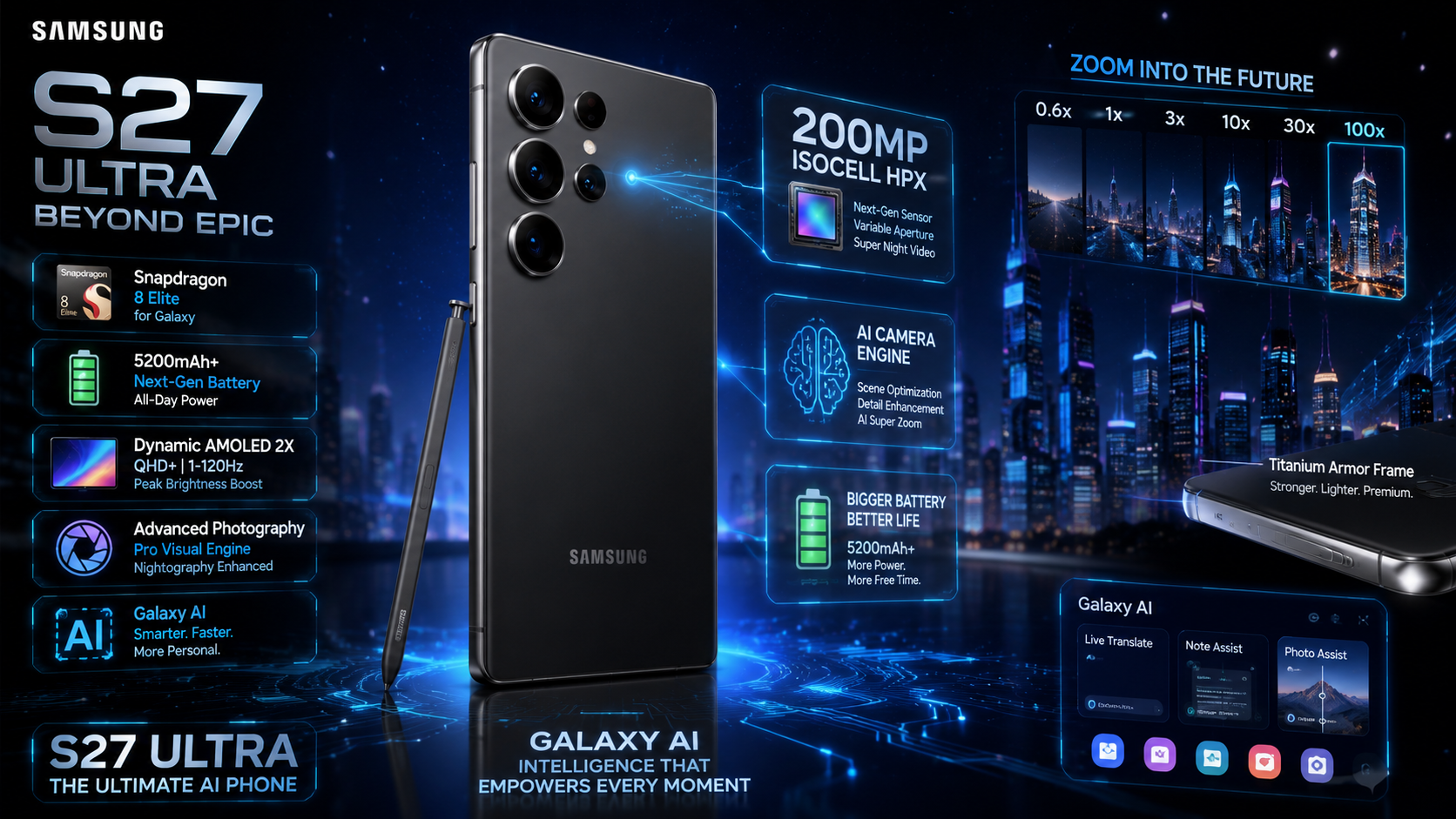
Samsung S27 Ultra Leaks Reveal Massive Camera Upgrades Ahead

Samsung S27 Ultra leaks hint at major camera upgrades, bigger battery, AI features, and a refreshed design. Here’s everything revealed so far. Galaxy Watch Ultra Gets Smarter With AI Health Upgrades Today Samsung S27 Ultra Leaks Reveal Massive Camera Upgrades Ahead The S27 Ultra has already become one of the most discussed smartphones in the…
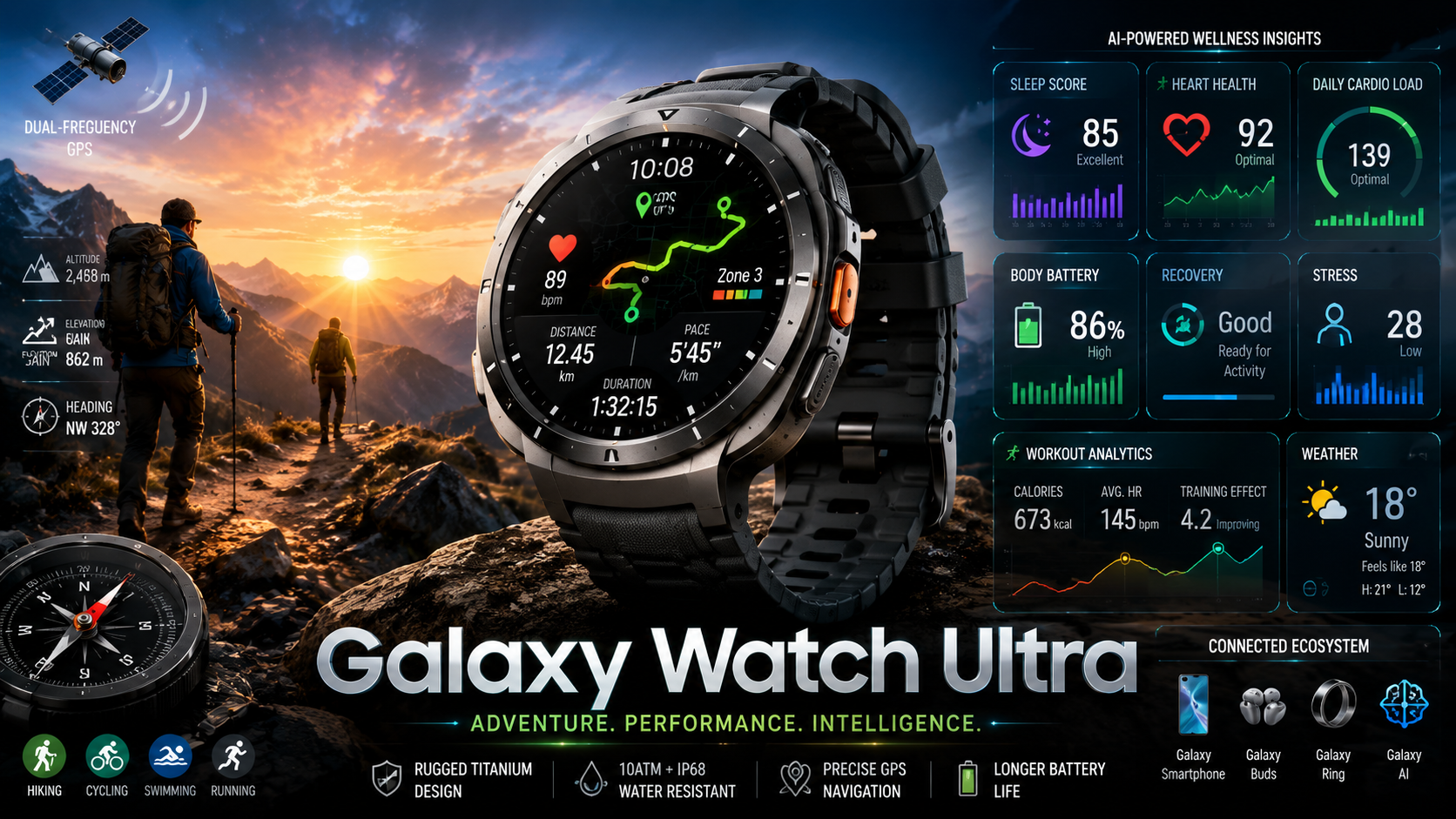
Galaxy Watch Ultra Gets Smarter With AI Health Upgrades Today
Discover the latest Galaxy Watch Ultra news, AI health features, battery improvements, rugged design, pricing, and everything announced by Samsung. Honda ADV 160 India Launch: Latest Updates & Expectations Galaxy Watch Ultra: Samsung Pushes Smartwatches Into a New AI Era Samsung has once again raised the bar in the premium smartwatch segment with its latest…
Honda ADV 160 India Launch: Latest Updates & Expectations
Honda ADV 160 India launch news, expected price, features, engine, rivals, launch timeline, and everything riders should know in 2026. Motorcycle Industry Shifts as EV Innovation Accelerates Honda ADV 160 India Launch: Everything We Know So Far Honda appears to be preparing one of its most anticipated premium scooter launches for the Indian market. The…