
DALL-E latest news 2026: OpenAI retires DALL-E models as GPT Image rises. Explore updates, impact, and future of AI image generation.
Vellum AI 2026: The Rise of Agentic AI Platforms
DALL-E in 2026: A Defining Shift, Not a Decline
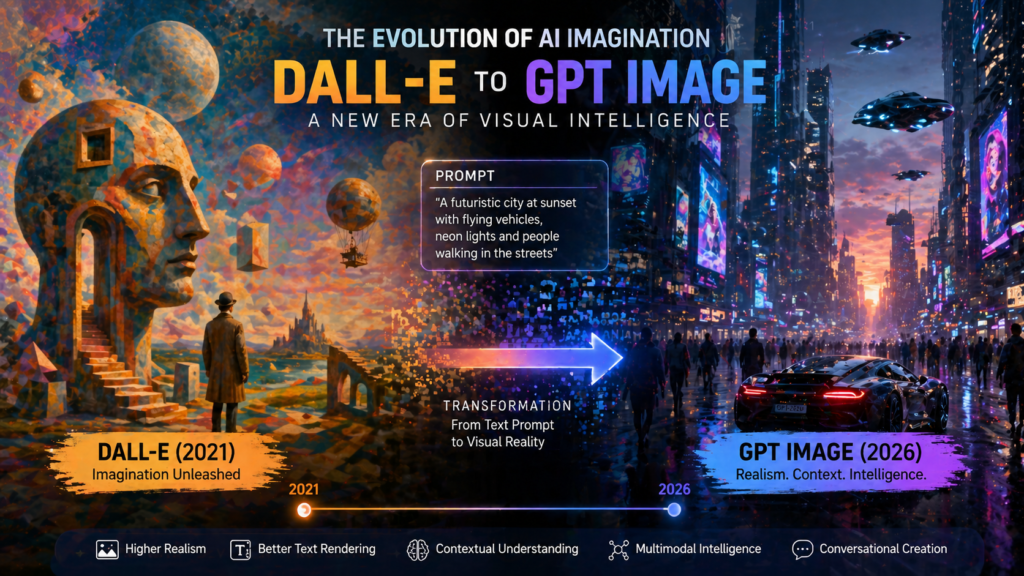
The latest developments around DALL-E mark a turning point in the evolution of artificial intelligence. What began as a breakthrough text-to-image system has now transitioned into a legacy technology, as OpenAI pivots toward more advanced, integrated image-generation models.
Recent reports confirm that DALL-E 2 and DALL-E 3 have been officially retired in 2026, signaling the end of a product line that once defined AI creativity.
This is not a story of obsolescence—it is a story of absorption into something more powerful.
The Big Update: DALL-E Replaced by New AI Image Systems
The most significant news is that OpenAI has replaced DALL-E with a new generation of models such as GPT Image and ChatGPT Images 2.0. These systems introduce reasoning capabilities, multilingual prompt handling, and significantly improved text rendering within images.
Unlike DALL-E, which generated images in a single pass, newer models “think” before rendering visuals—breaking down prompts into structured steps for more accurate outputs.
This represents a fundamental shift in how AI creates images.
Why DALL-E Was Retired
DALL-E’s architecture was built for a different era of AI—one where models were designed for single tasks. Today’s systems are multimodal, combining language, reasoning, and visual generation into one unified experience.
The successor framework, known as GPT Image, replaces DALL-E entirely and is now embedded within conversational platforms.
This transition reflects three major industry trends:
- Integration over standalone tools
- Conversational image generation
- Higher accuracy through reasoning-based outputs
In practical terms, users no longer need to switch between tools. Image generation now happens seamlessly inside chat environments.
A Look Back: What Made DALL-E Revolutionary
When DALL‑E was first introduced in 2021, it redefined the relationship between language and visuals. Built on transformer-based deep learning, it allowed users to generate images from simple text prompts—an unprecedented capability at the time.
Subsequent versions improved realism, detail, and usability. DALL-E 3, in particular, became widely adopted through integrations with ChatGPT and Microsoft tools.
For several years, DALL-E was synonymous with AI art itself.
Competition and Rapid Innovation
The retirement of DALL-E comes amid intense competition in the AI image-generation space. New models are pushing boundaries in realism, speed, and usability.
OpenAI’s latest system has demonstrated the ability to generate highly realistic images that are difficult to distinguish from real photographs, raising both excitement and ethical concerns.
At the same time, improvements in text rendering and design capabilities are making AI-generated visuals more practical for real-world applications such as advertising, UI design, and content creation.
This shift positions AI image tools as productivity platforms rather than experimental technologies.
The Evolution of AI Image Models
The journey of DALL-E reflects the rapid evolution of generative AI.
From its launch in 2021 to its integration into mainstream tools, DALL-E demonstrated how machines could interpret and visualize human imagination.
By 2025, however, newer systems had already begun replacing DALL-E within ChatGPT, signaling the start of a transition that became official in 2026.
This progression shows how quickly innovation cycles move in artificial intelligence.
What Comes Next After DALL-E
The future of image generation lies in unified AI systems that combine reasoning, creativity, and interaction. These systems are designed to:
- Interpret complex instructions accurately
- Maintain consistency across multiple images
- Generate realistic visuals with embedded text
- Integrate seamlessly into workflows
DALL-E may no longer exist as a standalone model, but its influence is deeply embedded in every new system that follows.
Disclaimer: This image is a conceptual and editorial representation created for illustrative purposes only. The depiction of DALL-E and its evolution toward modern AI image systems such as GPT Image is based on publicly available information and industry trends. The visuals, text overlays, and design elements do not represent official product interfaces, announcements, or proprietary materials from OpenAI. Any resemblance to actual tools, outputs, or branding is purely illustrative. This content is intended for informational and educational use only and does not imply endorsement, partnership, or official representation. All trademarks, product names, and intellectual property belong to their respective owners.
One UI 9: Samsung’s Android 17 Update Rolls Out

One UI 9 is rolling out with Android 17, Galaxy AI upgrades, privacy tools and new features. Here’s the latest Samsung rollout news and device status. Canon EOS R8 Captures Global Attention in 2026 One UI 9: Samsung’s Android 17 Rollout Gathers Pace Samsung’s One UI 9 rollout is entering an important phase. After months…
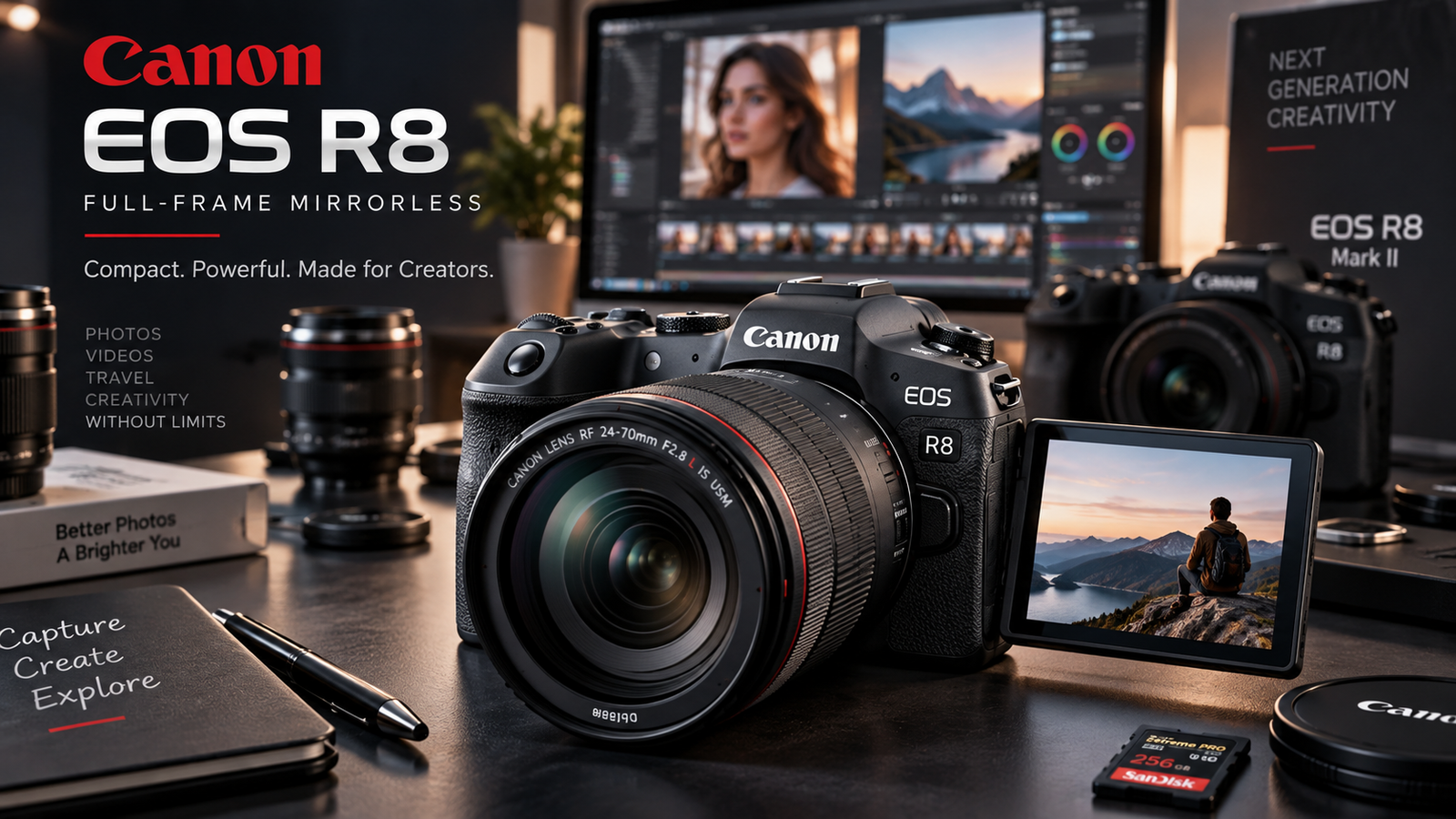
Canon EOS R8 Captures Global Attention in 2026

Canon EOS R8 gets a major 2026 buying boost as the R8 Mark II arrives. Check its price, specs, 4K video, 40fps shooting and latest firmware. Household Electric Fan: The Quiet Shift to BLDC Cooling The Canon EOS R8 has suddenly become a more interesting camera in 2026, not because Canon has quietly replaced it,…
Household Electric Fan: The Quiet Shift to BLDC Cooling
A household electric fan is getting smarter in 2026, with BLDC motors, battery backup and better efficiency reshaping how Indian homes stay cool. Redmi Note 17 Pro Max: 10,000mAh Battery Changes Game Household Electric Fan: The Quiet Shift to BLDC Cooling The humble household electric fan is going through a surprisingly important transformation. For decades,…


Pingback: Kling AI : 4K Breakthrough Reshapes Video AI Race