
Kling AI 2026 latest news: 4K video breakthrough, Kling 3.0 updates, and cinematic AI tools redefine generative video technology worldwide.
DALL-E : From AI Pioneer to Platform Transition Era
Kling AI in 2026: A Rapid Rise in the Video AI Race
The latest developments around Kling AI reveal a platform accelerating at the forefront of generative video technology. Developed by Kuaishou, Kling AI has quickly transitioned from an experimental tool into one of the most competitive players in the global AI video space.
In 2026, the platform is no longer just about generating short clips—it is redefining how cinematic content can be created using artificial intelligence. With breakthroughs in 4K output, multimodal storytelling, and native audio generation, Kling AI is positioning itself as a serious challenger in the evolving AI ecosystem.
The Big Update: Native 4K Video Generation Sets a New Benchmark
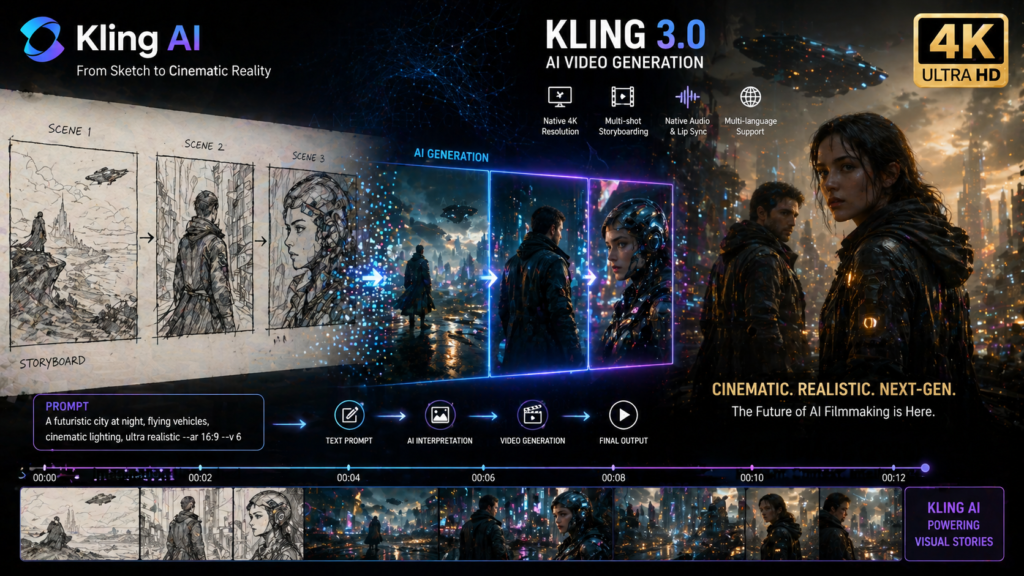
The most recent headline development is Kling AI’s introduction of native 4K video generation within its Video 3.0 model series. This is not an upscaling feature—it generates high-resolution visuals directly, offering cinema-grade clarity suitable for film, television, and advertising.
This advancement addresses one of the biggest limitations in earlier AI video tools: resolution. By delivering sharper textures, improved facial detail, and realistic motion at 4K quality, Kling AI is moving closer to professional production standards.
For creators and studios, this shift signals that AI-generated video is no longer confined to experimentation—it is entering real-world production pipelines.
Kling 3.0: A Multimodal Leap in AI Creativity
The release of Kling 3.0 marks another significant milestone. Built on a multimodal architecture, the system integrates text, image, audio, and video into a single workflow, allowing more complex and coherent outputs.
This model introduces features such as:
- Multi-shot storyboarding for structured video narratives
- Native audio generation with lip-sync across multiple languages
- Text-to-video and image-to-video workflows
- Enhanced realism and motion consistency
These capabilities represent a shift from simple generation to directorial control, where users can define camera angles, shot duration, and narrative flow.
Cinematic AI: From Prompt to Storytelling Engine
Kling AI is increasingly being framed not just as a tool, but as a storytelling engine. Its ability to maintain character consistency, simulate camera movement, and produce multi-scene outputs is narrowing the gap between traditional filmmaking and AI-assisted production.
This transformation is particularly significant for industries such as:
- Digital marketing and advertising
- Film pre-visualization
- Content creation for social platforms
- Educational and simulation-based media
The platform’s evolution suggests that AI video tools are moving beyond novelty and becoming part of mainstream creative workflows.
The Rise of Kling AI
Kling AI was first introduced in 2024 and has undergone rapid iteration, reaching version 3.0 in early 2026.
Unlike earlier AI models focused solely on images, Kling AI specializes in text-to-video generation, using advanced diffusion and transformer-based architectures to simulate motion, lighting, and scene transitions.
Its development reflects a broader trend in artificial intelligence: the shift from static content generation to dynamic, multimodal systems capable of producing full visual narratives.
Competitive Landscape: A High-Stakes AI Video Race
Kling AI’s growth is unfolding in an increasingly competitive environment. Rival platforms from global tech companies are also advancing rapidly, pushing innovation in video realism, duration, and control.
Kling’s strengths lie in:
- High-resolution output (4K and beyond)
- Integrated audio and multilingual capabilities
- Strong balance between quality and accessibility
However, competitors are focusing on deeper multimodal inputs and longer video generation, indicating that the race is far from settled.
What This Means for the Future of AI
The latest Kling AI updates highlight a broader shift in the AI industry. Video generation is becoming the next frontier, following the rapid evolution of text and image models.
As these systems improve, they raise important questions about:
- Content authenticity and deepfakes
- Copyright and ownership
- The role of AI in creative industries
Kling AI’s trajectory suggests that future AI platforms will not just assist creativity—they will actively participate in the production process.
Disclaimer: This image is a conceptual and editorial representation created for informational purposes only. The visuals are inspired by general advancements in AI video generation and are not official outputs or interfaces of Kling AI or any affiliated product. All elements such as storyboard sketches, cinematic frames, timeline visuals, and “4K” indicators are illustrative in nature and intended to convey technological concepts rather than depict real features or proprietary designs. No copyright infringement is intended. All trademarks, product names, and intellectual property related to Kuaishou and associated AI technologies belong to their respective owners.
One UI 9: Samsung’s Android 17 Update Rolls Out

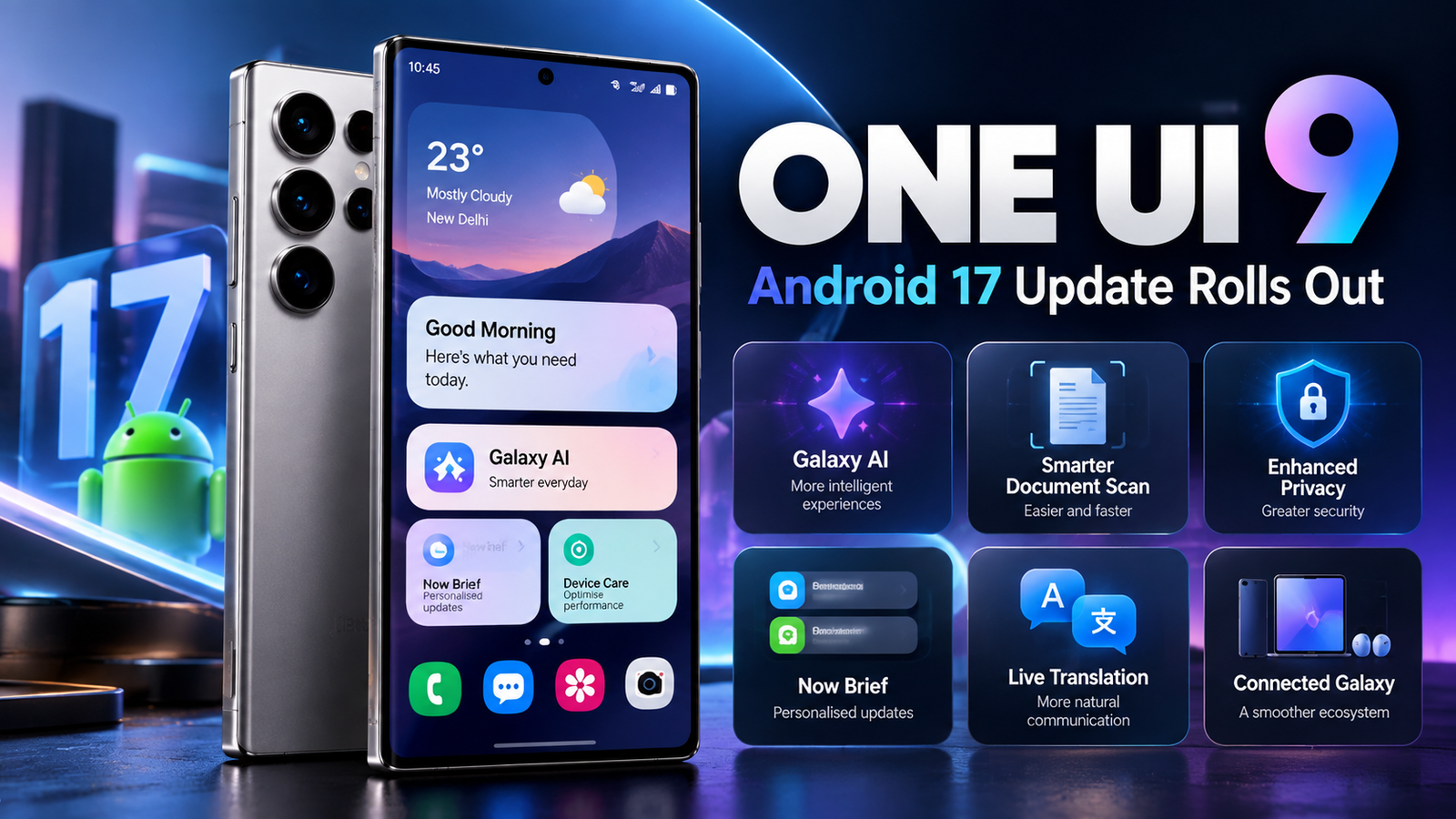
One UI 9 is rolling out with Android 17, Galaxy AI upgrades, privacy tools and new features. Here’s the latest Samsung rollout news and device status. Canon EOS R8 Captures Global Attention in 2026 One UI 9: Samsung’s Android 17 Rollout Gathers Pace Samsung’s One UI 9 rollout is entering an important phase. After months…
Canon EOS R8 Captures Global Attention in 2026

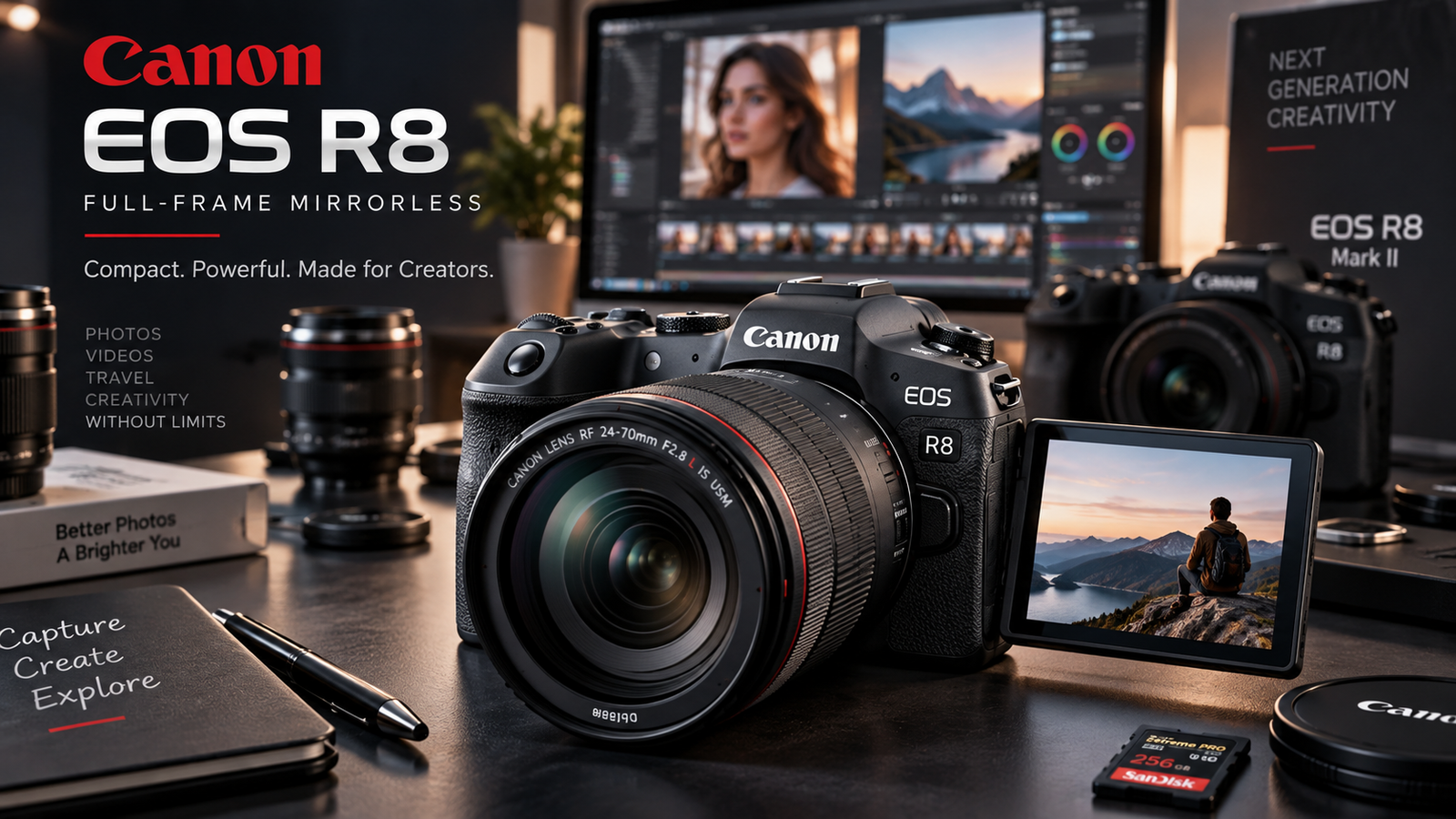
Canon EOS R8 gets a major 2026 buying boost as the R8 Mark II arrives. Check its price, specs, 4K video, 40fps shooting and latest firmware. Household Electric Fan: The Quiet Shift to BLDC Cooling The Canon EOS R8 has suddenly become a more interesting camera in 2026, not because Canon has quietly replaced it,…
Household Electric Fan: The Quiet Shift to BLDC Cooling
A household electric fan is getting smarter in 2026, with BLDC motors, battery backup and better efficiency reshaping how Indian homes stay cool. Redmi Note 17 Pro Max: 10,000mAh Battery Changes Game Household Electric Fan: The Quiet Shift to BLDC Cooling The humble household electric fan is going through a surprisingly important transformation. For decades,…


Pingback: Google VEO Redefines AI Video Creation in 2026 Era