
Google VEO latest news 2026: features, updates, risks, and how this AI video tool is transforming content creation, filmmaking, and digital media.
Kling AI : 4K Breakthrough Reshapes Video AI Race
What is Google VEO and Why It Matters
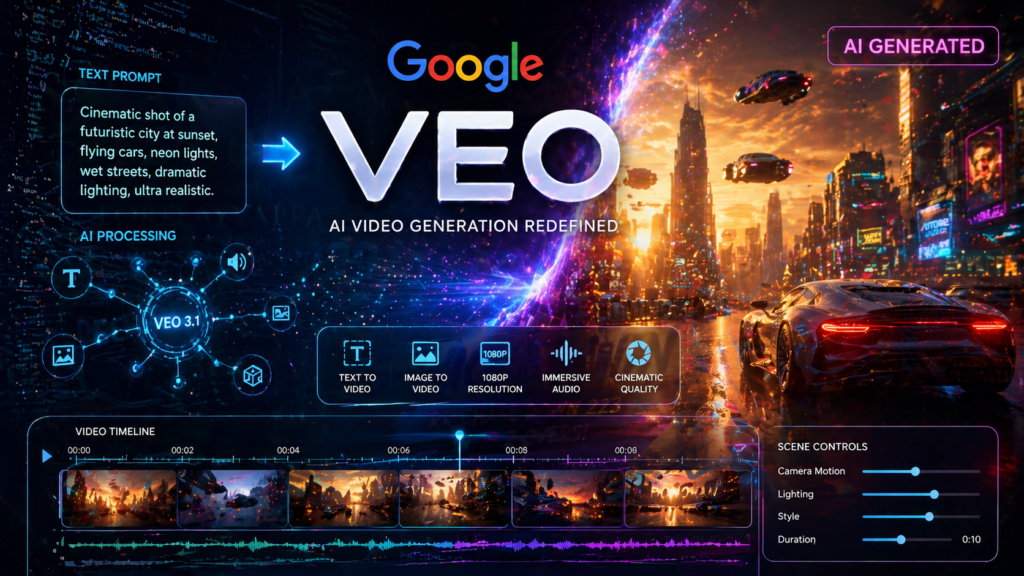
Google VEO represents a significant leap in generative AI, specifically in the domain of text-to-video creation. Developed by Google DeepMind, the model was first introduced at Google I/O 2024 as a response to the growing demand for AI-generated multimedia content.
Unlike earlier tools, Google VEO doesn’t just generate silent visuals. With newer versions, it produces synchronized audio, realistic motion, and cinematic-quality outputs, pushing AI video generation closer to professional filmmaking standards.
The evolution from Veo 1 to Veo 3.1 highlights how rapidly this technology is advancing, with improvements in realism, physics simulation, and storytelling capabilities.
Latest Developments: Google VEO in 2026
The biggest shift in 2026 is accessibility and scalability. Google recently introduced Veo 3.1 Lite, a more affordable version designed for developers and businesses aiming to scale video production.
This version supports both text-to-video and image-to-video workflows, with flexible formats like 16:9 and 9:16, and resolutions up to 1080p. The goal is clear: make AI video generation practical for real-world applications, not just experimentation.
Another major development is deeper integration with Google’s ecosystem. Veo 3.1 is now embedded into tools like Google Vids, allowing users to generate video clips directly from prompts or images and even customize avatars, scenes, and interactions.
At the same time, updates such as “Ingredients to Video” are enhancing creative control. Users can now generate videos from multiple reference images, improving consistency across scenes and enabling more coherent storytelling.
Creative Capabilities: From Prompt to Production
Google VEO is not just a tool—it is becoming a creative engine.
The model now supports high-quality video outputs with improved prompt adherence, meaning it follows user instructions with remarkable accuracy. It also integrates audio generation, including dialogue and ambient sound, which significantly enhances realism.
For creators, this means shorter production cycles. A concept that once required scripting, filming, and editing can now be generated through a structured prompt.
For businesses, it opens new possibilities in marketing, training, and content localization, where videos can be produced quickly and at scale.
Industry Impact: Disruption Across Media and Marketing
The implications of Google VEO extend beyond content creation. It is reshaping how industries think about production workflows.
Media companies are experimenting with AI-generated storytelling. Marketing teams are using it to produce ad variations instantly. Educators are leveraging it for visual learning content.
At the same time, regulatory frameworks are beginning to respond. New rules in markets like the United States are already requiring disclosure when synthetic media is used in advertising, signaling the start of governance around AI-generated visuals.
Risks and Ethical Concerns
Despite its potential, Google VEO also raises serious concerns.
Reports indicate that highly realistic AI-generated videos can be used to create misleading or fabricated content, including deepfakes that are difficult to distinguish from real footage.
This has triggered debates around misinformation, digital trust, and the need for stronger safeguards. While Google has introduced watermarking and safety filters, experts argue that these measures may not be sufficient as the technology evolves.
The balance between innovation and responsibility remains one of the most critical challenges for Google VEO moving forward.
What Lies Ahead for Google VEO
Looking ahead, Google VEO is expected to continue evolving rapidly. Industry speculation points toward future versions offering longer video durations, higher resolutions, and even more advanced control over cinematic elements.
Although there is no official confirmation, expectations around the next iteration—possibly Veo 4—are already building within the AI community.
The trajectory suggests that AI video generation will soon become a mainstream tool, not just for professionals but for everyday users.
Disclaimer : This image is a conceptual and illustrative representation created for informational and editorial purposes only. It is not an official product visual or interface of Google or its AI system Google VEO. All interface elements, prompts, video frames, and design components shown are artistic interpretations intended to depict the capabilities of AI-driven video generation. They do not represent actual outputs, features, or user interfaces of Google VEO. Any resemblance to real software environments, tools, or proprietary systems is purely coincidental. For accurate and official information, refer to announcements and documentation released by Google and its AI research teams.
One UI 9: Samsung’s Android 17 Update Rolls Out

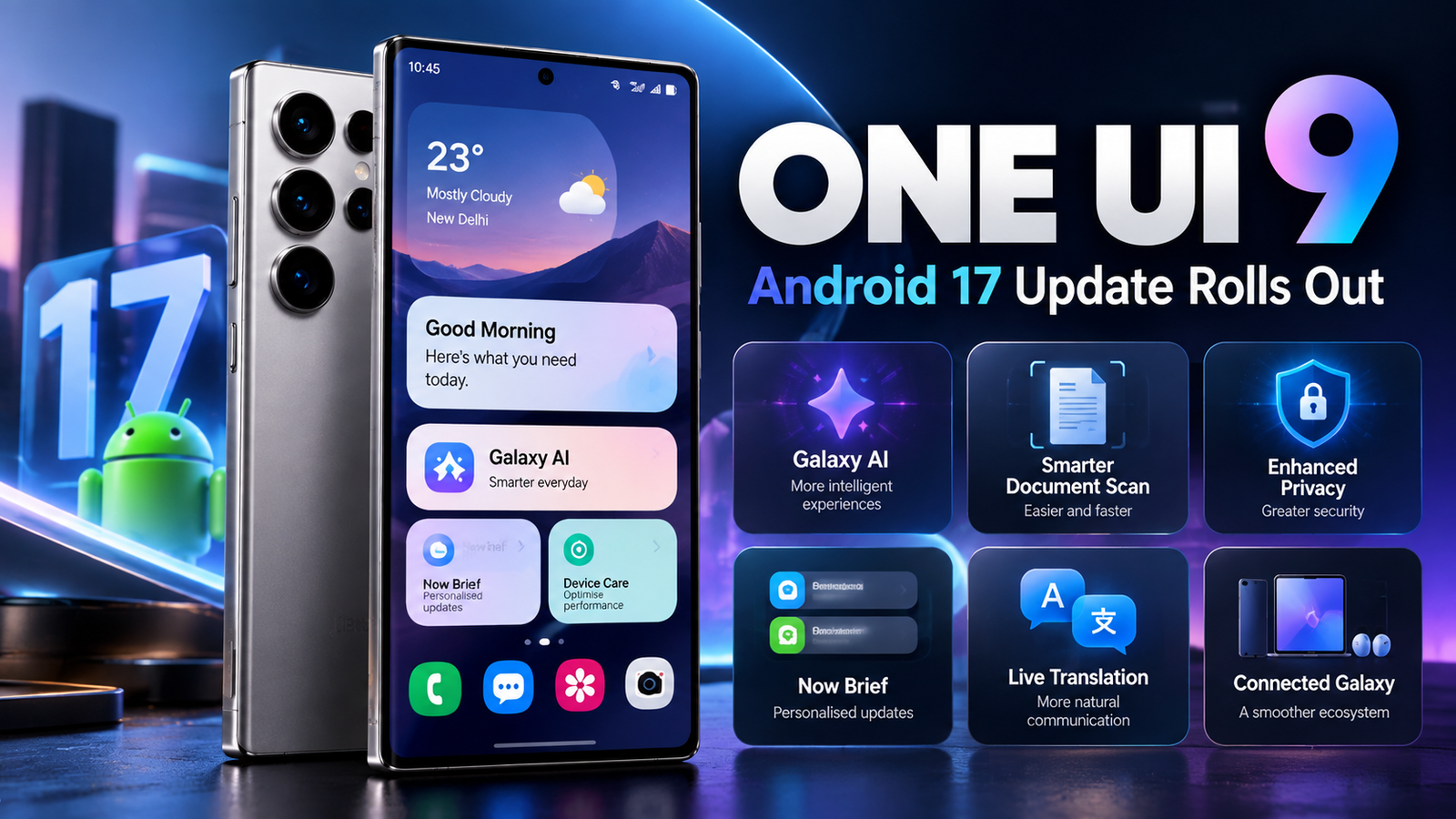
One UI 9 is rolling out with Android 17, Galaxy AI upgrades, privacy tools and new features. Here’s the latest Samsung rollout news and device status. Canon EOS R8 Captures Global Attention in 2026 One UI 9: Samsung’s Android 17 Rollout Gathers Pace Samsung’s One UI 9 rollout is entering an important phase. After months…
Canon EOS R8 Captures Global Attention in 2026

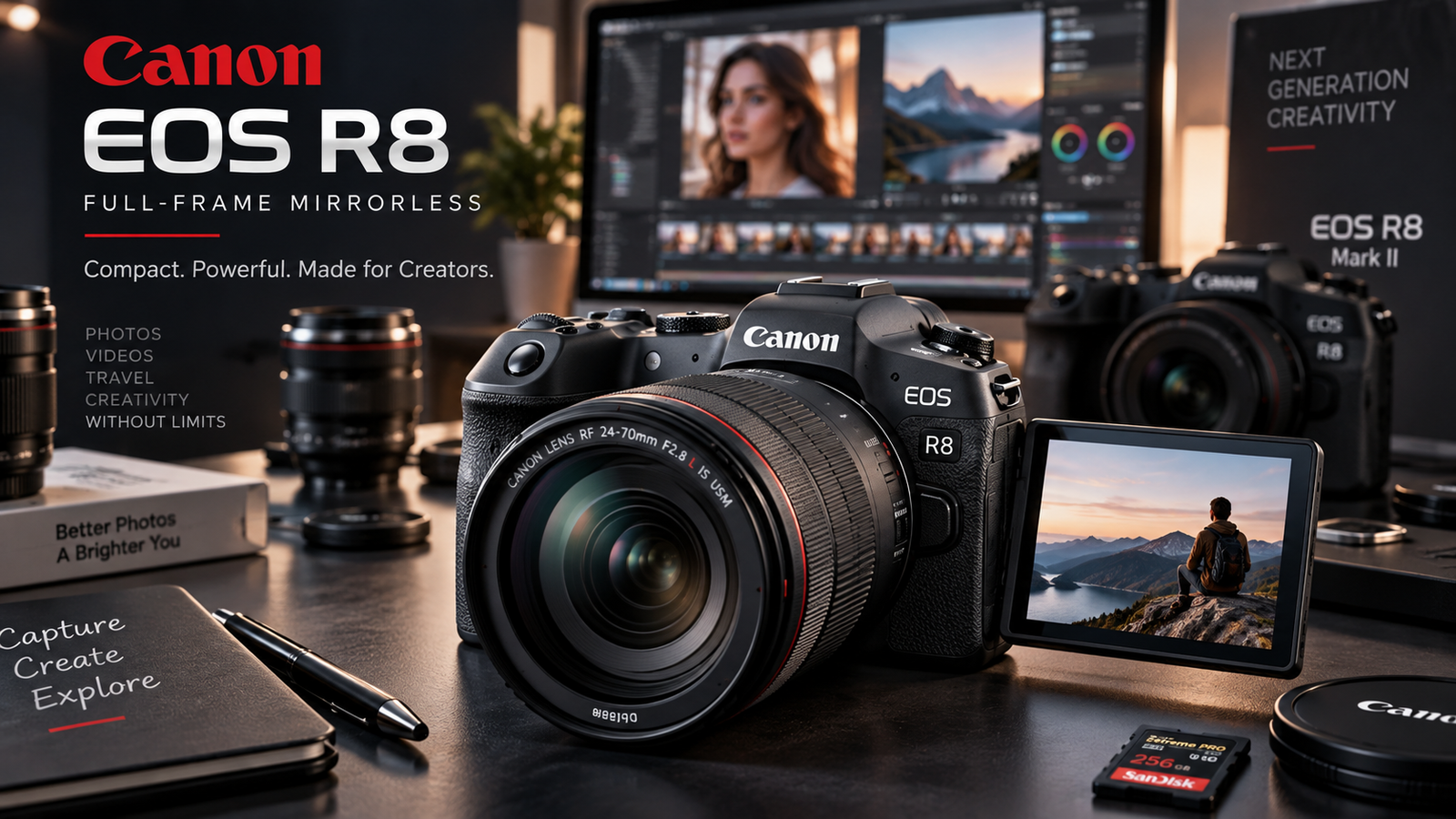
Canon EOS R8 gets a major 2026 buying boost as the R8 Mark II arrives. Check its price, specs, 4K video, 40fps shooting and latest firmware. Household Electric Fan: The Quiet Shift to BLDC Cooling The Canon EOS R8 has suddenly become a more interesting camera in 2026, not because Canon has quietly replaced it,…
Household Electric Fan: The Quiet Shift to BLDC Cooling
A household electric fan is getting smarter in 2026, with BLDC motors, battery backup and better efficiency reshaping how Indian homes stay cool. Redmi Note 17 Pro Max: 10,000mAh Battery Changes Game Household Electric Fan: The Quiet Shift to BLDC Cooling The humble household electric fan is going through a surprisingly important transformation. For decades,…

Pingback: Figma AI Drives Design Shift in 2026 Creative Era