
Quantum computing is advancing rapidly with breakthroughs in qubits, AI integration, cybersecurity risks. Explore the latest news, trends, and future outlook.
Drones 2026: The Rise of Autonomous Air Systems, AI Integration & Next-Gen UAV Tech
Introduction: Why Quantum Computing Is Entering a Critical Phase
Quantum computing is transitioning from theoretical physics to practical, high-impact technology. In 2026, it is no longer about “if” quantum computers will transform industries—but how soon and how disruptive the impact will be.
From cryptography risks to AI acceleration, quantum computing is shaping the next era of computation.
Latest News Highlights (2026)
Quantum Threat to Encryption Is Closer Than Expected
Recent research suggests that quantum computers may break current encryption systems much sooner than anticipated, with a realistic possibility of “Q-Day” by the early 2030s.
Even more concerning, new studies indicate far fewer qubits may be needed to crack encryption, accelerating the urgency for post-quantum cryptography adoption.
Massive Investment in Quantum Startups
Major investment firms are pouring millions into quantum computing companies to scale hardware and cloud-based quantum services, signaling strong commercialization momentum.
Governments Boost Quantum Education & Research
Countries are funding quantum research centers to build talent pipelines and infrastructure, highlighting the strategic importance of quantum technologies.
What Is Quantum Computing?
Quantum computing uses principles of quantum mechanics—such as superposition and entanglement—to perform computations far beyond classical systems.
Unlike classical bits (0 or 1), quantum bits (qubits) can exist in multiple states simultaneously, enabling massively parallel computation.
Key Technology Trends in Quantum Computing (2026)
Shift Toward Practical Applications
Quantum computing is moving from research labs to real-world use cases, especially in optimization, pharmaceuticals, and finance.
Hybrid Quantum-Classical Systems
Organizations are combining quantum processors with classical systems to solve complex problems efficiently.
Breakthroughs in Quantum Hardware
- 1,000+ qubit processors are now emerging
- Quantum error correction is improving system stability
- New materials like superconductors are enhancing efficiency
Advanced Simulation & Chip Design
Researchers are using massive GPU systems to simulate quantum chips before fabrication, accelerating development cycles.
Quantum Networking & “Quantum Telepathy” Concepts
Emerging research explores using entanglement for coordinated decision-making across systems without traditional communication.
Scaling Challenges Remain
Despite progress, scaling quantum systems into fully fault-tolerant machines remains a major engineering challenge.
Emerging Applications of Quantum Computing
Drug Discovery & Materials Science
Quantum simulations can model molecular interactions far more accurately than classical computers.
Financial Modeling & Optimization
Quantum algorithms enable faster portfolio optimization and risk analysis.
Cybersecurity & Cryptography
Quantum computing is both a threat and a solution:
- Can break current encryption
- Enables quantum-safe cryptography systems
AI & Machine Learning
Quantum computing can enhance AI by improving data processing and model training efficiency.
Technical Challenges
Hardware Instability
Quantum systems require extreme conditions (near absolute zero), making them difficult to scale.
Error Rates & Noise
Quantum states are fragile and prone to errors, requiring sophisticated correction techniques.
Infrastructure Limitations
Quantum computers demand specialized infrastructure, limiting widespread deployment.
Security Transition Gap
Organizations are not yet fully prepared for quantum-safe encryption, creating a vulnerability window.
Future Outlook: What’s Next for Quantum Computing?
The next decade will define quantum computing’s trajectory:
- Fault-tolerant quantum computers by ~2029
- Commercial quantum services expanding via cloud platforms
- Global shift toward post-quantum cryptography
- Integration with AI and high-performance computing systems
Quantum computing is approaching its “transistor moment”—a stage where foundational breakthroughs enable exponential growth.
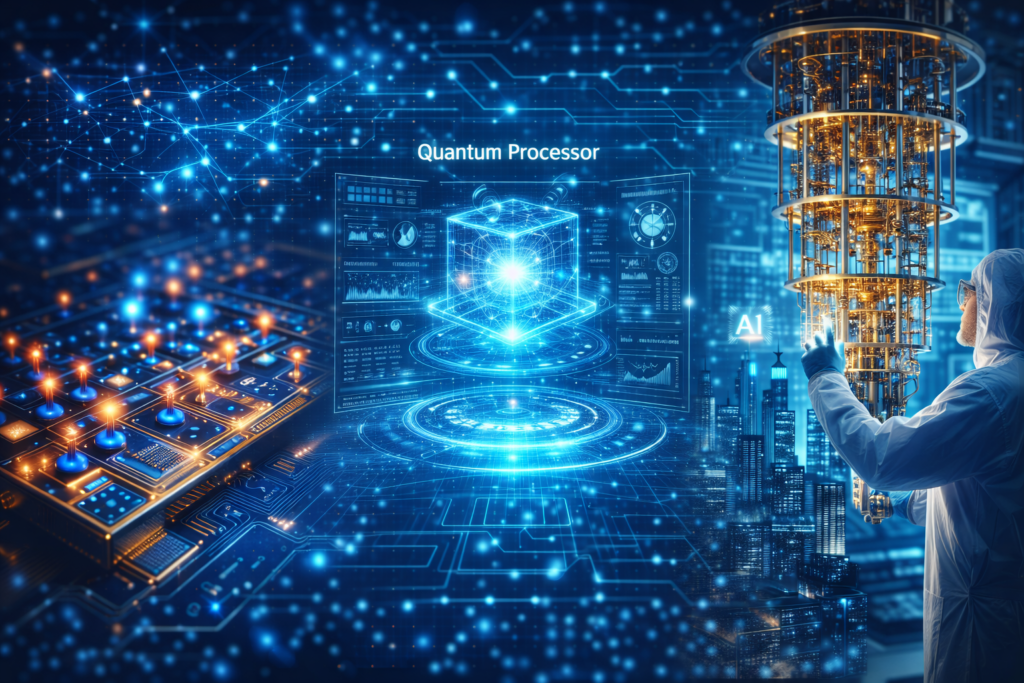
Disclaimer: This image is an AI-generated conceptual illustration created for informational and creative purposes only. It does not represent any real quantum computing system, laboratory, or organization. The visuals—including glowing qubits, holographic processor interfaces, and cryogenic quantum equipment—are symbolic representations of emerging quantum technologies and future possibilities. Any resemblance to actual systems or real-world implementations is purely coincidental.
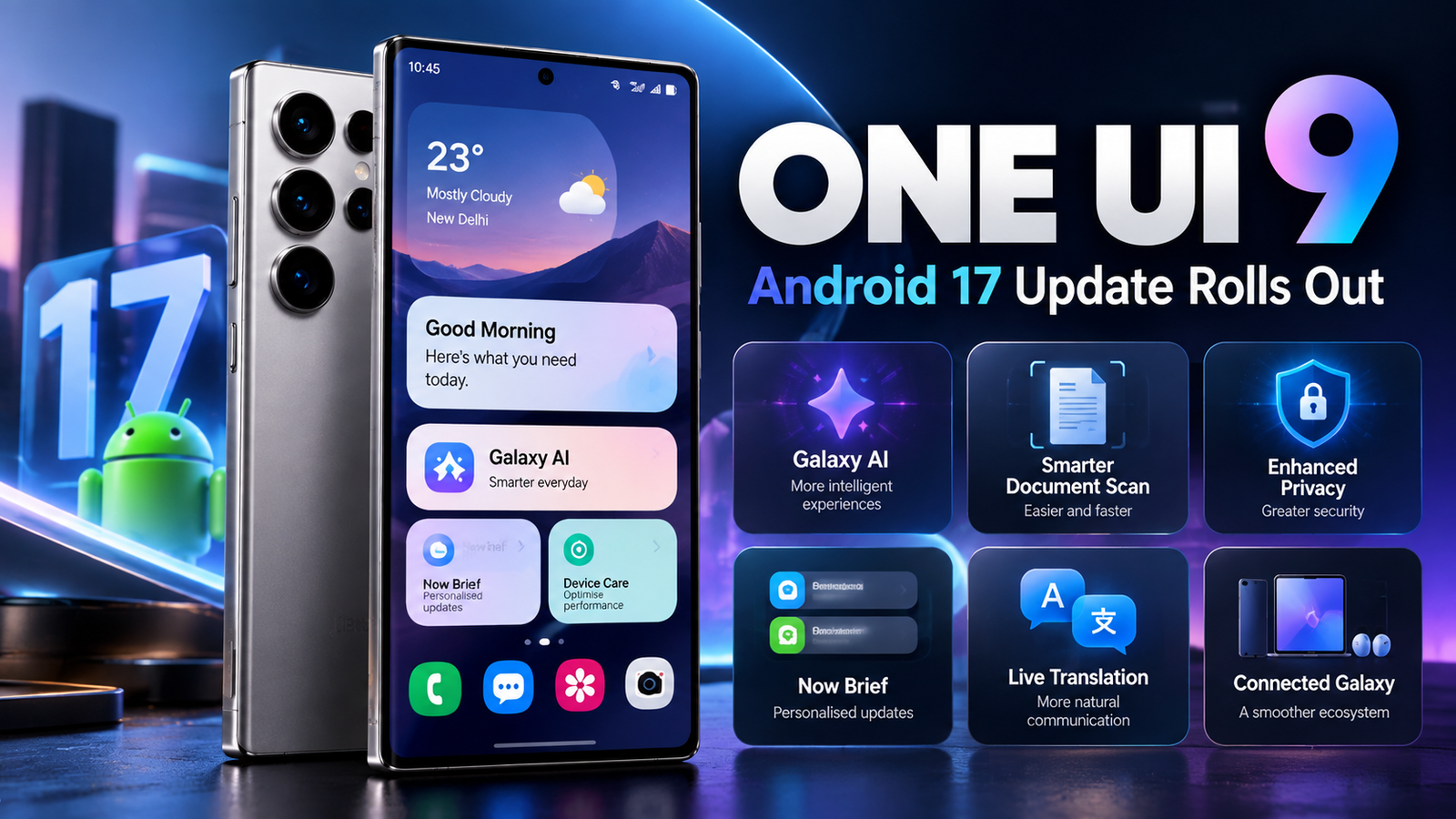
One UI 9: Samsung’s Android 17 Update Rolls Out

One UI 9 is rolling out with Android 17, Galaxy AI upgrades, privacy tools and new features. Here’s the latest Samsung rollout news and device status. Canon EOS R8 Captures Global Attention in 2026 One UI 9: Samsung’s Android 17 Rollout Gathers Pace Samsung’s One UI 9 rollout is entering an important phase. After months…
Canon EOS R8 Captures Global Attention in 2026

Canon EOS R8 gets a major 2026 buying boost as the R8 Mark II arrives. Check its price, specs, 4K video, 40fps shooting and latest firmware. Household Electric Fan: The Quiet Shift to BLDC Cooling The Canon EOS R8 has suddenly become a more interesting camera in 2026, not because Canon has quietly replaced it,…
Household Electric Fan: The Quiet Shift to BLDC Cooling
A household electric fan is getting smarter in 2026, with BLDC motors, battery backup and better efficiency reshaping how Indian homes stay cool. Redmi Note 17 Pro Max: 10,000mAh Battery Changes Game Household Electric Fan: The Quiet Shift to BLDC Cooling The humble household electric fan is going through a surprisingly important transformation. For decades,…




Pingback: 📱 Social Networking 2026: AI Feeds, Trust Crisis & the Evolution of Digital Communities