
Discover how RFID is transforming industries in 2026 with smart tracking, AI integration, digital product passports, and explosive market growth.
Autonomous Vehicles in 2026: Breakthrough Innovation Meets Real-World Risks
Introduction: RFID Becomes the Backbone of Smart Systems
The RFID industry in 2026 is no longer operating in the background—it is becoming a core infrastructure layer for global supply chains, smart cities, and digital commerce.
Recent developments show RFID evolving from simple tracking technology into a data intelligence platform, enabling real-time visibility, automation, and decision-making across industries.
Breaking News: RFID Expanding Across Real-World Systems
Recent headlines highlight RFID’s rapid adoption:
- RFID is being deployed for secure access systems, such as smart vehicle passes in public infrastructure
- New processors now integrate RFID directly into chips, eliminating the need for external hardware
- Industrial expos are showcasing RFID-powered automation and traceability solutions
- Universities and institutions are adopting RFID-based smart ID systems for enhanced security
The key shift: RFID is moving from niche deployments → everyday infrastructure
Market Growth: RFID Becomes a Billion-Dollar Industry
The RFID market is experiencing steady and scalable growth:
- Expected to grow from $14.5 billion (2025) to $30.4 billion by 2034
- Driven by demand for real-time tracking, automation, and data accuracy
Additionally:
- Over 55 billion RFID tags are already being deployed annually
RFID is becoming a mass-scale data collection layer for the physical world
RFID + AI + IoT: The Smart Technology Convergence
One of the biggest transformations in 2026 is the integration of RFID with other technologies:
Key Innovations:
- AI-powered analytics for tracking and predictions
- IoT-enabled RFID systems for real-time monitoring
- Energy-harvesting tags eliminating battery dependency
- Smart sensors embedded within RFID labels
Retail and logistics systems now combine RFID with AI to enable real-time inventory intelligence and automation
RFID is evolving from identification → intelligent sensing
Industry Use Cases Driving RFID Adoption
Retail & Supply Chain
- Item-level tracking replacing barcode systems
- Real-time inventory accuracy and shrinkage reduction
- Enhanced customer personalization
RFID is now considered a foundation technology for modern retail infrastructure
Manufacturing & Automotive
- High-precision tracking of components in harsh environments
- 99.9% accuracy in production systems using RFID tags
Healthcare
- Patient tracking and asset management
- Improved safety and operational efficiency
Smart Cities & Security
- RFID-based access control systems
- Smart ID cards and transportation tracking
- Infrastructure monitoring
RFID is becoming a critical enabler of smart ecosystems
Key Trends Shaping RFID in 2026
Digital Product Passports (DPP)
- RFID tags now store lifecycle data, sustainability metrics, and origin tracking
- Mandatory in some regions for compliance and transparency
Item-Level Visibility
- Shift from tracking pallets → tracking individual items
- Enables precise logistics and customer insights
Web-Connected RFID
- New standards allow RFID tags to link directly to web data
- Enhances traceability and transparency
Smarter & Smaller Tags
- Flexible, printable, and even chipless RFID technologies emerging
- Lower cost and wider adoption potential
RFID as Infrastructure
- Transition from optional tech → essential system layer
- Embedded in supply chains, cities, and enterprises
Challenges & Limitations
Despite growth, RFID faces challenges:
- Privacy concerns with tracking technologies
- Interference issues in dense environments
- Infrastructure costs for large-scale deployment
- Data management complexity
The next phase of RFID will depend on security, scalability, and standardization
Evolution of RFID
- 1990s–2000s: Early adoption in logistics and retail
- 2010s: Expansion into contactless payments and access control
- 2020s: Integration with IoT and AI
Now in 2026, RFID is entering the “intelligent connectivity era”
Future Outlook: What’s Next for RFID?
The future of RFID points toward:
- Fully autonomous supply chains
- AI-driven predictive tracking systems
- RFID-enabled digital twins of physical assets
- Integration into smartphones and consumer devices
Some experts predict RFID could become as ubiquitous as Wi-Fi or Bluetooth in the next decade.
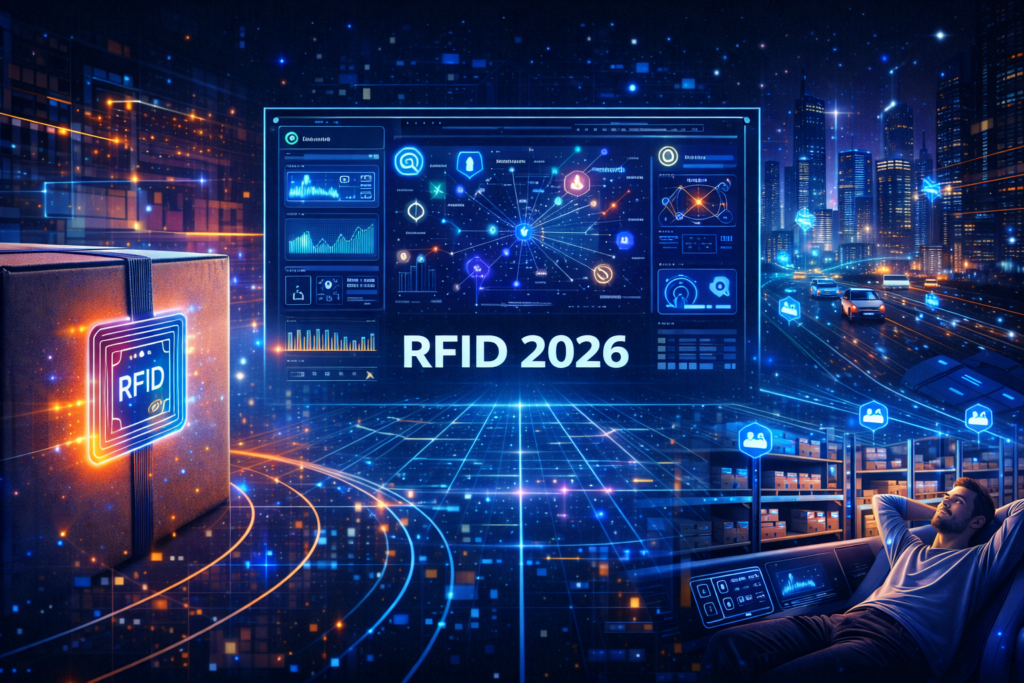
Disclaimer: This content is intended for informational and illustrative purposes only. The image is a conceptual representation designed to visualize trends and innovations in RFID technology and does not depict any real product, system, or proprietary interface. Any resemblance to actual brands, technologies, or implementations is purely coincidental. All trademarks, logos, and brand names remain the property of their respective owners, and no endorsement or affiliation is implied.
One UI 9: Samsung’s Android 17 Update Rolls Out

One UI 9 is rolling out with Android 17, Galaxy AI upgrades, privacy tools and new features. Here’s the latest Samsung rollout news and device status. Canon EOS R8 Captures Global Attention in 2026 One UI 9: Samsung’s Android 17 Rollout Gathers Pace Samsung’s One UI 9 rollout is entering an important phase. After months…
Canon EOS R8 Captures Global Attention in 2026

Canon EOS R8 gets a major 2026 buying boost as the R8 Mark II arrives. Check its price, specs, 4K video, 40fps shooting and latest firmware. Household Electric Fan: The Quiet Shift to BLDC Cooling The Canon EOS R8 has suddenly become a more interesting camera in 2026, not because Canon has quietly replaced it,…
Household Electric Fan: The Quiet Shift to BLDC Cooling
A household electric fan is getting smarter in 2026, with BLDC motors, battery backup and better efficiency reshaping how Indian homes stay cool. Redmi Note 17 Pro Max: 10,000mAh Battery Changes Game Household Electric Fan: The Quiet Shift to BLDC Cooling The humble household electric fan is going through a surprisingly important transformation. For decades,…




Pingback: 🕶️ Virtual Reality in 2026: Innovation Surge, Industry Reset & the Shift Beyond the Metaverse